Introduction: A Nation Built on Risk
Peru is currently facing a silent, structural crisis that threatens the lives and livelihoods of millions: the uncontrolled expansion of informal urban settlements. As the country prepares for the looming threat of the 2026 "Niño Costero" climatic phenomenon, experts are sounding the alarm. The vast majority of the nation’s infrastructure and housing stock has been developed outside the bounds of formal planning, leaving the population dangerously exposed to geological and meteorological hazards.
According to Hedy Villón, a prominent architect and key organizer of the XXI National Biennial of Peruvian Architecture, the country is navigating a landscape of extreme vulnerability, where the lack of institutional oversight and a staggering deficiency in urban planning have become the new, precarious normal.
Main Facts: The Scope of Informal Urbanization
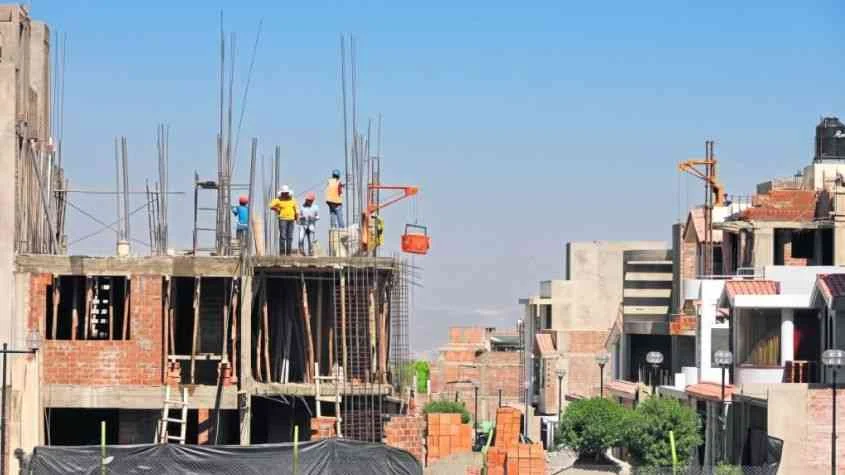
The scale of informality in Peru is not merely a social issue; it is a structural catastrophe. Data presented by experts indicates that 80% of all construction and land occupation in Peru is performed informally. This means that the vast majority of Peruvian families reside in structures built without technical oversight, architectural blueprints, or adherence to structural safety codes.
This phenomenon is primarily driven by rapid, unplanned migration to urban centers and the failure of the state to provide affordable, formal housing solutions. As a result, families settle on hillsides, riverbeds, and high-risk flood zones, creating a patchwork of "self-built" neighborhoods that lack basic services and disaster mitigation infrastructure.
The Planning Deficit
The severity of this issue is compounded by the systemic failure of local governments to manage territory. The statistics are sobering:

- Only 15% of municipalities nationwide possess a functional Urban Development Plan (PDU).
- Between 35% and 40% of provinces have any form of territorial planning instrument.
Even in major urban hubs like Lima Metropolitan, where comprehensive plans such as the Metropolitan Development Plan and specific guidelines for Lima Norte and Lima Este exist, their impact is severely diluted. The primary obstacle is not the lack of paper policies, but the glaring absence of political will and technical capacity at the local government level to enforce these regulations and curb illegal land trafficking.
Chronology: From Neglect to Imminent Threat
To understand the current state of emergency, one must look at the historical trajectory of urban development in Peru:
- 1990s–2000s: A period of massive, rapid urban growth where the pace of migration to cities like Lima far outstripped the state’s capacity to provide housing. Informal settlements became the primary source of shelter for lower-income populations.
- 2017: The disastrous El Niño Costero exposed the fragility of these settlements. Massive flooding and landslides decimated informal neighborhoods that had been built on dry riverbeds, serving as a tragic wake-up call.
- 2020–2025: Increased political instability and the economic aftermath of the pandemic slowed down the implementation of territorial planning reforms, allowing for the further expansion of informal settlements.
- October 2026: The current moment, marked by the announcement of the 2026 Niño Costero. The Colegio de Arquitectos del Perú (CAP) issues an urgent call to action, noting that the country is less prepared than it should be due to the persistent expansion of these high-risk areas.
- November 9–14, 2026: The scheduled dates for the XXI National Biennial of Peruvian Architecture in Ayacucho, which will serve as the primary platform to address these systemic failures.
Supporting Data: Why Formalization Matters
The technical consensus is clear: informal construction is synonymous with vulnerability. When a house is built without a licensed architect or structural engineer, it lacks the necessary reinforcement to withstand seismic activity—a critical concern in a country located on the Pacific Ring of Fire.
Furthermore, the environmental impact is profound. Informal settlements often involve the leveling of hillsides and the destruction of natural drainage systems. When heavy rains arrive, these modifications transform into conduits for landslides and mudflows (huaicos). Without drainage infrastructure or slope stabilization, the cost of reconstruction following a climate event consistently exceeds the investment that would have been required for preventative urban planning.
Official Responses and the Biennial Agenda
The Colegio de Arquitectos del Perú (CAP) has positioned itself at the forefront of the battle for better urban management. By choosing the theme "Memory, Territory, and Living Culture: Inhabiting the Legacy that Transcends," the organization is signaling a shift toward sustainable and culturally integrated urbanism.

The upcoming XXI Biennial in Ayacucho is not intended to be a mere academic exercise. It is designed to be a high-level forum where the state, private sector, and civil society meet to reconcile the reality of our cities with the necessity of safety. Key discussions will include:
- Territorial Governance: How to empower local governments to enforce land-use regulations.
- Risk Mitigation: Technical strategies for retrofitting existing informal structures to meet basic safety standards.
- Cross-Border Collaboration: Drawing on the expertise of delegates from Spain, Mexico, Paraguay, Chile, Guatemala, and Brazil to learn from successful regional models of urban formalization.
Implications: The High Cost of Inaction
The implications of the current trajectory are dire. If the current rate of informal occupation continues, Peru will face:
1. The Human Cost
During major weather events, the most vulnerable populations—who reside in the most precarious housing—will bear the brunt of the destruction. This translates into a cycle of poverty, where families lose their assets repeatedly, preventing capital accumulation and social mobility.
2. The Economic Burden
The fiscal impact of the "reconstruction" cycle is unsustainable. Every few years, the Peruvian government is forced to dedicate billions of soles to emergency relief and rebuilding efforts. If this capital were redirected toward long-term urban development and the formalization of housing, the country could break the cycle of disaster-recovery-disaster.
3. The Institutional Crisis
The inability of the state to manage land use weakens public trust. When regulations are ignored and land trafficking becomes the de facto method of urban growth, the rule of law is undermined. Restoring the authority of the planning process is, therefore, a fundamental step toward strengthening Peruvian democracy.

Toward a Resilient Future: A Call to Action
The path forward, as advocated by experts like Hedy Villón, requires a multi-pronged approach. First, the central government must provide stronger technical and financial support to provincial and district municipalities. Second, there must be a cultural shift; the public must be educated on the long-term dangers of settling in high-risk zones, and incentives for formalizing home construction must be improved.
The XXI Biennial of Architecture serves as a critical juncture. By gathering international experts and local stakeholders, the CAP hopes to draft a manifesto for change. The goal is to move beyond the reactive nature of current public policy and toward a proactive, science-based approach to urban living.
As the 2026 Niño Costero approaches, the clock is ticking. The physical structure of our cities is the legacy we leave for future generations. If that legacy is built on the sands of informality, it will inevitably crumble. However, if the nation chooses to prioritize professional planning, environmental respect, and rigorous adherence to building codes, it can create a future where Peruvian cities are not just places to survive, but places to thrive.
The message from the architectural community is unambiguous: Planning is not a luxury; it is the fundamental right of every citizen to live in a safe and sustainable environment. As the Biennial approaches, all eyes are on Ayacucho, where the future of Peru’s territory will be debated, defined, and—hopefully—rescued from the dangers of the informal status quo.