Introduction: A Homecoming of Distinction
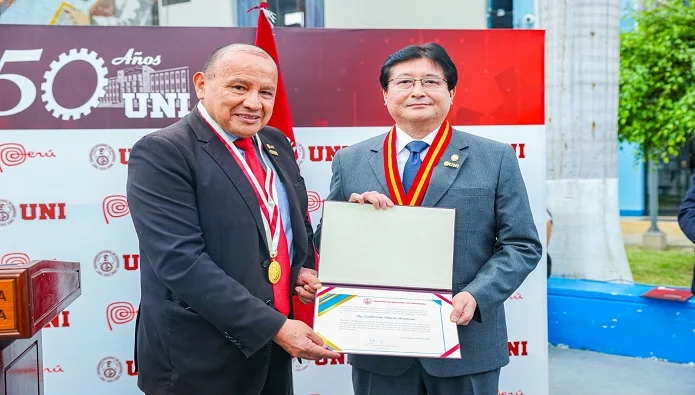
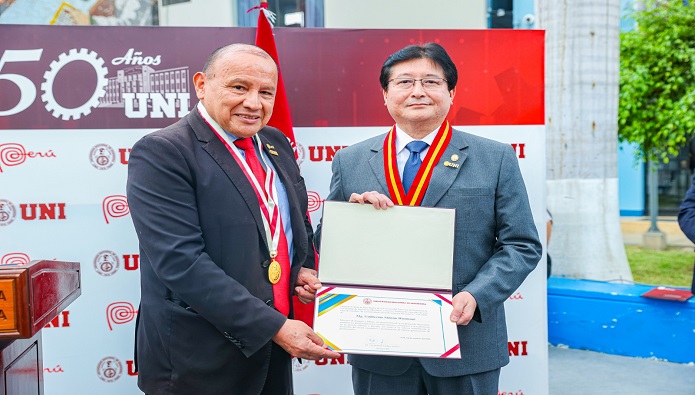
In a ceremony steeped in nostalgia and professional reverence, the current Minister of Energy and Mines, Guillermo Shinno Huamaní, returned to the hallowed halls of his alma mater, the National University of Engineering (UNI), to receive one of the institution’s most prestigious accolades. The event, held at the Plaza of the Faculty of Mechanical Engineering (FIM), served as a poignant bridge between the academic formation of the past and the high-stakes governance of the present.
The distinction, which honors Shinno’s multifaceted career in both the private sector and public administration, underscored the vital role that technical expertise plays in navigating the complex economic landscape of Peru. As an engineer returning to the classrooms where he spent his formative years over four decades ago, Minister Shinno’s recognition serves as a testament to the enduring impact of the UNI on the nation’s leadership.
The Honor: Resolution No. 329-2026
The Faculty of Mechanical Engineering, through the formal issuance of Decanal Resolution No. 329-2026, officially conferred upon Minister Shinno the honorary distinction of "Roberto Heredia Zavala." Beyond this title, the university declared him an "Illustrious Son" of the institution.
The resolution, signed by the Dean of the FIM, Tito Vilchez Vilvez, highlights the Minister’s "fruitful professional trajectory" and his "invaluable contribution to the development of higher education and engineering in the country." This award is not merely symbolic; it represents the university’s commitment to acknowledging alumni who have leveraged their technical background to influence national policy, energy security, and mining development.
Chronology: From Classroom to Cabinet
To understand the significance of this recognition, one must look at the arc of Guillermo Shinno’s career.
- 1980s (The Formative Years): As an undergraduate student at the UNI, Shinno navigated the rigorous academic environment of the Faculty of Mechanical Engineering. During this period, he established the foundations of the analytical thinking and technical problem-solving skills that would later define his professional tenure.
- Early Career (Industry Integration): Following graduation, Shinno entered the private sector, applying mechanical engineering principles to industrial operations. This period was critical in shaping his pragmatic approach to project management and economic efficiency.
- Public Sector Ascension: Transitioning into public service, Shinno became a key architect in the Ministry of Energy and Mines (MINEM). His path was marked by a steady climb through technical and managerial roles, eventually leading to his appointment as the head of the ministry.
- 2026 (The Recognition): Over 40 years after first walking the university grounds, Shinno returned to receive the "Roberto Heredia Zavala" distinction, marking a full circle in his journey from student to statesman.
Supporting Data: The Weight of the Energy and Mining Sector
During his acceptance speech, Minister Shinno provided a sobering reminder of the scale of his responsibilities. The energy and mining sectors are not merely peripheral industries; they are the pillars of the Peruvian economy.
Key Economic Indicators
- Export Dominance: The energy and mining sectors account for approximately 70% of Peru’s total exports. This dependency highlights the necessity for steady, long-term leadership in the ministry.
- Fiscal Revenue: The sectors contribute roughly 20% of the total gross income for the national government, providing the essential liquidity required for public infrastructure and social programs.
- The Investment Pipeline: Minister Shinno revealed a staggering investment portfolio:
- Mining: A project pipeline valued at $64 billion.
- Energy/Other Subsectors: A portfolio of $5 billion, which the Ministry is currently working to bring to fruition.
These figures illustrate the high-stakes environment in which the Minister operates. His role is not simply one of administration, but of unlocking potential and ensuring that these investments translate into tangible national development.
Official Responses and Perspectives
The ceremony was marked by high-level tributes from the leadership of the UNI, reinforcing the synergy between academia and the state.
The Perspective of the FIM
Dean Tito Vilchez Vilvez emphasized that the recognition was deeply rooted in Shinno’s contributions to the national energy matrix. He stated that the FIM views the Minister’s success as a reflection of the quality of education provided by the university. By honoring Shinno, the faculty aims to inspire current students to aspire to similar heights in public service.
The Vision of the Rector
The Rector of the UNI, Arturo Talledo Coronado, focused on the broader mission of the university. He noted that the UNI has a historic responsibility to produce professionals who are not only technically proficient but also socially conscious. Recognizing alumni who occupy significant positions in the public and technical spheres is, according to Talledo, a core component of the university’s cultural mission.
Implications: Engineering for the Vulnerable
Perhaps the most significant aspect of Minister Shinno’s address was his redefinition of the Ministry’s purpose. While the statistics regarding billions of dollars in investments are impressive, Shinno argued that the true metric of success is social impact.
"Our function is to determine how we provide greater benefits and greater development to those who need it most," Shinno stated. He highlighted the need to focus on citizens in remote, vulnerable areas who often see the least benefit from large-scale mining operations.
Bridging the Gap
The Minister’s philosophy suggests a shift in the traditional approach to mining and energy projects. By prioritizing the "most vulnerable," the Ministry aims to:
- Enhance Social License: Reducing the friction between large-scale projects and local communities.
- Equitable Distribution: Ensuring that the 20% of gross income generated by the sector is channeled effectively into healthcare, education, and infrastructure in the regions where these resources are extracted.
- Sustainable Development: Using technical engineering solutions to minimize environmental impact, thereby preserving the quality of life for future generations.
Personal Reflections: A Walk Down Memory Lane
The formal portion of the event gave way to a deeply personal segment as the Minister toured the FIM facilities. For Shinno, the classrooms, laboratories, and hallways were not just physical spaces, but vessels of memory.
"I feel very emotional and happy to return to my alma mater," he confessed. He recounted anecdotes from his time as a student, acknowledging the ex-classmates and professors present who had walked the same path decades prior. For the students in attendance, witnessing a Minister reflect on his time as a student provided a rare glimpse into the human side of leadership. It served as a powerful reminder that today’s students are the potential leaders of tomorrow, and that the bonds formed in university laboratories can last a lifetime.
Conclusion: The Enduring Legacy of the UNI
The recognition of Guillermo Shinno Huamaní by the National University of Engineering is a celebration of more than just a successful career; it is an affirmation of the values of technical rigor, public duty, and lifelong connection to one’s roots.
As the Minister continues to oversee a portfolio of nearly $70 billion, his return to the FIM serves as a grounding mechanism. It reminds the public and the political class that the engineers, scientists, and planners who run the nation’s most critical sectors are shaped by the values instilled in them by their universities.
In closing his speech, Shinno addressed his peers with humility: "I wish to thank all my great friends here present, for this opportunity you give me, for the longings you bring back, for these memories of over 40 years ago that we lived in these classrooms."
As Peru looks toward the future of its energy and mining sectors, the leadership of figures like Minister Shinno—who combine technical mastery with a commitment to the most vulnerable—will be essential. The UNI has successfully highlighted that, in the complex architecture of a nation, the most important elements are the people who build it.