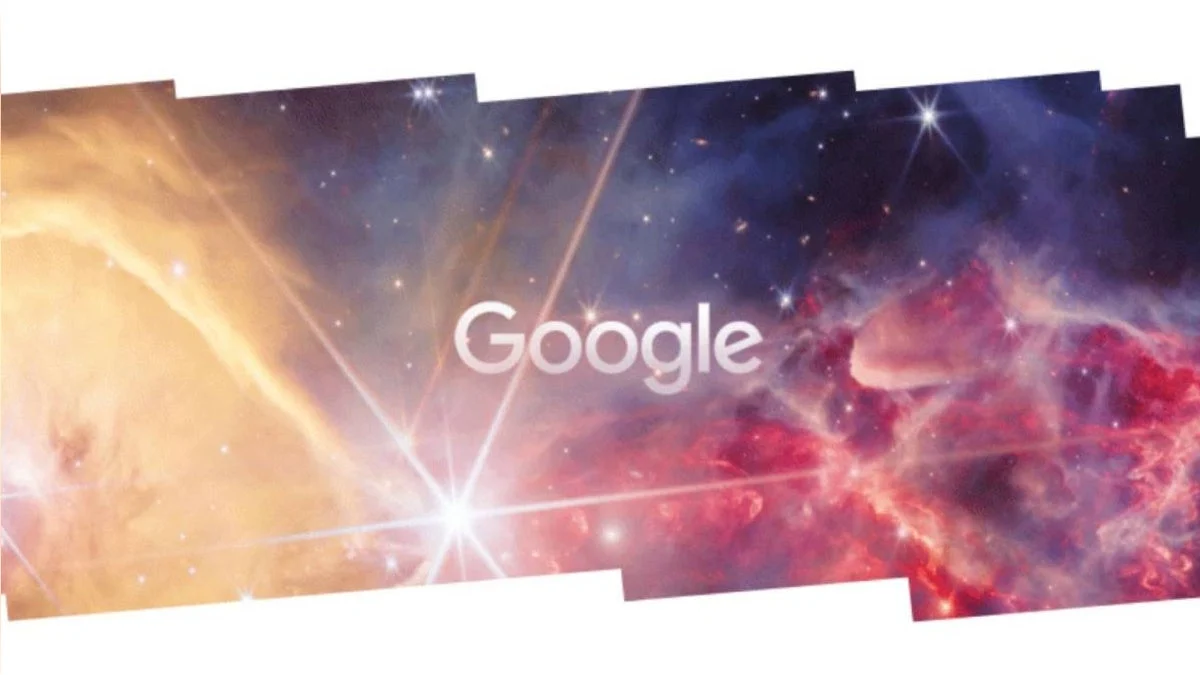
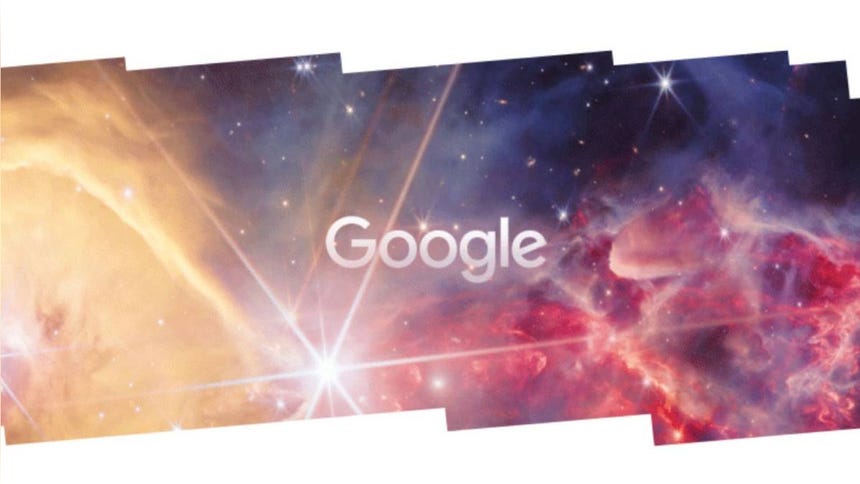
On Tuesday, October 6, 2026, the digital landscape was graced by a breathtaking transformation of the world’s most recognized search engine. Google unveiled a new "doodle"—an artistic modification of its homepage logo—dedicated to the 2026 World Space Week. This year’s tribute is not merely a decorative graphic; it serves as a portal into the awe-inspiring mysteries of the cosmos, featuring a high-definition capture of the "Rosebud" nebula, provided by the cutting-edge James Webb Space Telescope (JWST).
As the global community turns its gaze toward the heavens, this annual celebration acts as a catalyst for discourse on scientific literacy, the rapid privatization of space, and the existential significance of humanity’s reach into the stars.
The Significance of the Doodle: A Window into the Rosebud Nebula
Google’s choice of imagery this year is particularly striking. By highlighting the Rosebud nebula, a star-forming region of immense complexity and beauty, the company is bridging the gap between high-level astrophysics and public consciousness.
The James Webb Space Telescope, a collaborative marvel of NASA, the European Space Agency (ESA), and the Canadian Space Agency (CSA), has revolutionized our understanding of the universe. Unlike its predecessor, the Hubble, the Webb telescope operates primarily in the infrared spectrum, allowing it to peer through the dense, obscuring clouds of dust that characterize stellar nurseries. The "Rosebud" image featured in the Google doodle serves as a poignant reminder that we are currently living in a "Golden Age" of astronomy, where data once considered unreachable is now available at the click of a button.
Chronology: The Roots of World Space Week
While the doodle celebrates the present, the history of World Space Week is anchored in two pivotal moments that reshaped the geopolitical and scientific landscape of the 20th century.
1. The Dawn of the Space Age: Sputnik 1 (October 4, 1957)
The week is framed by the anniversary of the launch of Sputnik 1, the Soviet Union’s groundbreaking satellite. It was the first human-made object to orbit the Earth, a feat that triggered the "Space Race" and fundamentally altered the trajectory of human technology. The "beep-beep" signal of Sputnik broadcasted to the world that the barrier between Earth and the void had been breached.
2. The Foundation of Space Law: The Outer Space Treaty (October 10, 1967)
Ten years after Sputnik, the international community recognized the need for a framework to govern the cosmos. The Outer Space Treaty, which entered into force on October 10, 1967, established the fundamental principles that space should be the "province of all mankind" and prohibited the placement of nuclear weapons in orbit.
In December 1999, the United Nations General Assembly officially declared the period between October 4 and 10 as World Space Week, ensuring that these two anniversaries would forever be linked in the global calendar to promote the peaceful use of space for the benefit of all nations.
"Rocket Revolution": The Theme of 2026
The theme for this year, "Rocket Revolution," marks a departure from the purely academic celebrations of the past. It reflects a shift in the aerospace industry from state-led exploration to a hybrid model characterized by rapid technological iteration and commercial accessibility.
The Rise of Reusable Launch Vehicles
The term "Rocket Revolution" refers to the massive strides made in launch technology. The cost of placing a kilogram of payload into orbit has plummeted in recent years, largely due to the successful implementation of reusable first-stage boosters and the rise of private aerospace firms. This economic shift has democratized access to orbit, allowing smaller nations, universities, and commercial startups to contribute to the global space infrastructure.
Implications for the Future
The implications of this revolution are manifold. With more satellites being launched than ever before, we are witnessing an era of global connectivity, improved climate monitoring, and unprecedented data collection. However, this also brings challenges regarding orbital congestion and space debris, topics that are likely to dominate the discourse during the various international conferences and workshops being held throughout this week.
The Broader Context: Why Space Science Matters
World Space Week is more than just a commemoration; it is an educational initiative designed to inspire the next generation of scientists, engineers, and dreamers. Across the globe, museums, schools, and astronomical societies are hosting:
- Public Observational Nights: Allowing citizens to view the moon, planets, and distant nebulas through telescopes.
- Scientific Workshops: Focused on data analysis, satellite technology, and the search for exoplanets.
- International Symposia: Where policymakers and industry leaders discuss the long-term sustainability of space exploration.
For Google, this is a strategic engagement with its mission to organize the world’s information. By highlighting these events, the tech giant is effectively acting as a digital gateway, funneling millions of curious users toward scientific content that might otherwise remain confined to academic circles.
Supporting Data: The Commercialization of Space
Recent studies underscore the shift highlighted by the "Rocket Revolution" theme. As of 2026, the space economy has grown to a multi-hundred-billion-dollar industry. The reliance on satellite data for daily life—from GPS navigation to precision agriculture and climate change tracking—has never been higher.
Government agencies like NASA have increasingly turned to public-private partnerships. This model has allowed NASA to focus on deep-space exploration, such as the Artemis program and the pursuit of Mars, while offloading routine low-Earth orbit logistics to the private sector. This transition is not without its critics, who argue that the commercialization of space requires stricter international regulation to prevent the monopolization of celestial resources and to ensure the preservation of the space environment.
Official Responses and Global Engagement
The United Nations Office for Outer Space Affairs (UNOOSA) has issued a statement emphasizing that the 2026 celebration is a call to action. "The ‘Rocket Revolution’ is not just about the engineering of faster or cheaper launch systems," said an official spokesperson. "It is about the human spirit’s capacity to innovate and the collective responsibility we share to ensure that space remains a space for peaceful cooperation."
National space agencies, including the ESA and the JAXA (Japan Aerospace Exploration Agency), have also joined the chorus, announcing new collaborative projects intended to utilize the "Rocket Revolution" to solve terrestrial problems, specifically in the areas of disaster management and telecommunications infrastructure in developing regions.
Implications: A New Era for Humanity
As we move through the 2026 World Space Week, the implications for humanity are profound. We are transitioning from being a species that visits space to a species that lives and operates within it.

The Scientific Frontier
The data coming back from the James Webb Space Telescope—the very data that inspired the Google doodle—is challenging our fundamental understanding of the early universe. By observing galaxies that formed shortly after the Big Bang, we are effectively looking back in time, unraveling the origins of stars, galaxies, and perhaps even the conditions necessary for life.
The Economic Frontier
The "Rocket Revolution" promises to turn space into an extension of the global economy. Whether through asteroid mining, orbital manufacturing, or the development of space-based solar power, the next decade will likely define the long-term economic trajectory of our civilization.
The Ethical Frontier
With this progress comes the need for ethical reflection. Who owns the resources of the moon? How do we manage the increasing amount of space debris? How do we ensure that space exploration remains an inclusive endeavor that benefits all of humanity, rather than just a few powerful corporations or nations?
Conclusion: Looking Upward
The Google doodle for the 2026 World Space Week serves as a subtle, yet powerful, nudge for humanity to look up. It invites us to appreciate the intersection of art, technology, and science. As we navigate the complexities of the 21st century, the lessons learned from the Sputnik era and the advancements of the "Rocket Revolution" provide a roadmap for the future.
The 2026 celebration is a testament to the fact that while our feet are firmly planted on Earth, our aspirations are increasingly tethered to the stars. Whether through the lens of a telescope or the launch of a new satellite, the pursuit of space exploration remains one of the most unifying and ambitious projects in human history. As we continue to celebrate this week, we are reminded that the universe is vast, mysterious, and waiting for us to uncover its secrets—one breakthrough at a time.