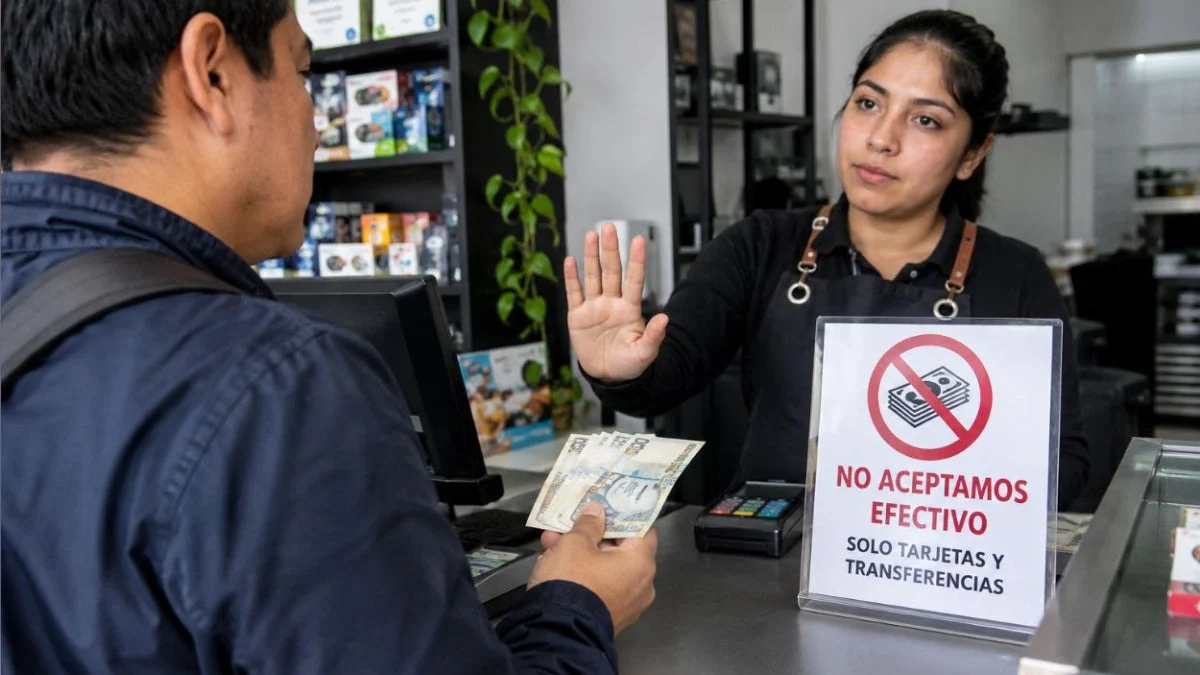
Introduction: The Conflict Between Modernization and Consumer Rights
In an era increasingly dominated by digital wallets, QR codes, and contactless card payments, the traditional use of physical cash is facing unexpected friction at the point of sale. Recent directives from the National Institute for the Defense of Competition and the Protection of Intellectual Property (Indecopi) in Peru have brought this tension to the forefront. The regulatory body has issued a stern warning to commercial establishments: the arbitrary rejection of legal tender—specifically banknotes and coins—is not only a poor business practice but a potential violation of consumer protection laws.
As retailers move toward "cashless" environments, often citing security concerns or administrative efficiency, Indecopi has intervened to remind the market that the Peruvian Sol remains the sovereign currency, and its acceptance is mandatory for all private transactions under the nation’s legal framework.
The Legal Foundation: Understanding "Forced Acceptance"
The core of Indecopi’s intervention lies in the interpretation of the Organic Law of the Central Reserve Bank of Peru (BCRP). Specifically, Article 43 of this law establishes the principle of "forced acceptance" (aceptación forzosa).
This legal provision dictates that all currency issued by the BCRP—the sole authorized issuer in the country—must be accepted for the settlement of any private obligation. From a legal standpoint, a consumer presenting a legitimate S/200 note to pay for a cup of coffee is fulfilling their obligation, and a merchant who refuses this tender without a valid, objective reason is effectively obstructing a transaction that is protected by law.
Indecopi emphasizes that the "forced acceptance" rule is not merely a suggestion; it is a pillar of the monetary system that ensures the stability and usability of the national currency. When a business unilaterally decides to reject certain denominations—such as the S/200 bill—they are unilaterally altering the terms of legal tender, which falls outside the scope of their commercial authority.
Chronology of a Policy Clash: The Chimbote Precedent
The recent clarification from Indecopi was not issued in a vacuum. It was the direct result of a regulatory review prompted by a specific incident in Chimbote.
The Triggering Event
A commercial establishment in this coastal city had implemented a strict internal policy refusing the use of S/200 banknotes for any transaction. The business justified this by citing a generalized fear of receiving counterfeit currency, arguing that the security risks associated with the high-denomination bill outweighed the convenience for the customer.
The Regulatory Investigation
Indecopi’s consumer protection division intervened, evaluating whether the fear of counterfeiting constituted a "valid reason" for such a broad prohibition. Their findings were decisive:
- Lack of Proportionality: The regulatory body determined that a generalized fear of counterfeiting does not grant a merchant the right to categorically ban an entire denomination.
- Individualized Analysis Required: Indecopi ruled that merchants must assess the validity of a banknote on a case-by-case basis. If a bill is suspected of being fake, the merchant has the right to scrutinize it or request an alternative; however, they cannot preemptively reject all bills of that value.
- The Conclusion: The policy was deemed a restriction on consumer rights, as it unfairly limited the means by which a consumer could exercise their right to purchase goods and services.
Supporting Data: The Balance Between Security and Inclusion
The shift toward digital payments in Peru has been exponential. According to recent reports from the BCRP and various financial sector analysts, the adoption of digital wallets like Yape and Plin has transformed the retail landscape. While this transition offers significant benefits—reduced handling of physical cash, faster transaction times, and enhanced security—it has also created a digital divide.
The Risks of Digital Exclusivity
While businesses argue that digital payments reduce the risk of robbery and the logistical burden of cash management, Indecopi notes that these benefits do not grant a waiver from legal obligations. Data suggests that a significant portion of the population remains "unbanked" or relies exclusively on cash for daily survival. By forcing digital payments, merchants risk excluding vulnerable segments of the population, including the elderly and those without consistent internet access.
When Is Rejection Justified?
It is critical to distinguish between arbitrary rejection and justified refusal. Indecopi clarifies that merchants are legally permitted to refuse currency only under specific, documented circumstances:
- Evidence of Counterfeiting: If a banknote lacks the security features required by the BCRP (e.g., missing watermarks, incorrect texture, or failed UV light tests).
- Significant Deterioration: If a note is so damaged that its authenticity cannot be verified or it has been rendered unusable by standard banking criteria.
- Withdrawn Currency: If the Central Bank has officially removed the currency from circulation and it is no longer valid for trade.
In any other case, a merchant’s refusal to accept legal tender—simply because they "don’t like" the denomination or "don’t have change"—is legally indefensible.
Official Responses and Regulatory Outlook
Indecopi’s stance is supported by a growing body of consumer protection jurisprudence that favors the customer’s ease of payment. The authority has made it clear that while businesses are free to promote digital payment methods, they cannot do so through coercive measures.
Promoting vs. Imposing
"Suppliers may promote the use of cards and digital wallets for security and efficiency," states an official Indecopi spokesperson. "However, these incentives do not exempt them from complying with existing regulations. A policy that discourages cash is acceptable, but a policy that bans it is a violation."
This distinction is vital for business owners. Retailers are encouraged to offer discounts or rewards for digital payments to entice consumers, rather than implementing "no cash" signs that antagonize those who prefer or rely on physical currency.
Implications for Businesses and Consumers
For Business Owners
- Update Internal Policies: Businesses that have implemented "no cash" or "no S/200 bills" policies should immediately revise them to ensure they align with Indecopi’s interpretation of the law.
- Staff Training: Cashiers and store managers must be trained to identify counterfeit currency properly, rather than relying on blanket rejections.
- Transparency: If a business has a genuine issue (such as a temporary lack of change), they must communicate this clearly to the consumer without implying that the currency itself is illegitimate.
For Consumers
- Know Your Rights: Consumers have the right to pay with any valid BCRP-issued currency. If a store refuses your money, you are entitled to file a formal complaint with Indecopi through their digital channels.
- Documentation: In the event of a dispute, try to secure evidence of the refusal, such as a photograph of the policy sign or a witness statement, which will strengthen any subsequent complaint.
- Assertiveness: Calmly informing a business owner of their obligations under the BCRP Organic Law is often enough to resolve the situation without the need for formal intervention.
Conclusion: A Balanced Future
The evolution toward a digital economy in Peru is inevitable and, in many ways, desirable. However, the path toward modernization must not come at the cost of consumer choice or the integrity of the national currency. Indecopi’s recent guidance serves as a necessary "reset," reminding the commercial sector that while technology is the future, the law remains the foundation of the present.
By requiring businesses to perform individualized assessments rather than sweeping bans, Indecopi is protecting the rights of all citizens to participate in the economy, regardless of whether they pay with a smartphone or a crisp banknote. In the end, the goal is a marketplace that is both efficient for the merchant and inclusive for the consumer—a balance that is only possible when the fundamental rules of the monetary system are respected by all.