As the frequency of extreme weather events accelerates, the Peruvian private sector faces a critical juncture. The days of treating natural disasters as "anomalies" have passed; in the current climate landscape, the Fenómeno El Niño (FEN) and related meteorological phenomena are recurring variables that threaten the structural integrity, supply chain continuity, and financial stability of businesses across the nation.
Recent analysis from Avla Perú serves as a stark warning: the failure to integrate climate risk into financial strategy is no longer just a management oversight—it is an existential threat to operations in sectors ranging from agroindustry to logistics.
Main Facts: A Paradigm Shift in Risk Perception
The traditional business model in Peru, which often prioritized reactive recovery over proactive resilience, is being forced to evolve. According to a comprehensive survey conducted by the Central Reserve Bank of Peru (BCRP) involving 345 non-financial companies, 83% of firms have begun implementing preventive measures to mitigate the impact of El Niño.
However, the nature of these measures remains largely operational rather than financial. Companies are prioritizing physical hardening and logistical agility:
- Logistical Redundancy: 42% of firms have established alternative routes to circumvent potential infrastructure collapse.
- Operational Continuity: 41% have formalized business continuity plans.
- Physical Infrastructure Reinforcement: 40% have invested in fortifying facilities, a figure that surges to 94% among companies operating in the northern regions of the country, which are historically the most susceptible to torrential rains and flooding.
Despite these efforts, a glaring gap persists: financial protection. Avla Perú estimates that only 5% of Peruvian companies currently hold comprehensive insurance against natural disasters. This leaves the vast majority of the private sector exposed to the full weight of capital loss should a catastrophic event occur.
Chronology: From Exceptional Events to a New Normal
To understand the current urgency, one must look at the shifting frequency of climate events. Historically, the cycle of El Niño occurrences in Peru was estimated at roughly one major event every 19 years. Contemporary data from global risk analysis firm Marsh indicates that this interval has shrunk to once every six years.
The 2017 Benchmark
The most significant modern reference point remains the "Coastal Niño" (Niño Costero) of 2017. The data provided by the Superintendency of Banking, Insurance, and Private Pension Funds (SBS) illustrates the magnitude of the impact:
- Total Claims: The event triggered a reserve of over 16,000 insurance claims.
- Economic Cost: The financial value of these claims amounted to approximately US$ 660 million (roughly S/ 2.19 billion at the time).
- Systemic Ripple Effects: The 2017 event did not merely affect individual businesses; it sent shockwaves through the entire financial and insurance ecosystem, exposing the fragility of existing infrastructure.
This historical data serves as a barometer for what firms can expect in the coming years if they fail to bridge the protection gap.
Supporting Data: The Insurance Gap and Economic Reality
The state of disaster risk management in Peru is compounded by a relatively underdeveloped insurance market. When compared to global and regional benchmarks, the Peruvian insurance sector shows significant room for growth:
- Insurance Penetration: The Peruvian insurance market represents only 2% of the country’s GDP. This stands in stark contrast to the Latin American average of 3.3% and the global average of 7.2%.
- Infrastructure Vulnerability: Perhaps most alarming is the state of national infrastructure; only 24.3% of the country’s national road network currently carries insurance coverage.
These statistics suggest that if a major climate event were to occur today, the burden of reconstruction would fall disproportionately on the public treasury and the private balance sheets of individual companies, neither of which are fully equipped to absorb such shocks without long-term damage to economic growth.
Sectoral Vulnerability: Who is at Risk?
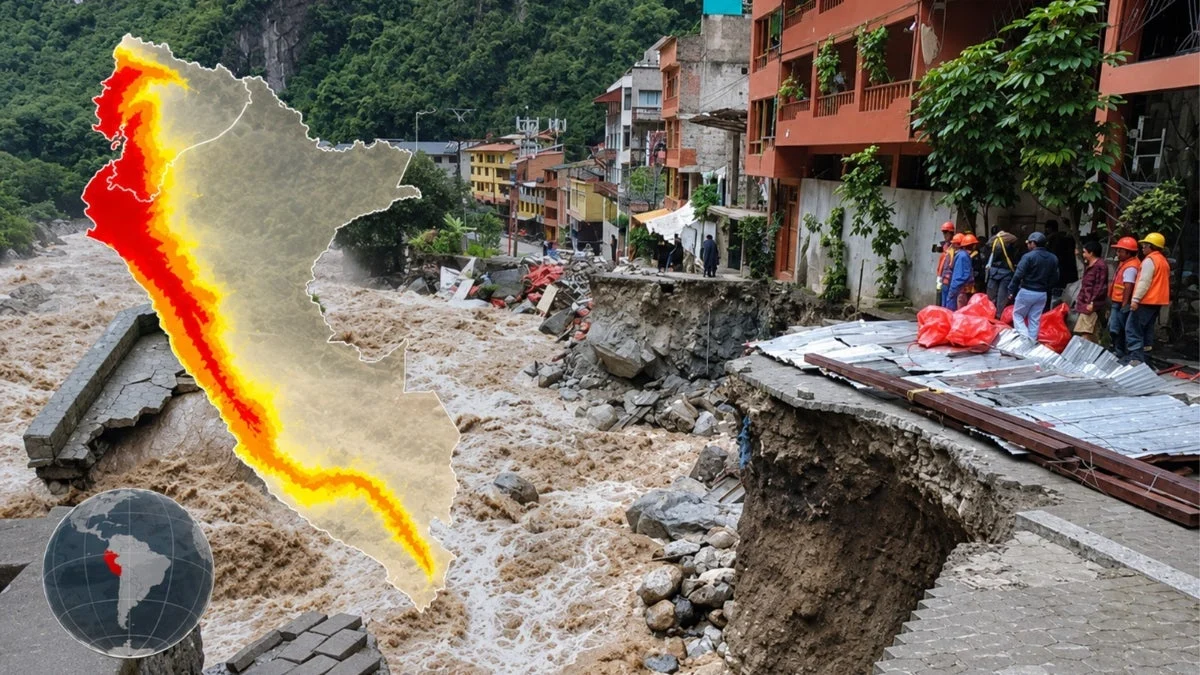
The impact of climate change is not evenly distributed. Geography dictates destiny for many Peruvian industries. Regions such as Piura, Tumbes, Lambayeque, La Libertad, Áncash, and Lima are identified as the primary zones of concern due to their high susceptibility to landslides (huaicos), intense rainfall, and river flooding.
The Most Exposed Sectors:
- Agroindustry: As a cornerstone of the Peruvian export economy, the agroindustry is uniquely vulnerable. Flooding destroys crops, washes away topsoil, and renders irrigation systems inoperable, leading to massive harvest losses.
- Logistics and Transport: The destruction of road infrastructure effectively severs the arteries of the economy. When trucks cannot move, the entire supply chain—from raw materials to finished goods—grinds to a halt.
- Manufacturing: Plant shutdowns due to flooded facilities or interrupted power grids result in immediate losses in productivity and missed delivery deadlines, which can cause long-term damage to client relationships.
- Commerce: The retail and distribution sectors suffer from both supply chain disruptions and diminished consumer demand during crises.
Official Responses and Strategic Imperatives
Walter Fernández, General Manager of Avla Perú, has been vocal about the strategic necessity of shifting the corporate mindset. "The principal error of a company is to think that natural disasters are exceptional occurrences that will not happen again," Fernández notes.
He argues that the Fenómeno El Niño is not a one-off tragedy but a permanent feature of the operating environment. Consequently, the focus must shift from "disaster recovery" to "financial resilience."
The Call for Financial Integration
Preventive measures cannot be limited to sandbags and reinforced roofs. True resilience requires:
- Risk-Adjusted Financial Planning: Companies must factor potential downtime and asset loss into their annual budgets.
- Insurance as a Strategic Asset: Moving beyond mandatory insurance to specialized coverage that protects against business interruption, supply chain failure, and liquidity gaps during recovery periods.
- Collaboration with Public Policy: Businesses must advocate for and participate in public-private partnerships aimed at improving national infrastructure resilience, particularly in the transport sector.
Implications: The Long-Term Economic Outlook
The implications of failing to address these risks are severe. If the Peruvian private sector remains largely uninsured and unprepared, the economic volatility caused by each successive El Niño will deepen. This leads to:
- Capital Flight: Investors may view industries in high-risk zones as "unbankable" or too volatile, increasing the cost of capital for firms operating in those regions.
- Supply Chain Fragility: As businesses struggle to recover, the resulting shortages can drive up inflation, affecting the broader economy and reducing household purchasing power.
- Slower GDP Growth: Given the importance of the agroindustrial and manufacturing sectors to the Peruvian economy, the cumulative impact of frequent climate shocks acts as a drag on national development.
Conclusion: A Call to Action
The data is unequivocal: the frequency of extreme weather events is rising, and the financial exposure of Peruvian businesses is significant. While operational preparedness has improved—particularly in the north—the financial foundations of business continuity remain fragile.
Moving forward, the successful enterprise in Peru will be the one that views climate risk not as an external force of nature, but as a manageable component of their balance sheet. By closing the insurance gap, investing in resilient infrastructure, and formalizing robust financial continuity plans, the Peruvian private sector can move from a posture of vulnerability to one of sustainable growth, regardless of what the next El Niño brings.
The transition from viewing disasters as "surprises" to viewing them as "calculated risks" is the defining challenge for the next decade of Peruvian industry. The tools to mitigate these risks exist; the question is whether the corporate sector will act with the urgency that the changing climate demands.