Introduction: The Legislative Crossroads
The Peruvian legislative landscape finds itself at a critical juncture as the Senate prepares to undertake a rigorous review of the executive’s request for delegated legislative powers. Following a contentious and protracted approval process in the Chamber of Deputies, the bill—which centers on critical pillars such as citizen security and national preparedness for the El Niño phenomenon—now moves to the upper house.
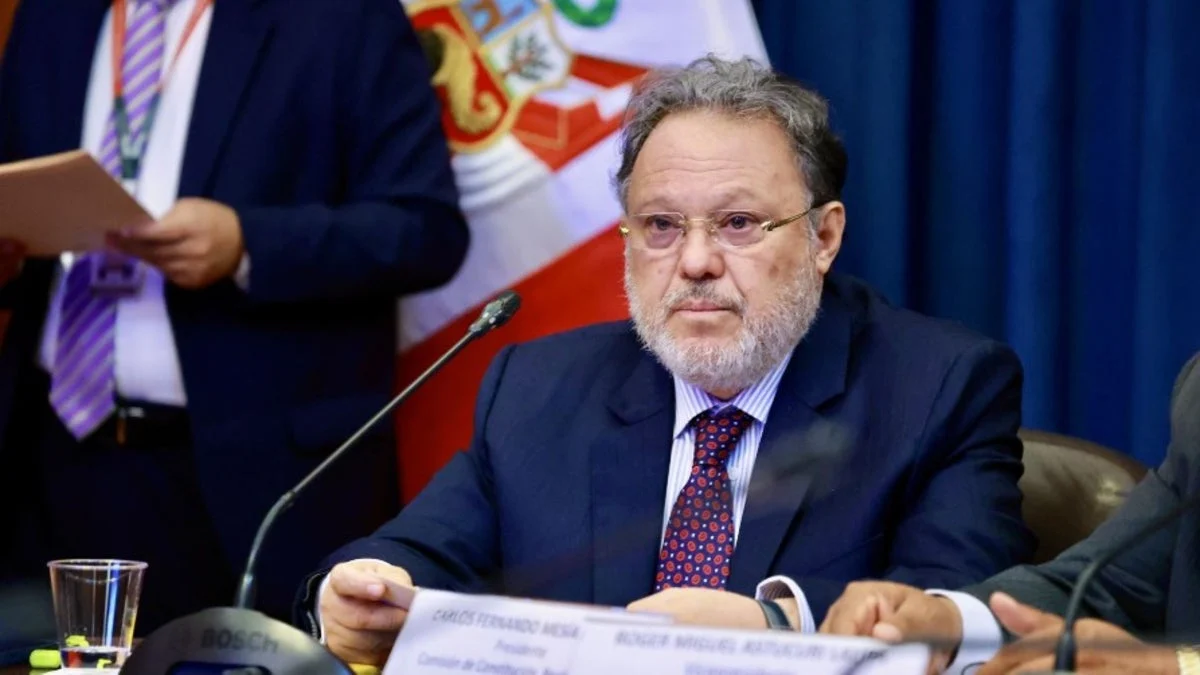
Carlos Mesía, president of the Senate’s Constitution Committee, confirmed this Friday that the Senate will formally commence its deliberation on the proposal this coming Tuesday. His statements, delivered during an interview on the RPP program ‘Las Cosas Como Son,’ suggest that while the executive branch is seeking a swift passage, the Senate intends to exercise its constitutional prerogative for "second-tier reflection." This ensures that the final product is not merely a reflection of the lower house’s initial draft, but a refined, legally sound framework capable of addressing the country’s most pressing crises.
Chronology: From the Chamber Floor to the Senate Chamber
The path to this moment has been marked by political friction and procedural delays. The Chamber of Deputies, having spent weeks debating the scope of the delegated powers, finally reached a majority consensus late Thursday evening.
The Legislative Timeline:
- The Preliminary Phase: The executive branch submitted its request for legislative faculties, citing an urgent need to bypass traditional bureaucratic bottlenecks to combat rising crime rates and mitigate the environmental and economic impacts of the looming El Niño phenomenon.
- The Deputies’ Debate: The lower house engaged in a series of heated sessions characterized by intense partisan rhetoric. Critics accused the government of overreaching, while proponents argued that the status quo had become unsustainable.
- The Thursday Vote: After a grueling session, the Chamber of Deputies passed the draft bill. While some factions celebrated this as a "victory over the extremes," others lamented the concessions made to secure the necessary votes.
- The Friday Announcement: Carlos Mesía announced that the official text had been received by the Senate. He signaled that the Senate’s committee process would begin on Tuesday, setting the stage for what is expected to be a more technical, albeit equally rigorous, debate.
Supporting Data: Why Delegated Powers?
The executive branch has justified its request through a two-pronged strategy focused on the most vulnerable aspects of the current administration’s agenda:
- Citizen Security: With public perception of safety at a multi-year low, the government aims to reform police protocols, tighten sentencing for repeat offenders, and improve intelligence-sharing mechanisms. The requested powers would allow the Executive to enact these changes via legislative decree rather than waiting for the often-slow committee-to-plenary pipeline.
- The El Niño Phenomenon: Meteorological data indicates that the upcoming El Niño season could be one of the most destructive in a decade. The Executive argues that the power to reallocate budget lines and accelerate infrastructure repair—such as drainage systems and riverbank reinforcement—is a matter of national survival.
Official Responses and Political Implications
The most significant tension currently exists between the two houses of the legislature. Carlos Mesía was clear in his assessment: the Senate is not a rubber stamp.
The Senate’s Stance
"There is no possibility that the ruling party can impose a bill at its whim; it will be the result of the discussion," Mesía asserted. He emphasized that the Senate retains the authority to modify the text or incorporate new provisions, provided they remain within the thematic scope of security and climate preparedness. For Mesía, the principle of a bicameral system is the "second reflection"—a safeguard against legislative haste.
Tensions with the Chamber of Deputies
Mesía’s comments reflected a palpable frustration regarding the performance of the lower house. He described the debates in the Chamber of Deputies as "atrocious," noting that the level of discourse had devolved into personal insults rather than policy critique. He pledged that the Senate would maintain a higher standard of decorum, ensuring that all political viewpoints are respected, even when fundamental disagreements persist.
Critique of the Lower House’s Competence
In a candid and controversial assessment, Mesía characterized the Chamber of Deputies as a "young and inexperienced" body. He noted that many of its members are serving their first terms and, in his view, struggle with the technical complexities of legislative drafting.
Specifically, Mesía leveled sharp criticism at the chair of the Energy and Mines Committee, Yenifer Paredes. He claimed that her inability to articulate complex policy without significant struggle was symptomatic of a broader issue of inexperience within the lower house. This public rebuke highlights a deepening divide between the veteran-led Senate and the newer, more polarized Chamber of Deputies.
The Broader Implications: Democracy and Oversight
The upcoming Senate debates are not merely about the specific contents of the bill; they are about the nature of Peruvian governance. By insisting on their right to amend the bill, the Senate is reaffirming its role as a check on executive power.
Constitutional Interpretations
Mesía noted that while the executive branch and the Chamber of Deputies might prefer an "as-is" approval, such a move would undermine the very structure of the bicameral system. The Senate, he argued, acts as the "supreme organ of interpretation." By engaging in a robust review, the Senate is protecting the integrity of the law. If the Senate identifies flaws in the security measures or the disaster relief allocations, it has both the moral and legal obligation to rectify them before the decrees are signed into law.
The Risk of Gridlock
However, this approach carries risks. Critics of the Senate’s planned modifications argue that time is a luxury Peru does not have. Every day spent debating in the Senate is a day lost in the fight against crime and the preparation for environmental disasters. The ruling party, eager to show results, may view the Senate’s "second reflection" as a deliberate attempt to sabotage their agenda.
Conclusion: A Test of Institutional Maturity
As Tuesday approaches, all eyes are on the Senate. The outcome of these deliberations will provide a definitive answer as to whether the two houses of the Peruvian legislature can achieve a functional synergy or if they are destined to remain in a state of permanent procedural friction.
For the citizens of Peru, the stakes are high. The delegated powers, if executed correctly, could lead to a more secure and resilient nation. If, however, they become trapped in a cycle of legislative ping-pong between the Deputies and the Senators, the result will be a continued stagnation of public policy at a time when decisive action is required.
Carlos Mesía’s call for a respectful, substantive debate is a welcome signal, but the political reality suggests that the road ahead will be anything but simple. The Senate’s ability to refine the executive’s proposals without obstructing the urgent needs of the country will be the ultimate test of its political maturity and its commitment to the constitutional order. The coming weeks will reveal if the "second reflection" is a path toward better governance or merely another layer of political complexity in an already fractured legislative landscape.