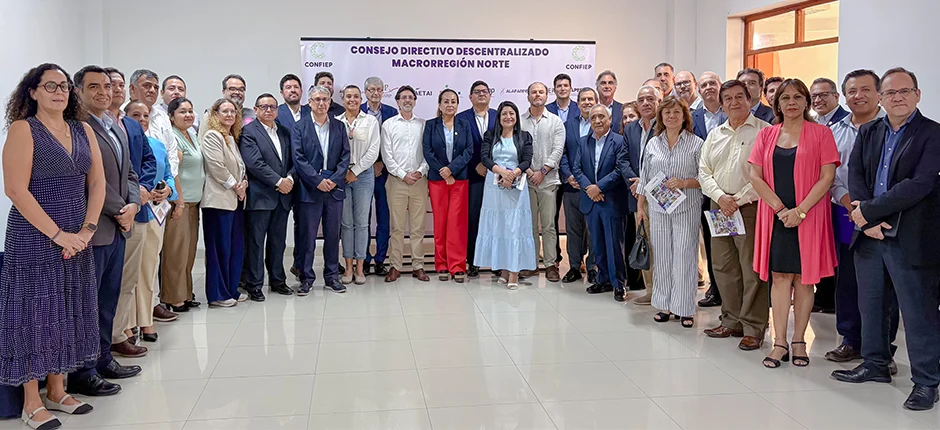
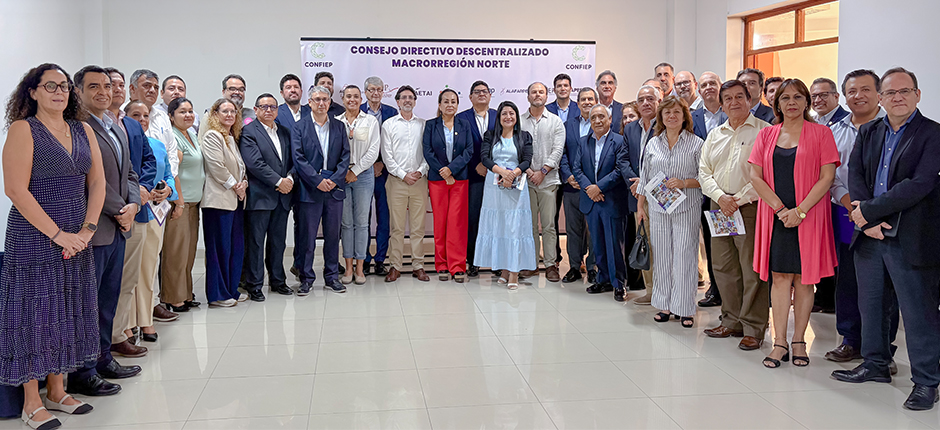
PIURA, PERU – In a high-stakes mobilization aimed at safeguarding the economic and social stability of Northern Peru, the Confederation of Private Business Institutions (CONFIEP) convened a decisive summit in Piura. As the nation braces for the potential catastrophic impacts of the El Niño Phenomenon (FEN), leaders from the nation’s largest business guilds, regional chambers of commerce, and government officials gathered to architect a unified, rapid-response strategy.
The urgency of the meeting, held at the headquarters of the Piura Chamber of Commerce on September 1, 2026, underscored a growing consensus: the private sector must serve as the primary engine of agility in the face of what climatologists predict could be a transformative environmental event.
The Call for Strategic Articulation
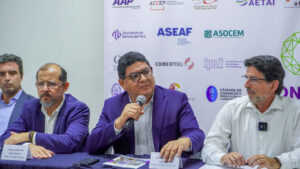
Jorge Zapata Ríos, president of CONFIEP, opened the session with a sobering assessment of the timeline. With only a narrow window of two to three months remaining before the peak of the phenomenon, he argued that the bureaucratic inertia often associated with public sector response must be bypassed by private-sector speed.
“The next few months are critical,” Zapata Ríos stated during the summit. “We are here to facilitate action. The private sector possesses the inherent flexibility and logistical capacity to execute projects with the agility that this emergency demands. Our role is to bridge the gap between planning and implementation.”
The summit served as a "Decentralized Board of Directors" meeting for the Northern Macro-Region, signaling a shift in how the business community interacts with local governance. By bringing together national industry leaders and regional stakeholders, CONFIEP aims to ensure that resources are deployed where they are most needed, avoiding the pitfalls of centralized, slow-moving disaster response mechanisms.
Chronology of the Mobilization
The mobilization in Piura represents the culmination of weeks of private-sector pressure to formalize a collaborative framework.

- Early August 2026: Initial reports from international meteorological agencies heighten alarms regarding sea surface temperature anomalies off the Peruvian coast.
- Mid-August 2026: CONFIEP begins internal consultations with regional chambers of commerce in Piura, Lambayeque, and La Libertad to assess readiness levels.
- Late August 2026: Coordination meetings are established between the private sector and local municipal authorities in the Piura region to identify critical infrastructure points—such as drainage systems and bridge reinforcements—that require immediate intervention.
- September 1, 2026: The formal Summit at the Piura Chamber of Commerce takes place, involving an unprecedented gathering of national guilds and regional representatives to finalize the operational roadmap for the FEN.
A Multi-Sectoral Coalition
The breadth of representation at the summit highlighted the multifaceted threat posed by El Niño. The potential damage is not limited to agriculture; it threatens the entire supply chain, telecommunications, healthcare delivery, and physical infrastructure.
Key industry leaders in attendance included:
- Infrastructure and Construction: Alejandro Garland (CAPECO) and Juan Pacheco (AFIN) discussed the reinforcement of vital transport corridors.
- Transportation and Logistics: Karsten Kunckel (AAP) focused on maintaining the fluidity of vehicular movement despite potential flooding.
- Healthcare: Francisco Feliu (ACP) and Diego Hovispo (ALAFARPE) coordinated strategies to ensure the continuity of essential medical supplies and hospital operations in high-risk zones.
- Media and Communication: Michelle Szejer (SNRTV) emphasized the role of media in public awareness and emergency broadcasting.
Regional presence was equally robust, featuring the leadership of chambers from Piura, Ancash, Cajamarca, La Libertad, Lambayeque, and Sullana. This regional network is crucial, as the impact of El Niño is geographically specific, requiring localized knowledge to mitigate damage to key industries such as agro-export, which serves as the backbone of the Northern Peruvian economy.

Official Responses and Cross-Sector Coordination
The summit was not limited to business leaders; it functioned as a rare roundtable between the private sector and key government and international actors.
The presence of UNICEP representative Javier Álvarez and the Director of the International Labour Organization (ILO) for the Andean Countries, Ítalo Cardona, signaled the global concern regarding the potential humanitarian toll. Their participation ensures that the private sector’s mitigation strategies are aligned with international standards for disaster resilience and labor protection.
Governmental participation included representatives from the Congress of the Republic, such as Senators Nilza Chacón and Karla Schaefer, alongside local leaders like the mayors of Piura and the 26 de Octubre district. PROINVERSIÓN, represented by Denisse Miralles, provided insights into how decentralized investments could be leveraged to speed up infrastructure projects that double as mitigation measures.
“The collaboration between the Autoridad Administrativa del Agua (Jequetepeque-Zarumilla) and private stakeholders is a testament to the new reality,” noted one observer at the summit. “We are moving from a model of requesting state aid to a model of co-investing in disaster prevention.”
Economic and Social Implications
The implications of an unmitigated El Niño event for Peru are profound. Historically, the phenomenon has caused billions of dollars in losses, destroyed vital road networks, and devastated crop yields. However, the 2026 approach adopted by CONFIEP shifts the paradigm from recovery to resilience.
1. Infrastructure Hardening
The focus on infrastructure, supported by the Association for the Promotion of National Infrastructure (AFIN) and the Chamber of Real Estate Developers (CODIP), is centered on "hardening" critical assets. This includes reinforcing drainage systems in urban areas to prevent the catastrophic flooding seen in previous decades, which often paralyzed commerce for months.
2. Supply Chain Continuity
With leaders from the mining sector, such as those from Compañía de Minas Buenaventura, present, there is a clear effort to ensure that the primary extractive industries—which drive national exports—remain operational. By coordinating with electricity providers like CVC Energía, the coalition aims to prevent power outages that could cripple industrial output during severe storms.
3. Public Health and Social Stability
The inclusion of the Association of Private Clinics (ACP) and pharmaceutical laboratories (ALAFARPE) highlights the recognition that a natural disaster is also a public health crisis. The strategy involves pre-positioning medicine and ensuring that private medical facilities can act as surge-capacity centers if public hospitals are overwhelmed.
A New Governance Model?
The Piura summit may serve as a blueprint for future public-private partnerships in Peru. By decentralizing the decision-making process and involving regional chambers of commerce, the business sector is demonstrating that it can effectively manage risk at the local level.

However, the success of this initiative will ultimately depend on the political will of the central government to remove regulatory hurdles that often stall private-sector investments in public infrastructure. As Jorge Zapata Ríos suggested, the "agility" of the private sector is only useful if the government provides the regulatory "green light" to execute.
Conclusion
The mobilization of the Northern Macro-Region is a clear signal that the private sector is no longer content to wait for the storm to break. Through this unprecedented coordination, the business community is positioning itself as an essential partner in national security.
As Peru faces the daunting challenge of El Niño in the final quarter of 2026, the unity displayed in Piura offers a glimmer of hope. If the collaborative spirit between industry guilds, regional chambers, and government officials holds, the nation will be better prepared than ever before to mitigate the environmental and economic damage of what is expected to be a volatile season. The focus now shifts from the meeting rooms of Piura to the ground, where the implementation of these defensive measures will determine the resilience of the North.