By ProActivo Editorial Team
On October 1, 2001, a monumental chapter in the history of global mining began when Compañía Minera Antamina officially commenced commercial operations in the rugged peaks of the Ancash region, Peru. Twenty-five years later, the project stands not merely as a high-production copper and zinc powerhouse, but as a socio-economic blueprint for modern, sustainable, and inclusive mining.
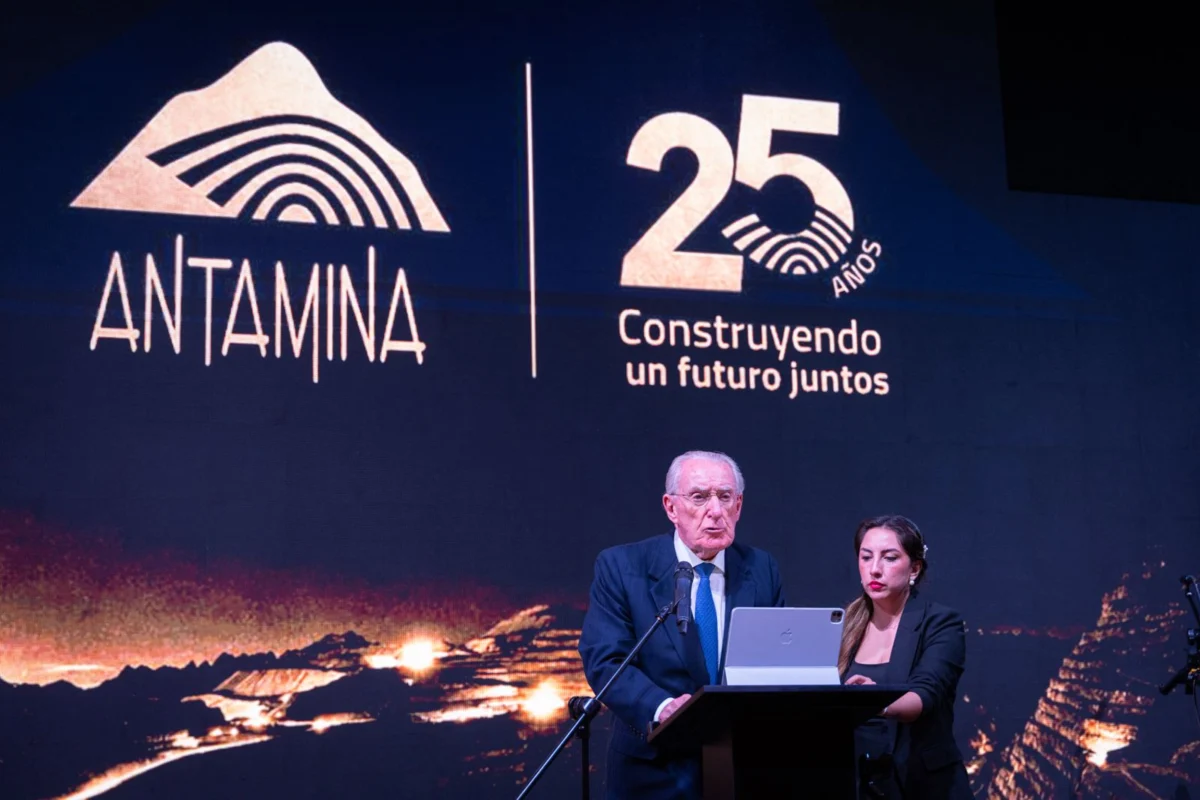
Augusto Baertl Montori, the visionary leader who served as Antamina’s first president and general manager, recently reflected on this quarter-century milestone. For Baertl, who steered the company through the precarious stages of exploration, design, and construction, Antamina represents the fulfillment of a national ambition: proving that Peru could execute large-scale, world-class mining with unmatched technical excellence, safety standards, and deep social responsibility.
The Genesis of a Mining Giant: From Vision to Reality
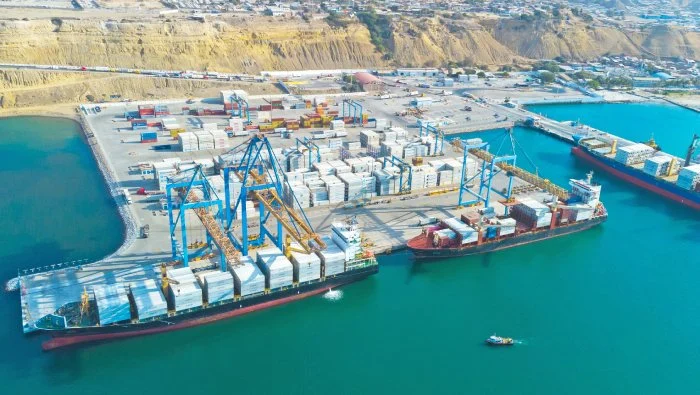
Antamina’s inception was far from a simple business venture; it was a testament to conviction during a time when the Peruvian mining landscape faced significant skepticism. Long before the construction of the massive concentrator plant, the 302-kilometer mineral pipeline—one of the longest in the world—or the dedicated port at Huarmey, there was only a geological prospect and a bold team.
"When I look back at these 25 years, I don’t just see a mining operation. I see, I live a dream," Baertl remarked during the commemoration.
The project was forged in the late 1990s, a period marked by both economic uncertainty and the tail-end of the internal conflict that had gripped the country. To establish a mine at over 4,000 meters above sea level required more than just engineering prowess; it required a fundamental commitment to transforming an isolated, impoverished region into a hub of modern industry. The decision to invest was a calculated risk that ultimately paid off, with the team achieving the milestone of starting test production on May 28, 2001—four months ahead of the original schedule.
Chronology of an Industrial Transformation
The trajectory of Antamina can be categorized into several critical phases that have defined its longevity and impact on the Peruvian economy:
- 1996–1998 (The Visionary Phase): Exploration and feasibility studies confirmed the existence of one of the world’s largest copper-zinc deposits. During this time, the leadership team, headed by Baertl, navigated the complex regulatory and environmental landscapes to secure the project’s viability.
- 1999–2001 (The Construction Marvel): This period saw the simultaneous development of the mine, the slurry pipeline, and the port. It was one of the largest private mining investments in Peruvian history at the time, involving thousands of workers in one of the most challenging terrains in the Andes.
- 2001–2010 (Operational Maturation): The successful ramp-up of operations established Antamina as a key player in the global copper and zinc markets. The company focused on integrating local communities into the supply chain.
- 2011–2020 (Optimization and Sustainability): Through various expansions and technological upgrades, Antamina maintained its status as a top-tier producer while deepening its social programs in Ancash, focusing on health, education, and infrastructure.
- 2021–2026 (The Era of Innovation): Currently, the company is pivoting toward digital transformation, advanced environmental stewardship, and a commitment to carbon neutrality, setting the stage for the next 25 years of production.
Building with Character: Addressing Social and Technical Hurdles
The story of Antamina is defined by "character." When the project began, the region of Ancash was suffering from the aftermath of internal terrorism and chronic poverty. Baertl emphasizes that the company did not simply arrive as an extraction entity; it arrived as a development partner.
The "Antamina Model" involved a unique synergy between technical operations, human capital, and political engagement. By fostering transparent relationships with local communities, the company created a sense of ownership among the regional population. This was not merely corporate social responsibility; it was an integrated strategy of shared value.
"Antamina didn’t start in 2001," Baertl recalled. "It started when a group of us decided to believe." That belief led to the construction of essential infrastructure that benefited not only the mine but also the surrounding villages, providing clean water, electricity, and access to education that had previously been nonexistent in the high-Andean districts.
The Human Element: Beyond Production Records
While industry analysts often measure Antamina by its tonnage of copper concentrate or its export revenue, Augusto Baertl insists that the true metric of success is social transformation.
"What I am most proud of is seeing how Antamina has transformed lives," he stated. "Antamina is great because of its people. It is strong because of its culture. It is an example because it never forgot that mining is done with responsibility and purpose."
The company’s impact on Ancash is palpable:
- Educational Advancement: Through scholarship programs and the improvement of school facilities, Antamina has empowered a new generation of professionals in the region.
- Healthcare Infrastructure: By funding regional health clinics and mobile medical campaigns, the company filled a critical void in public health services.
- Local Empowerment: By prioritizing local labor and suppliers, the company catalyzed the regional economy, allowing small businesses to thrive alongside the mining giant.
Implications for the Future: A New Era of Mining
As the company moves past its silver anniversary, the focus is shifting toward the challenges of the future: environmental sustainability and technological integration. Baertl believes that the lessons learned over the last 25 years will serve as the foundation for the next stage of Peruvian mining.
The global energy transition, which relies heavily on copper, positions Antamina as a strategic asset for the world. However, Baertl warns that the future of the industry depends on the ability to balance production with innovation and rigorous ESG (Environmental, Social, and Governance) standards.
"I am sure that Antamina and its collaborators are ready to continue proving that Peruvian mining can be a model for the world," he asserted.
Conclusion: The "Hagamos las Cosas Bien" Philosophy
The legacy of Augusto Baertl at Antamina is tied to a simple but profound mantra: "Hagamos las cosas bien" (Let’s do things right). This philosophy has permeated the company’s corporate culture for a quarter of a century. It implies that profitability cannot exist in a vacuum; it must be supported by safety, integrity, and a respect for the environment and the community.
As Antamina looks toward the future, it carries the weight of a proven track record. It has successfully navigated the peaks and valleys of commodity prices, political shifts, and the immense technical difficulty of high-altitude mining. For those who built it, and for the thousands who work there today, the project is more than an asset—it is a living example of what is possible when vision is matched by unwavering execution.
The next chapter for Antamina will undoubtedly be defined by the ongoing struggle to harmonize large-scale industrial progress with the urgent need for climate action and social equity. If the past 25 years are any indication, the "Antamina way" will continue to influence not just the mining industry in Peru, but the global standard for how mining can and should contribute to human progress.
This article was prepared with the professional expertise of the ProActivo editorial team, drawing on the historical insights provided by Augusto Baertl Montori regarding the 25-year evolution of the Antamina project.