Introduction: A System Under Fire
The aftermath of the 2026 Regional and Municipal Elections in Peru has sparked a heated debate regarding the operational capacity of the nation’s electoral authorities. Following the release of preliminary exit polls and initial vote counts, Francisco Calisto Giampietri, a senator representing the Renovación Popular party, has launched a scathing critique of the Jurado Nacional de Elecciones (JNE).
Senator Calisto Giampietri argues that the current delays in finalizing election results reveal a deep-seated institutional crisis that transcends mere personnel changes. As the country waits for official confirmation of the results, the debate over the efficiency, technological integration, and legal foresight of the electoral body has reached a boiling point, prompting calls for structural reform.
Main Facts: The Delay and the Discontent
The controversy erupted after Roberto Burneo, the head of the JNE, estimated that the final, definitive results of the 2026 elections would not be available until late October or early November. This timeline, which implies a delay of nearly a month after the casting of ballots, has been met with frustration by political actors and the public alike.
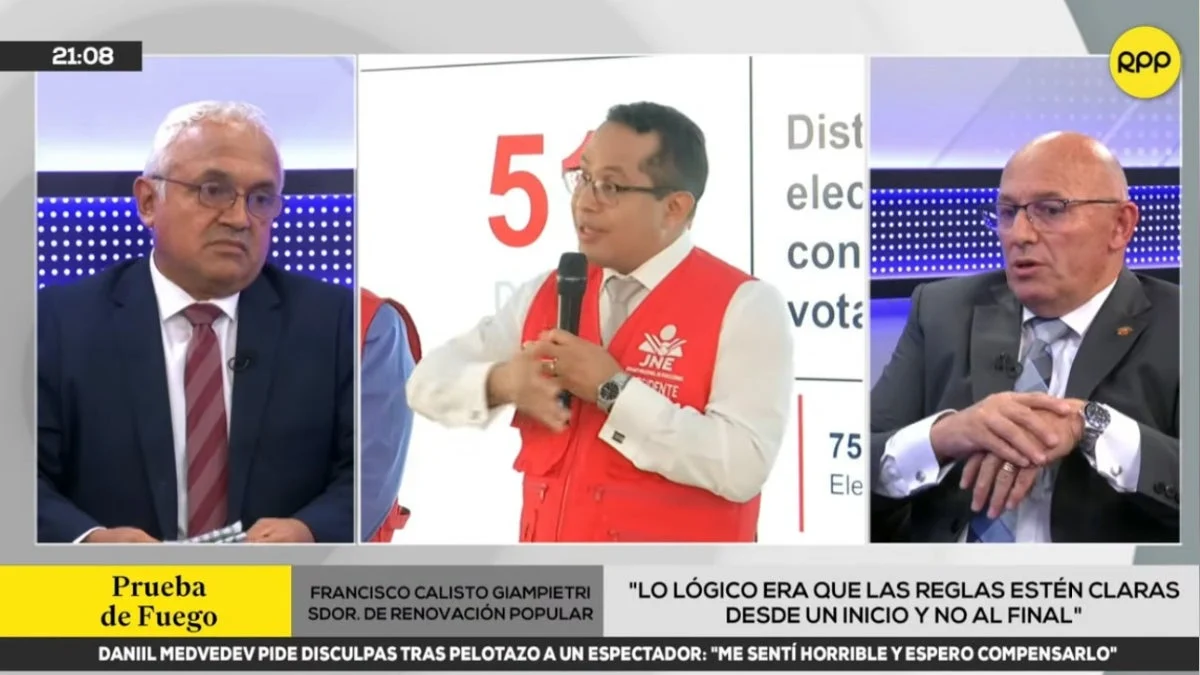
Senator Calisto Giampietri, speaking on the RPP program Prueba de Fuego, articulated the grievances of his party, stating that the current electoral system is failing to meet the basic expectations of a modern democracy. According to the Senator, the issue is not limited to the performance of specific individuals within the JNE or the ONPE (National Office of Electoral Processes), but rather a systemic failure to modernize and streamline the vote-counting process.
"The system as such is not working," the Senator remarked. "It is not a matter of just changing people, as was done when they removed the head of the ONPE; it is a matter of optimizing systems, of technifying the process, and giving much more validity to the institutionality of the Jurado Nacional de Elecciones."
Chronology of the 2026 Election Tension
The trajectory of the 2026 electoral process has been marked by legal uncertainty and administrative friction.
- Pre-Election Phase: The candidacy of Rafael López Aliaga, a prominent figure for Renovación Popular, became a focal point of legal scrutiny. The JNE faced pressure to define the legal status of various candidates, leading to accusations that the rules of the game were not sufficiently clear before the campaign began.
- Election Day: Millions of Peruvians went to the polls. Exit polls provided initial trends, but the wait for official results immediately highlighted the disconnect between the digital age and the current bureaucratic process.
- Post-Election (Current Status): Following the announcement by JNE chief Roberto Burneo that results would be delayed until the turn of the month, political criticism intensified. The delay has created a power vacuum regarding the formalization of local authorities, including the potential mayoralty of Lima.
- The Debate: Legislators and constitutional experts are currently debating whether the JNE’s timeline is a result of legal requirements, resource constraints, or an outdated technological infrastructure.
Supporting Data: Comparative Analysis and Institutional Challenges
Senator Calisto Giampietri invoked the example of Brazil to highlight the contrast between the Peruvian system and more efficient electoral models in the region.
The Brazilian Benchmark
In his critique, the Senator pointed to the recent Brazilian presidential elections, where a nation with a significantly larger population than Peru was able to tabulate and declare results within hours of the polls closing. This comparison serves as the backbone of his argument that Peru’s delay is not an inherent necessity of democratic governance, but rather a failure of modernization.
The Institutional Argument
The JNE’s mandate is to ensure the legitimacy of the vote, but critics argue that by extending the timeline, the institution inadvertently fosters instability. Data from previous cycles suggests that extended periods of uncertainty—where "boca de urna" (exit poll) results are widely debated but not officially confirmed—create fertile ground for social tension and accusations of manipulation.
The Senator argues that if Brazil can utilize advanced electronic systems to achieve near-instantaneous results, Peru’s reliance on paper-heavy, bureaucratic verification processes is an impediment to democratic health.
The Case of Rafael López Aliaga: A Legal Quagmire
A significant portion of the tension involves the candidacy and potential victory of Rafael López Aliaga. The Senator from Renovación Popular was asked whether the JNE should move to issue official credentials to the candidate if he holds a lead in the final count.
The Senator’s Stance
Calisto Giampietri maintained that this is a "purely legal matter" that falls under the jurisdiction of the JNE Plenary. However, he did not shy away from criticizing the lack of foresight that led to this situation.
"What is logical is that, in a situation of this nature, in an electoral contest, the rules should be clear from the beginning and not at the end," the Senator stated. He noted that while the process may have followed the letter of the law, the fact that the law itself contains gaps—or is subject to wildly different interpretations—is evidence of a failure by the electoral body to prepare for the contest adequately. "That should have been elucidated before the process was generated," he added.
Official Responses and Implications
The JNE has not yet issued a formal rebuttal to the Senator’s specific remarks regarding the modernization of their systems. However, officials within the electoral body have historically defended the current timeline by citing the need for rigorous verification of electoral records, the handling of impugned votes, and the constitutional requirements for due process that allow candidates to appeal results.

The Implications for Peruvian Democracy
The broader implications of this debate are profound:
- Erosion of Trust: Constant delays in results weaken public confidence in the integrity of the elections. When the process is opaque or seemingly slow, the door is opened for misinformation and conspiracy theories.
- Administrative Paralysis: The uncertainty regarding winners prevents the transition process from beginning in municipal and regional governments, potentially stalling public policy implementation at the local level.
- Pressure for Legislative Reform: The Senator’s call for "optimizing systems" is likely to translate into legislative efforts to mandate technological upgrades for both the ONPE and the JNE. This could lead to a push for electronic voting or digitized verification systems, which have been topics of debate in the Peruvian Congress for years.
- Judicialization of Politics: The "legal gaps" mentioned by the Senator suggest that the electoral process has become increasingly judicialized, where elections are decided in courtrooms rather than at the ballot box. This trend risks alienating the electorate and shifting the focus from policy proposals to legal maneuvers.
Conclusion: Toward a More Agile Democracy
As the 2026 election cycle draws to a close, the criticism leveled by Francisco Calisto Giampietri underscores a growing consensus among some political factions: the status quo is insufficient.
The JNE, as the ultimate arbiter of the Peruvian democratic process, faces an uphill battle to maintain its legitimacy while operating under antiquated procedures. Whether or not the institution chooses to accelerate its internal processes or reform its technological framework will be a key determinant in the stability of future electoral cycles.
For now, the country remains in a state of suspended animation, waiting for the JNE to finalize the count and clarify the path forward. The lesson from the 2026 experience is clear: without structural changes that prioritize speed, transparency, and administrative efficiency, the electoral process will continue to be a source of national friction rather than a mechanism for peaceful political renewal.
The challenge for the JNE now is not just to count the votes, but to restore the public’s faith in the speed and accuracy of the democratic process. As the Senator emphasized, it is no longer just about the individuals in charge, but about the very foundations of the system itself.