The Peruvian mining sector stands at a critical juncture as the Ministry of Energy and Mines (MINEM) unveils a significant regulatory proposal aimed at recalibrating the environmental permitting landscape. Through a ministerial resolution published in the official gazette El Peruano, the government has introduced a draft Supreme Decree that seeks to incorporate a new mechanism into the existing environmental protection regulations: the Environmental Affidavit for Mining Exploration (DJA, by its Spanish acronym).
This initiative, currently undergoing a 15-day public consultation period, marks a strategic effort to differentiate between large-scale industrial impacts and minor exploration activities. By introducing an "automatic approval" mechanism for low-impact projects, the government intends to revitalize mining exploration—the essential precursor to long-term mineral extraction—without compromising the rigorous standards of the National Environmental Impact Assessment System (SEIA).
The Core Proposal: Defining the DJA
The proposed mechanism is designed as a complementary instrument to the SEIA, specifically tailored for mining exploration projects of limited scale. According to the draft, the DJA would be applicable to projects that involve the installation of between one and 10 exploration platforms.
What is a Mining Exploration Platform?
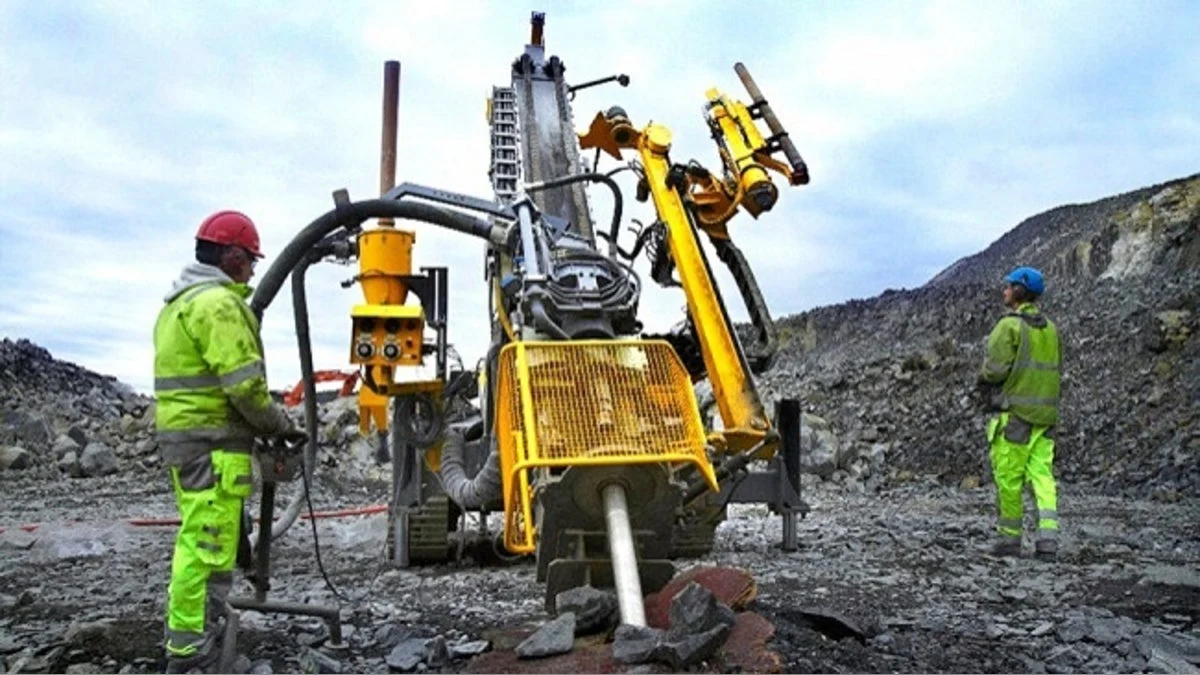
To understand the significance of this threshold, it is essential to define the component in question. A mining exploration platform is a specifically prepared area of land where heavy machinery is positioned to conduct deep-crust drilling. These platforms serve as the base for extracting core samples—cylindrical segments of rock—that provide geologists with the data necessary to evaluate the mineralogical characteristics and economic viability of a potential deposit.
By limiting the scope of the DJA to a maximum of 10 platforms, the Ministry is focusing on the "scout drilling" phase of mining, where footprints are localized and environmental disruption is inherently minimal compared to full-scale mine development.
Chronology of Regulatory Evolution
The push for this regulatory adjustment did not occur in a vacuum. It follows a decade of debate regarding the "permitting bottleneck" that has historically hampered the mining industry in Peru.
- Pre-2010s: Mining exploration was subject to generic environmental oversight, often treated with the same level of bureaucratic complexity as large-scale extraction projects.
- 2012–2015: The implementation of the SEIA brought greater environmental protection but also increased the administrative burden on small-scale exploration firms, leading to longer lead times for permit approval.
- 2018–2020: The mining sector faced a stagnation in exploration investments, exacerbated by the COVID-19 pandemic and complex administrative procedures.
- September 29, 2024: The Ministry of Energy and Mines publishes a Ministerial Resolution in El Peruano, formally proposing the creation of the DJA as a means to decouple low-impact exploration from the standard, lengthy evaluation processes.
- October 2024 (Ongoing): A 15-day public comment period is opened, inviting industry leaders, civil society organizations, and environmental groups to weigh in on the proposal before it is finalized into a Supreme Decree.
Supporting Data: Why Exploration Matters
Exploration is the "lifeblood" of the mining industry. Without continuous investment in exploration, the mining pipeline dries up, leading to the eventual closure of mines as reserves are depleted.
The Economic Linkage
Data from recent years indicates that for every dollar invested in exploration, a significant multiplier effect is generated in the regional economies where these projects operate. However, exploration is a high-risk activity; out of hundreds of prospects, only a fraction result in a viable, profitable mine.
By reducing the time and cost associated with obtaining an environmental certificate for a project with only 1 to 10 platforms, the government aims to lower the "barrier to entry." This is particularly crucial for junior mining companies, which often lack the deep capital reserves of multinational corporations and are most sensitive to administrative delays.
Environmental Safeguards
Critics of the proposal have raised questions regarding the oversight of these projects. However, the Ministry maintains that "automatic approval" does not mean "no oversight." The DJA requires companies to adhere to strict environmental management standards. If a project fails to comply with the parameters defined under the DJA, the automatic approval can be revoked, and the company may face sanctions. The government argues that this shift moves the focus from ex-ante (before the fact) bureaucracy to ex-post (after the fact) enforcement.
Official Responses and Stakeholder Perspectives
The proposal has triggered a diverse range of responses from the various stakeholders involved in the Peruvian mining ecosystem.
Government Stance
The Ministry of Energy and Mines emphasizes that the DJA is not a deregulatory measure, but a "pro-efficiency" one. In official statements, ministry spokespersons have highlighted that current procedures treat a project with three drill holes with the same administrative rigor as a project with 50 or 100 platforms. They argue that this misallocation of human and financial resources slows down the entire sector.
Industry Associations
Mining guilds, such as the National Society of Mining, Petroleum, and Energy (SNMPE), have generally viewed the proposal as a positive step. They argue that shortening the permitting timeframe will make Peru a more attractive destination for global exploration capital. For these firms, time is the most expensive commodity; a delay in receiving a permit can mean missing a drilling season due to local weather conditions or market volatility.
Civil Society and Environmental NGOs
Environmental advocacy groups have expressed cautious concern. Their primary argument is that even small-scale exploration can have localized impacts on water sources, biodiversity, or community lands. They are calling for transparency, demanding that the DJA mechanism must include robust mechanisms for community consultation and that "automatic" should not be confused with "unmonitored."
Implications for the Future of Peruvian Mining
The introduction of the Environmental Affidavit for Mining Exploration holds profound implications for the future of the nation’s primary economic engine.
1. Enhanced Competitiveness
Peru competes globally for mining investment against jurisdictions like Canada, Australia, and Chile. These nations have refined their exploration permitting processes to ensure that projects move from the drawing board to the drill site as efficiently as possible. The DJA is, in essence, an attempt to modernize Peru’s regulatory framework to stay competitive in a global market where capital flows to the path of least administrative resistance.
2. A Shift in Regulatory Philosophy
The shift toward "automatic approval" signifies a move toward a "trust-but-verify" model of regulation. Rather than requiring the state to review every single detail of a low-impact project before it begins, the state is shifting its resources toward auditing and compliance monitoring after operations have commenced. This requires a strong institutional capacity for environmental oversight, which remains a challenge for regional environmental offices.
3. Impact on Local Communities
The success of the DJA will ultimately hinge on how it is perceived by local communities. If the process is seen as a way to bypass environmental concerns, it could lead to increased social conflict. However, if implemented with clear guidelines and transparent reporting, it could provide a clearer, more predictable framework for community-company interactions. The 15-day consultation period is a vital opportunity for these voices to be heard, ensuring that the final regulation balances administrative efficiency with environmental and social protection.
Conclusion: Balancing Progress and Preservation
As the 15-day window for public input closes, the Ministry of Energy and Mines faces the delicate task of balancing the urgent need for economic reactivation through mining exploration with the non-negotiable requirement of environmental stewardship.
The proposed Environmental Affidavit (DJA) is more than just a procedural change; it is a signal that Peru is ready to embrace a more agile, modern approach to the mining industry. By isolating and accelerating low-impact exploration, the state hopes to sustain the pipeline of mineral resources that drives the national economy.
However, the efficacy of this policy will depend on the strength of the accompanying enforcement mechanisms. As the country looks toward a future of sustainable mining, the success of the DJA will serve as a litmus test for the government’s ability to simplify bureaucracy without sacrificing the rigorous environmental standards that define modern, responsible mining. Whether this mechanism will succeed in unlocking the potential of smaller-scale projects remains to be seen, but it is clear that the conversation on mining regulation in Peru has entered a new and decisive phase.