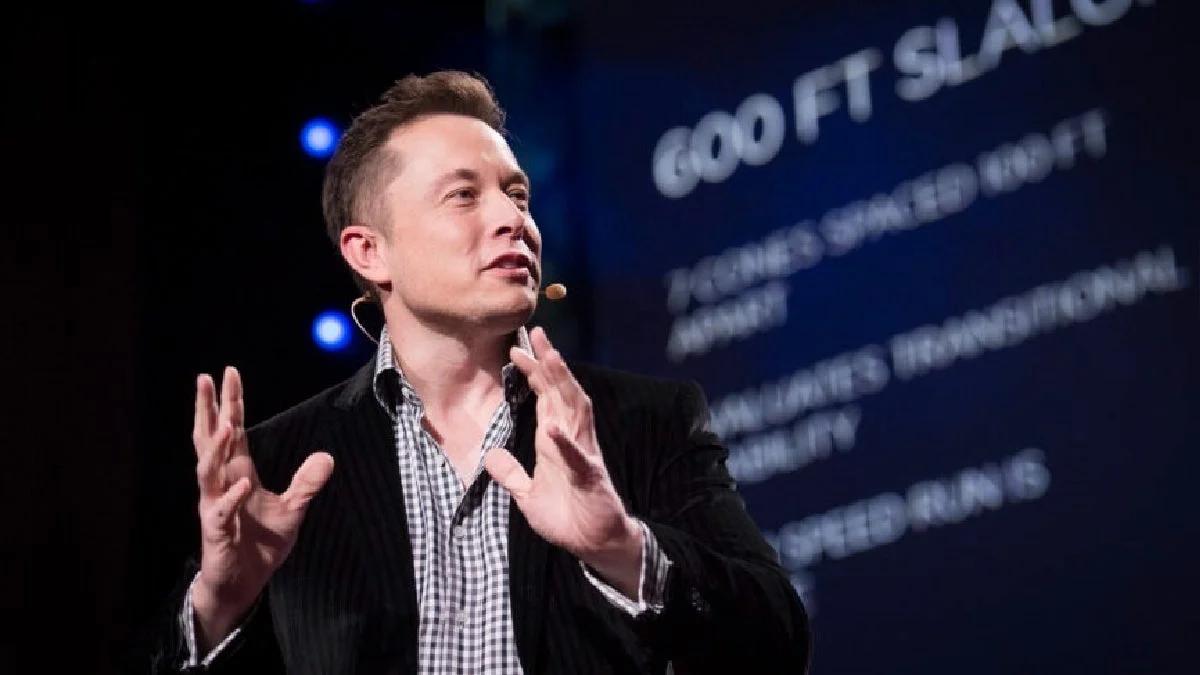
In a series of high-stakes diplomatic and technological engagements at the White House, Elon Musk—the visionary CEO of SpaceX and xAI—has painted a portrait of a near-future defined not by displacement, but by unprecedented abundance. Standing alongside President Donald Trump, Musk addressed growing global anxieties surrounding the rapid evolution of artificial intelligence, reframing the narrative from one of existential fear to one of human empowerment.
Central to this new official discourse is a linguistic and conceptual shift: the U.S. government has officially moved to adopt the term "Superintelligence" (SI) as the standard nomenclature for what was previously known as Artificial Intelligence (AI). This rebranding effort, championed by the administration, is designed to align with a more optimistic, manageable view of the technology’s trajectory.
The Promise of Abundance: Musk’s Vision for the Future of Work
Emerging from a high-level summit at the White House, Elon Musk offered a candid assessment of the technological shifts currently reshaping the global economy. When asked about the potential for mass unemployment due to automation and robotics, Musk remained distinctly bullish.
"I think the most likely outcome, and it is a future that I believe everyone would desire, is one of incredible benefit," Musk stated. "We are moving toward an era of abundance. This won’t just mean a basic universal income; it will likely evolve into a high universal income."
Musk’s argument rests on the premise that labor is not disappearing, but rather undergoing a profound metamorphosis. "Jobs are going to change," he acknowledged. "They have always changed throughout human history. What we are witnessing is an evolution of roles. Currently, we are not seeing an increase in unemployment; in fact, there is an enormous, persistent demand for human labor across almost every sector."
The Medical and Social Dividend
Musk emphasized that the true promise of Superintelligence lies beyond mere efficiency in the workplace. He highlighted the potential for universal, high-quality healthcare. "When you integrate robots and superintelligence, it means every individual on this planet could have access to medical care superior to what anyone has today, including myself. That is a future worth striving for."
Chronology of a Policy Shift: From AI to Superintelligence
The recent rhetoric from the White House represents a significant pivot in how the U.S. government handles the narrative of technological progress.
- Pre-Summit Tensions: For months, industry leaders—including Bill Gates and the heads of leading AI labs like Anthropic and OpenAI—have issued stern warnings regarding the risks of uncontrolled, unaligned AI. These concerns, often labeled as "existential risks," created a tense atmosphere leading up to the summit.
- The White House AI Summit: President Trump convened a powerhouse group of tech luminaries, including Sundar Pichai (Google), Elon Musk (xAI), Dario Amodei (Anthropic), Mark Zuckerberg (Meta), and Jensen Huang (Nvidia). The meeting resulted in a voluntary agreement to implement robust internal safety protocols to monitor the behavior and capacity of large-scale models.
- The Linguistic Mandate: Following the summit, President Trump issued a formal directive to all federal agencies and departments. The mandate requires that official government documents, public communications, and policy papers cease the use of the terms "Artificial Intelligence" and "IA," replacing them exclusively with "Superintelligence" (SI).
- International Diplomacy: Following the domestic meeting, President Trump revealed that he and Musk had engaged in discussions with Chinese President Xi Jinping regarding the development of global data center infrastructure, signaling that the "Superintelligence" race is now a centerpiece of international relations.
Supporting Data and the Reality of Labor Demand
While skeptics continue to cite studies regarding the automation of white-collar and blue-collar tasks, current labor market data supports some of the optimism expressed by the administration. Despite the deployment of advanced generative models, the U.S. labor market has remained resilient.
Economists note that while specific tasks—such as data entry, basic coding, and routine administrative work—are being absorbed by SI systems, the demand for "human-in-the-loop" roles has spiked. The focus has shifted toward high-level cognitive tasks, empathy-based roles, and the management of complex, automated systems.
Furthermore, the integration of robots into manufacturing and logistics has not led to a net decrease in headcount in many sectors, but rather a redistribution of talent. Companies are increasingly hiring for roles that did not exist five years ago: prompt engineers, AI ethics auditors, and robotic systems maintenance technicians. Musk’s assertion that there is an "enormous demand" for people mirrors the ongoing struggle of firms to find qualified workers to oversee the very systems that are allegedly replacing them.
Official Responses and Strategic Objectives
The administration’s decision to move toward the term "Superintelligence" is not merely semantic; it is a strategic attempt to shape public perception. By distancing the technology from the negative connotations associated with early, often buggy AI, the White House hopes to foster a culture of adoption rather than obstruction.
The Role of Regulatory Safety
During the summit, the agreement signed by the tech leaders served as a bridge between innovation and regulation. By agreeing to internal security controls, these companies have essentially pledged to "self-police" their progress. This approach is intended to satisfy regulatory concerns while ensuring that the United States does not lose its competitive edge against international rivals, particularly in light of the discussions held with Chinese leadership.
Addressing the Existential Critique
The shift in language also serves to neutralize the "doomer" discourse. When leaders like Bill Gates warn of the risks of "uncontrolled AI," they frame it as a threat to humanity. By rebranding the technology as "Superintelligence," the administration frames the technology as an asset—a tool of statecraft and public welfare that, when managed correctly, guarantees a higher standard of living for all citizens.
Implications for the Future: A New Social Contract?
The implications of this shift are profound. If the government and industry leaders are correct, the global economy is headed for a fundamental decoupling of labor and survival.
- The Economic Shift: Musk’s mention of a "high universal income" suggests that the administration is preparing for a reality where the traditional link between 40-hour work weeks and basic sustenance may be severed. This implies a future where the gains from Superintelligence are taxed or distributed to ensure that the "era of abundance" is shared, rather than concentrated.
- The Societal Shift: The focus on "evolution of roles" implies a massive, state-sponsored or industry-sponsored retraining effort. If every job is to change, the educational system must mirror that change. This suggests a future where lifelong learning becomes as mandatory as primary schooling once was.
- The Geopolitical Shift: The dialogue between Washington and Beijing suggests that Superintelligence is the new "Space Race." The country that successfully integrates SI into its healthcare, logistics, and defense sectors first will likely set the global standard for the 21st century.
Conclusion: A Future We Would Choose
Elon Musk’s optimism is infectious, yet it rests on a significant "if." The transition to an era of abundance is contingent upon the successful alignment of these systems and the willingness of society to adapt to a reality where the definition of "work" is constantly in flux.
As the White House moves forward with its "Superintelligence" mandate, the eyes of the world are fixed on whether this technological transition will truly yield the benefits Musk predicts. If the path leads to the empowerment of the individual through better health and higher standards of living, it will indeed be the future that humanity desires. If it fails, the "Superintelligence" era may become a cautionary tale of hubris.
For now, the policy direction is clear: the United States is betting on the belief that humanity will not be replaced, but rather upgraded. The "evolution of roles" has begun, and the administration is determined to ensure that, in this new era, the human element remains the primary beneficiary of the machine’s labor.