Introduction: A New Benchmark for Peruvian Governance
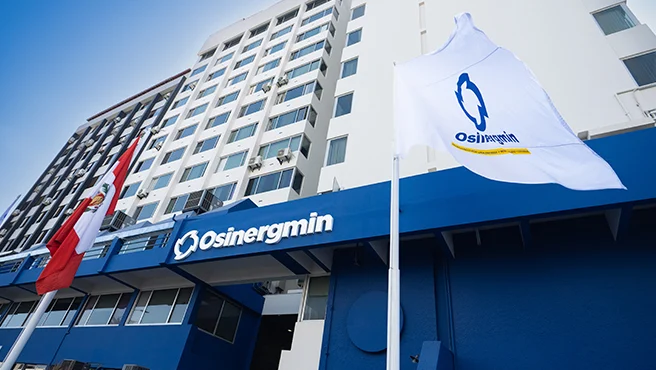
The Organization for Economic Cooperation and Development (OECD) has officially recognized the Organismo Supervisor de la Inversión en Energía y Minería (Osinergmin) as a vanguard institution in regulatory governance within Peru. The landmark report, “Regulatory Policy in Peru 2026,” produced by the OECD’s Regulatory Policy Committee as part of the country’s ongoing accession process, positions Osinergmin as a model of international best practices.
For years, Peru has sought to align its state apparatus with the rigorous standards of the “club of developed nations.” The findings in the 2026 report underscore that Osinergmin has not only adopted these standards but has, in several key areas, surpassed the regulatory frameworks currently applied across the broader Peruvian executive branch.
Main Facts: The Pillars of Osinergmin’s Regulatory Success
The OECD report highlights several distinct areas where Osinergmin has demonstrated institutional maturity:
- Advanced Governance Structure: Osinergmin’s internal governance is fully aligned with OECD principles, ensuring independence, transparency, and accountability in its regulatory decision-making.
- Pioneering Regulatory Impact Analysis (RIA): The agency adopted the RIA framework—a method for assessing the potential benefits and costs of new regulations—well before it became a standard requirement for the rest of the Peruvian government.
- Proportionality in Regulation: By applying deeper analysis to regulations with higher socio-economic impacts, Osinergmin has successfully optimized its administrative burden.
- Systematic Ex-Post Evaluation: The agency is one of the few in the country that conducts rigorous retrospective assessments of its rules, ensuring that policies remain relevant and effective years after their inception.
- Digital Transformation in Supervision: The integration of risk-based supervision and emerging technologies, such as virtual reality (VR), has revolutionized how the agency monitors the nation’s critical energy and mining infrastructure.
Chronology: The Path to International Standardization
The recognition of Osinergmin is not a sudden achievement but the result of a long-term strategic shift in the organization’s operational philosophy.
- Pre-2022 (The Foundation): Osinergmin initiates internal reforms to formalize its methodology for cost-benefit analysis, creating a specific regulatory guide that would later become a cornerstone of its operations.
- June 10, 2022 (The Road Map): The Council of the OECD formally adopts the Road Map for Peru’s accession to the organization, setting the stage for institutional audits across all major regulatory bodies.
- 2023–2025 (Refinement): During this period, Osinergmin accelerates its digital transformation, implementing high-tech monitoring tools for mining and energy sites. It begins to formalize its ex-post evaluation process, moving beyond simple compliance to performance-based oversight.
- April 2026 (The Report): The OECD publishes “Regulatory Policy in Peru 2026,” formally validating Osinergmin’s efforts and highlighting it as a benchmark for the rest of the Peruvian public administration.
Supporting Data: Evidence of Regulatory Rigor
The OECD’s assessment is not merely qualitative; it is supported by the systematic application of technical tools. A key case study cited by the organization is the review of the regulation concerning safety measures for Liquefied Petroleum Gas (LPG) cylinder distribution.
Four years after the initial implementation of the regulation, Osinergmin conducted an ex-post evaluation. This process measured the real-world impact of the policy, identified gaps in compliance, and adjusted the enforcement strategy. According to the OECD, such practices are rare in the Latin American context, where regulatory cycles often end at the point of publication. By closing the loop—implementing, monitoring, and evaluating—Osinergmin has created a “living” regulatory framework that adapts to market realities.
Furthermore, the agency’s risk-based supervision model represents a shift from "universal inspection" to "targeted oversight." By identifying which infrastructure assets pose the highest risk to public safety or the environment, Osinergmin maximizes its resources, ensuring that the most critical areas receive the most rigorous attention.
Digital Transformation: The Technological Frontier
One of the most impressive aspects of the OECD report is its praise for Osinergmin’s embrace of digital technology. The agency has moved beyond paper-based reporting to:
- Virtual Reality (VR) Integration: Inspectors can now conduct preliminary assessments of remote or dangerous mining environments using VR, reducing the time spent on-site and increasing the accuracy of data collection.
- On-Demand Visualization: By leveraging digital platforms, the agency provides real-time oversight of energy infrastructure. This has increased both the volume and the quality of data available to policymakers, allowing for data-driven decisions that minimize the risk of accidents.
- Standardized Risk Management: By digitizing its internal processes, Osinergmin has created a uniform approach to risk identification, ensuring that regardless of the region or the industry, supervision remains consistent and reliable.
Official Responses and Institutional Implications
The implications of this OECD report are profound for Peru’s accession process. By setting a high bar within its own ranks, Osinergmin provides a blueprint for other Peruvian regulatory agencies to follow.
In response to the report, analysts suggest that Osinergmin’s success serves as a signal to international investors that Peru is moving toward a more predictable and transparent regulatory environment. When a country adopts OECD standards, it lowers the "cost of doing business," as regulatory frameworks become more stable and less prone to political interference.
For the Peruvian government, the Osinergmin case serves as a successful pilot project. The Regulatory Policy Committee of the OECD has essentially signaled that if the rest of the Peruvian executive branch can mirror the governance structures observed at Osinergmin, the country’s chances of successful accession will increase significantly.
Future Outlook: Sustaining the Momentum
While the OECD report is a significant milestone, the challenge for Osinergmin lies in sustaining this trajectory. As technology evolves and the energy sector undergoes its own "green transition," the regulator will need to ensure that its regulatory impact analysis remains as dynamic as the sector it oversees.
The move toward more complex energy systems—including the integration of renewables and the modernization of the electrical grid—will require even more sophisticated risk-based supervision. However, with the current governance structure and the endorsement of an organization as prestigious as the OECD, Osinergmin appears well-positioned to lead this transition.
Conclusion
The recognition of Osinergmin by the OECD is a testament to the power of administrative reform. By prioritizing scientific analysis over bureaucratic intuition and embracing digital tools, the agency has transformed from a traditional supervisor into a modern regulatory authority. As Peru continues its journey toward full OECD membership, the lessons learned at Osinergmin will likely serve as the gold standard for public management in the country for years to come.
The agency’s ability to conduct systematic ex-post evaluations, its early adoption of the RIA, and its commitment to proportionality ensure that it remains not just a regulator, but a proactive partner in Peru’s economic and industrial development. This latest report from the OECD is not only a validation of past performance but a mandate for continued excellence in the years ahead.