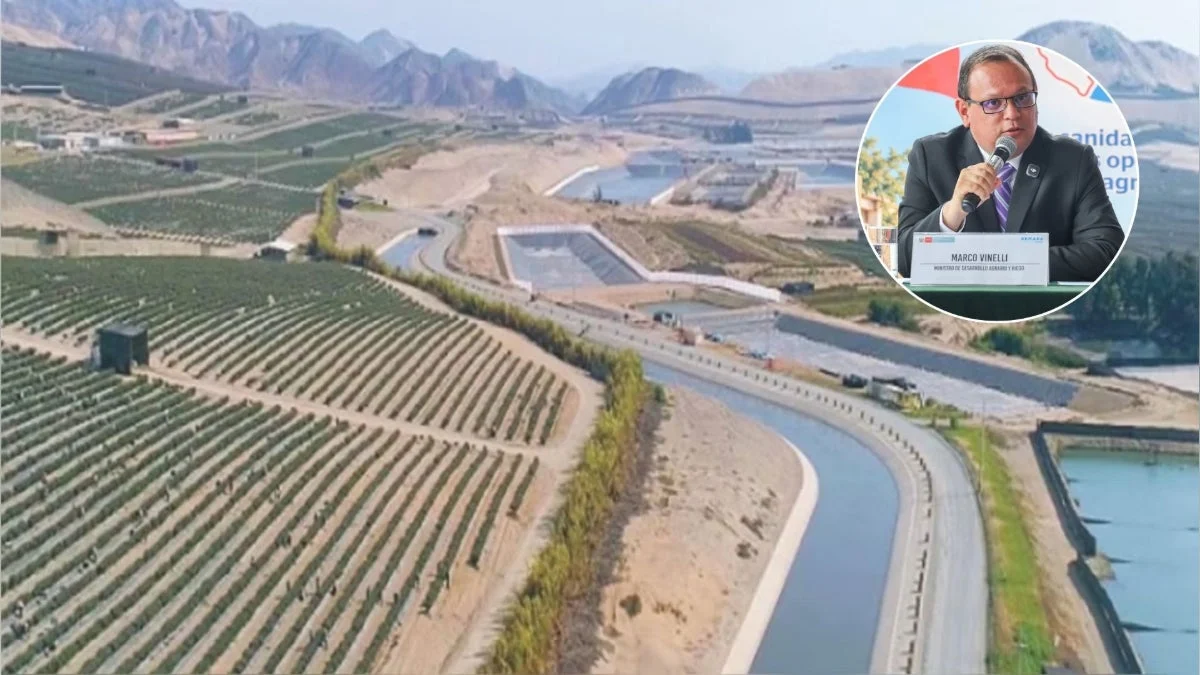
In a pivotal move for the agricultural development of northern Peru, the Ministry of Agrarian Development and Irrigation (Midagri) has officially set the stage for the construction of the Siphon No. 3, a critical component of the Chavimochic III irrigation project. With the signing of a S/145 million contract scheduled for September 30, the government is signaling a decisive phase in unlocking the potential of the La Libertad region, long hindered by stalled infrastructure.
The project, which represents a cornerstone of the nation’s water security strategy, aims to transform arid lands into high-yield agricultural zones. Minister of Agrarian Development and Irrigation, Marco Vinelli, confirmed that the contract for the design and execution of the 3.5-kilometer siphon will mark the beginning of a rapid deployment phase, with a completion timeline set at approximately 50 weeks.
The Strategic Importance of the Chavimochic III Project
Chavimochic III is not merely an irrigation project; it is an economic engine for northern Peru. By channeling vital water resources to agricultural hubs, the project aims to stabilize water supply for more than 111,000 hectares of land. The implications for the local economy are profound, with projections indicating that the initiative will directly benefit more than 32,000 families, providing them with the resources necessary to expand crop production, improve food security, and integrate into international export markets.
The Siphon No. 3 is a structural necessity for the irrigation network. Without it, the water trapped behind current or future dams cannot be effectively transported across the complex topography of the region to reach the farms that rely on this supply. The 3.5-kilometer structure is a feat of engineering that will serve as the arterial vein of the entire system.
Chronology of a Multi-Year Infrastructure Effort
The journey to the September 30 signing has been long and marked by bureaucratic hurdles and legal disputes. To understand the significance of this milestone, one must look at the timeline of the Chavimochic project:
- The Origins: Chavimochic was conceived as a multi-stage project aimed at harnessing the waters of the Santa River. While the first two stages achieved significant success, the third stage became a focal point of national debate regarding corruption and construction delays.
- The Government-to-Government (G2G) Shift: Recognizing that traditional procurement methods had failed to move the project forward, the Peruvian government opted for a G2G framework. In 2024, a landmark agreement was signed between Peru and Canada, establishing a partnership to oversee the execution of the pending works.
- The Current Phase (2024): The focus has shifted to the execution of the most critical missing links: the completion of the Palo Redondo dam and the construction of the third line of the siphon.
- Future Milestones: With the Siphon contract slated for late September, the next major milestone is the signing of the contract for the completion of the Palo Redondo dam, which Minister Vinelli has indicated is expected to take place in November 2024.
Supporting Data: Investment and Economic Impact
The financial scale of Chavimochic III is immense, reflecting its role as a "mega-project." The total investment required to bring the third stage to full functionality is estimated at over S/4,000 million.
Midagri is managing a significant portion of this capital, with S/1,422 million specifically allocated under its portfolio for the execution of key components. The fiscal commitment of the Peruvian state is further evidenced by the inclusion of S/500 million for the project in the 2027 national budget, ensuring that once construction commences, there is a clear roadmap for funding through the project’s maturation.
The cost-benefit analysis of the project remains highly favorable. Experts suggest that the increase in agricultural output—particularly in high-value exports like blueberries, avocados, and asparagus—will generate tax revenues and employment opportunities that far exceed the initial S/4 billion investment within a decade of full operation.
Official Responses and Strategic Vision
Minister Marco Vinelli has been vocal about the importance of this specific contract signing. "Today, we announce that the contract will be signed to execute this first component," Vinelli stated. "It is a vital step in unlocking the destrabe (the unblocking) of the irrigation project."
The Minister’s emphasis on "destrabe" refers to the long-standing efforts by the current administration to navigate the legal and administrative complexities that had effectively paralyzed the project for years. By breaking the project into manageable components—the siphon, the dam, and the eventual concession of the system—Midagri is adopting a more pragmatic approach to project management.
The partnership with Canada has been lauded by government officials as a model for transparency and efficiency. By utilizing international expertise through the G2G model, the Peruvian government seeks to mitigate the risks of mismanagement and ensure that international quality standards are met during the construction of the siphon.
The Broader Implications for Peru’s Agriculture
The completion of Chavimochic III carries implications that extend beyond the borders of La Libertad. It serves as a litmus test for the government’s ability to execute complex infrastructure projects in the face of political and economic instability.
1. Water Security in the Face of Climate Change
As global climate patterns become increasingly erratic, the ability to store and transport water effectively is becoming a matter of national security. The Palo Redondo dam, in tandem with the new Siphon No. 3, will provide a buffer against seasonal droughts, allowing for year-round agricultural production.
2. Export Competitiveness
Peru has emerged as a global powerhouse in the agro-export sector. Chavimochic III is the linchpin that will allow the country to maintain this momentum. By providing water to an additional 111,000 hectares, the project ensures that Peru remains a competitive supplier in the European and North American markets.
3. Rural Development and Poverty Alleviation
Perhaps most importantly, the project is a direct poverty alleviation tool. The 32,000 families mentioned in official reports represent a massive demographic that stands to transition from subsistence farming to commercial-scale agriculture. This transition is essential for raising rural income levels and curbing migration to urban centers like Trujillo and Lima.
What Lies Ahead: The Path to Completion
While the September 30 contract signing is a cause for celebration, the administration faces a rigorous schedule ahead. The completion of the siphon within the 50-week timeframe will require seamless coordination between the contractors, the government, and the local communities affected by the construction.
Moreover, the upcoming November signing for the Palo Redondo dam will be equally critical. The dam is the "reservoir" that makes the siphon useful; without the dam, the water volume remains unreliable. The dual focus on these two components demonstrates a holistic strategy: the government is no longer just planning; it is actively constructing.
Finally, the third phase of the project—the concession of the system—remains on the horizon. This will involve finding a private operator capable of managing the irrigation infrastructure long-term, ensuring that the water reaches the fields efficiently and that the infrastructure is maintained for decades to come.
Conclusion
The signing of the contract for Siphon No. 3 is a testament to the persistent efforts of the Peruvian government to overcome historical inertia in the Chavimochic III project. As the nation watches the development of this 3.5-kilometer engineering project, the message is clear: the modernization of Peruvian agriculture is moving forward. With the support of international partners and a dedicated fiscal strategy, the northern region of Peru is poised to enter a new era of agricultural prosperity, turning the potential of the desert into a reality for thousands of families.