Introduction: A Tense Standoff
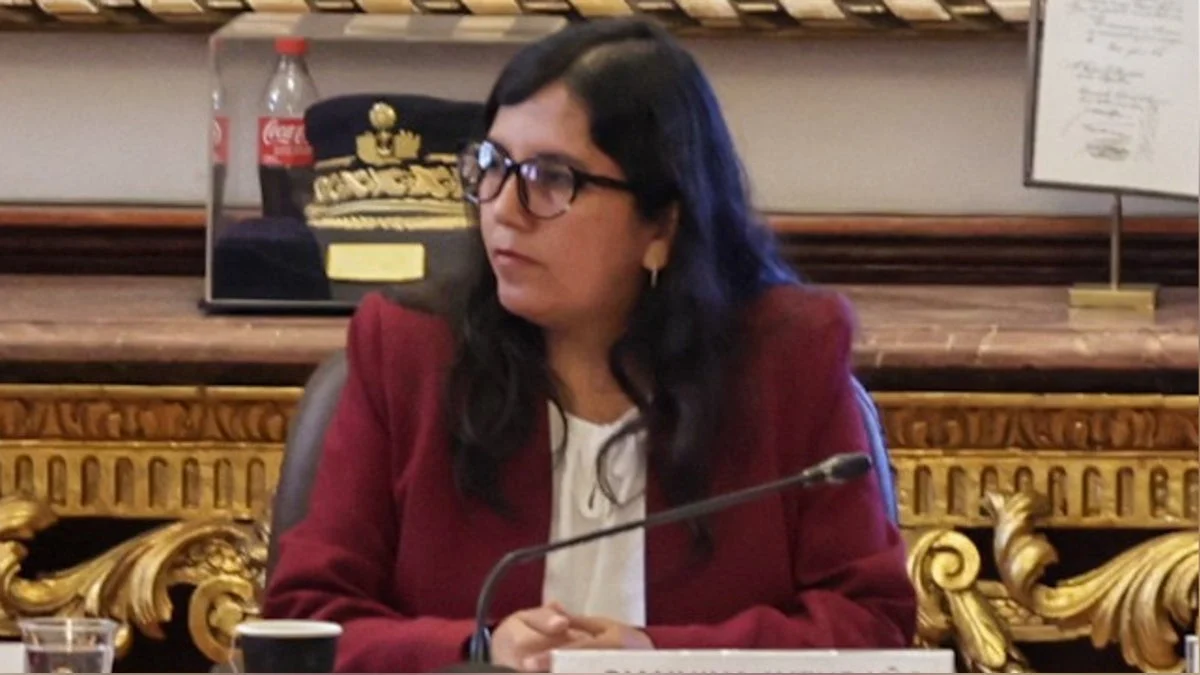
The legislative halls of the Chamber of Deputies were the site of a high-stakes political confrontation this week, as the Commission of Constitution, led by Chairwoman Giannina Avendaño, became the epicenter of a deepening rift between the legislative and executive branches. In a move that has sent shockwaves through the political establishment, Avendaño unilaterally refused to admit a motion of censure filed against her by members of the Fuerza Popular party.
The decision, which effectively sidelined a direct challenge to her leadership, set the stage for a contentious debate regarding the government’s request for extraordinary legislative powers. As the administration of the current government faces mounting pressure to secure these faculties to address national crises, the refusal to entertain the censure motion has transformed the commission into a theater of institutional conflict, raising questions about procedural integrity, political maneuvering, and the future of executive-legislative relations.
Chronology of the Conflict: From Friction to Defiance
The Build-up to the Motion
The tension within the Commission of Constitution did not emerge in a vacuum. For weeks, the relationship between the opposition-led commission and the executive branch had been deteriorating. The Executive had presented a comprehensive request for 120 days of legislative powers, encompassing 66 distinct requests across eight critical policy areas.
As the deadline for the review approached, members of Fuerza Popular expressed deep-seated dissatisfaction with how Avendaño—a representative of Juntos por el Perú—managed the commission’s agenda. Critics argued that her leadership was biased and that she had failed to uphold the impartiality required of the chair. This culminated in the formal presentation of a censure motion, intended to strip her of her leadership position before the critical vote on the Executive’s powers could occur.
The Session of Refusal
The atmosphere was electric when the commission convened. Anticipation hung heavy as members awaited the floor’s decision on the admissibility of the censure motion. Instead of allowing a vote on her own removal, Avendaño seized the initiative. She declared that the motion failed to meet the necessary procedural requirements for admission.
"The country is waiting for us to debate this legislative proposal," Avendaño stated from the podium, firmly brushing aside the objections of the opposition. "We may agree on some points or only partially, but ultimately, it is the population that must witness this debate and the arguments of the case. In that sense, we are moving forward to the debate, and the motion presented will not be admitted."
By denying the motion, Avendaño effectively insulated herself from immediate removal, allowing the commission to pivot directly into a discussion on a controversial predictamen—a preliminary report—that recommends the wholesale rejection of the Executive’s request for legislative powers.
Supporting Data: The Executive’s Ambitious Agenda
To understand the intensity of this political clash, one must examine what is at stake. The government’s request for legislative faculties is not a minor bureaucratic adjustment; it is a significant push to bypass standard parliamentary deliberation in favor of executive decree-making.
The Eight Pillars of the Request
The government has requested authorization for 120 days to legislate on eight key areas, encompassing 66 individual policy changes. These include:
- Security and Public Order: A direct response to rising crime rates that have dominated public discourse.
- Administrative Simplification: An attempt to reduce red tape that hampers economic growth.
- State Reform: A structural overhaul of various ministries to improve efficiency.
- Disaster Prevention (El Niño): Urgent infrastructure and preparedness planning for the anticipated climate phenomenon.
- Economic Reactivation: Specific tax and investment measures intended to pull the country out of a stagnant growth cycle.
- Infrastructure Development: Expedited project delivery mechanisms.
- Environmental Governance: Regulatory updates to comply with international standards.
- Social Inclusion: Targeted programs to support vulnerable populations.
The Opposition’s Perspective
The "predictamen" currently being debated in the commission suggests an outright archival of these requests. The opposition argues that the government has not provided sufficient justification for such a broad delegation of powers. They contend that the Executive is attempting to circumvent the legislative process to implement unpopular measures without the checks and balances inherent in parliamentary debate.
Official Responses and Political Repercussions
The Stance of the Opposition
Fuerza Popular and allied factions within the Chamber have labeled Avendaño’s refusal to process the censure motion as "authoritarian" and "a violation of democratic norms." Legislators from these parties argued that by shielding herself from a vote, the Chairwoman has effectively rendered the commission’s internal rules moot.
"The chair has lost the competence to preside over this commission," remarked a prominent opposition lawmaker. "By refusing to acknowledge a motion that is procedurally sound, she has demonstrated that her primary goal is to protect her political agenda rather than facilitate a fair, institutional process."
The Executive’s Defense
While the government has remained largely quiet on the internal dynamics of the commission, spokespeople have emphasized the urgency of the request. They argue that the country cannot afford a 120-day delay in legislative action. The administration views the Commission of Constitution’s skepticism not as a legitimate legislative oversight, but as an obstructionist tactic aimed at destabilizing the government.
Implications: A Looming Institutional Crisis
The standoff in the Commission of Constitution has wide-ranging implications for the stability of the current political system.
1. The Erosion of Institutional Trust
When the legislative branch descends into personal and procedural warfare, public trust in the state declines. The citizens, as Avendaño noted, are the ones waiting for results. However, when the legislative process becomes a game of "who can outmaneuver whom" rather than a debate on national policy, the electorate is left disillusioned.
2. The Risk of Governance Paralysis
If the commission proceeds to archive the Executive’s request for powers, the government will be forced to submit individual bills through the standard, slow-moving legislative process. This could significantly hinder the government’s ability to respond to the looming threat of the El Niño phenomenon or the escalating security crisis. The political cost of such paralysis could be devastating for the current administration.
3. The Precedent of Censorship Refusal
Avendaño’s decision to ignore the censure motion establishes a dangerous precedent. If a commission chair can unilaterally decide which motions against them are "admissible," the mechanism of censure—a key tool of parliamentary accountability—effectively ceases to exist. This could lead to a cycle where every chair shields themselves from accountability, further polarizing the Chamber of Deputies.
Conclusion: The Road Ahead
As the Commission of Constitution prepares to conclude its debate this Wednesday, the political climate remains volatile. The remaining four subjects of the legislative request are slated for discussion starting at 9:00 AM, and it is highly likely that the session will be marked by further procedural challenges.
The failure to reach a consensus on these legislative powers highlights a fundamental lack of communication between the Executive and the Legislative branches. Whether or not the government gets its requested powers, the current conflict has already left a mark on the legislative record.
For Giannina Avendaño, the path forward is narrow. By successfully fending off the initial attempt at her censure, she has bought herself time, but she has also solidified her position as a target for the opposition. The coming days will be critical; the nation watches, not only to see what happens to the requested legislative powers, but to see if the Chamber of Deputies can maintain the integrity of its own internal processes in the face of such deep ideological divide.
The struggle is far from over. As the debate continues, the fundamental question remains: can the legislative branch prioritize the needs of the country over the power dynamics of the commission, or will this standoff be remembered as the moment when institutional cooperation fully collapsed? The answer will be determined by the votes—and the maneuvers—that take place in the coming sessions.