Executive Summary: A Unified Front for Crisis Mitigation
In a significant move to bolster the nation’s disaster preparedness, the Peruvian Ministry of Economy and Finance (MEF) has formalised a strategic coordination framework with the country’s leading business associations. The objective is to establish a robust, collaborative mechanism to mitigate the anticipated socio-economic impact of the El Niño phenomenon. As climate forecasts point to severe weather risks, the synergy between the state and the private sector is being positioned as a cornerstone of national civil defense.
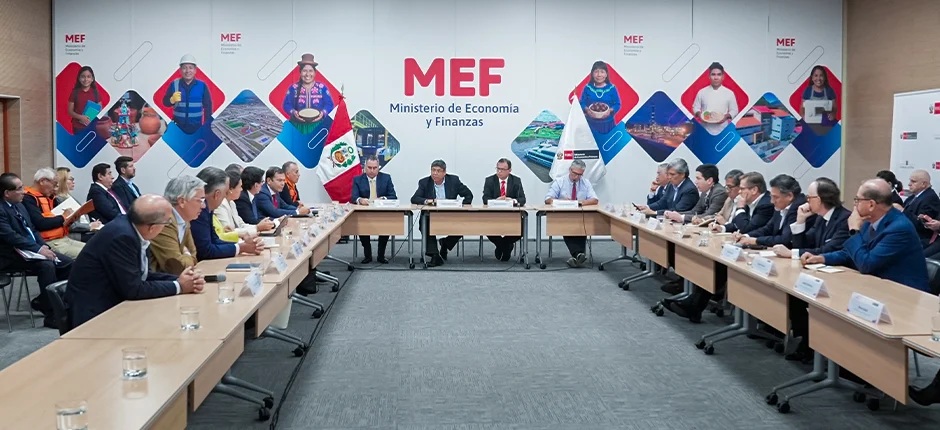
The collaboration, solidified during a session of the National Commission for FEN Risk Management, marks a departure from traditional emergency responses. Rather than working in silos, the government and the private sector are integrating logistical assets, technical expertise, and operational data to ensure a rapid, decentralized, and efficient response to potential natural disasters.
Chronology of Collaboration: From Consultation to Action
The current alignment is the culmination of several months of intensified dialogue between the executive branch and business leaders.
- Early Assessment Phase: Following initial meteorological warnings regarding the strengthening of sea surface temperatures in the Pacific, government agencies began mapping vulnerability zones.
- The Preliminary Dialogue: Initial meetings between the Ministry of Economy and the Confederation of Private Business Institutions (CONFIEP) focused on identifying the gaps in the state’s current response capacity.
- Strategic Formalization: The recent session of the National Commission for FEN Risk Management acted as the formal bridge, moving the partnership from conceptual discussion to operational planning.
- The Leadership Appointment: The decision to designate Carlos Neuhaus, President of the Association of Malls and Entertainment Centers (ACCEP), as the primary coordinator for private sector capabilities represents a shift toward a professionalized, structured management approach to emergency logistics.
Supporting Data: The Private Sector’s Arsenal
The strength of this partnership lies in the specific assets placed at the disposal of the state. The private sector, leveraging its extensive infrastructure, has committed a diverse array of resources to aid in national prevention and disaster relief:
1. Logistical and Operational Assets
- Heavy Machinery: CAPECO and construction-linked entities have pledged access to heavy earth-moving equipment, essential for clearing roads blocked by landslides or mudflows (huaicos).
- Infrastructure Support: Warehousing facilities across the country, managed by member companies of the various trade associations, are being earmarked as distribution hubs for humanitarian aid.
- Technical Equipment: Motobumps for flood mitigation, specialized communication tools, and heavy-duty transport vehicles are being cataloged for deployment in high-risk zones.
2. The Role of "Hombro a Hombro"
The inclusion of "Hombro a Hombro" (Shoulder to Shoulder)—an organization specialized in private sector emergency response—is critical. Their expertise in the "last mile" delivery of aid ensures that the resources provided by companies like ASBANC (Banking), AGAP (Agriculture), and AFIN (Infrastructure) reach the populations most in need without becoming bottlenecked by bureaucratic delays.
Official Responses: Navigating the Regulatory Landscape
A primary focus of the meeting was the friction caused by administrative red tape. Business leaders, represented by CONFIEP President Jorge Zapata Ríos, argued that existing regulations for permits and authorizations are too rigid to allow for rapid intervention in emergency scenarios.
The Proposal for Streamlining
The business associations have submitted a roadmap to the MEF aimed at "fast-tracking" the deployment of resources. The proposal includes:
- Temporary Regulatory Waivers: Exemptions or simplified processes for the mobilization of heavy machinery across municipal boundaries.
- Emergency Zoning Permissions: Allowing for the swift setup of temporary storage or shelter facilities on private or public land without the usual months-long permit wait times.
- Pre-Approved Intervention Protocols: Establishing a "green channel" for private companies to repair critical infrastructure (such as drainage systems or roads) without waiting for public tender processes during a declared emergency.
The MEF’s response was one of cautious openness. The Ministry has requested that all proposals be submitted with granular detail, including:
- Resource Mapping: A clear inventory of what is available and where.
- Timeline Projections: Expected deployment times for different assets.
- Budgetary Implications: Clear outlines of which actions are purely private-funded and which might require public fiscal support.
The Strategic Coalition: A Cross-Sectoral Effort
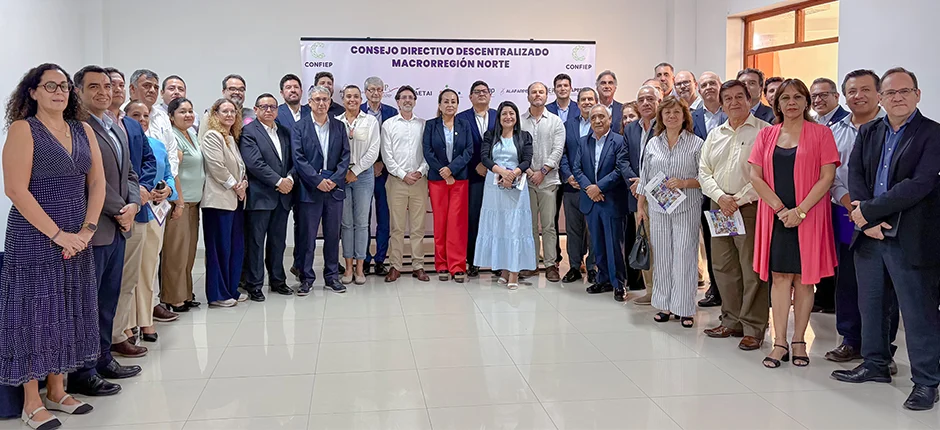
The scale of this collaboration is reflected in the diversity of the participants. The following organizations are now aligned under the National Commission for FEN Risk Management:
- Financial and Agricultural Sectors: ASBANC (Banking) and AGAP (Agricultural Producers) provide the economic backbone and supply chain security.
- Infrastructure and Construction: AFIN, CAPECO, and CODIP (Real Estate Developers) are providing the technical muscle to fortify infrastructure and respond to structural damage.
- Natural Resources: The Sociedad Nacional de Pesquería (SNP) and the Sociedad Nacional de Minería, Petróleo y Energía (SNMPE) offer regional presence and local logistical hubs, often situated in remote areas where government presence is sparse.
- Trade and Commercial Leadership: ComexPerú and ACCEP ensure that the flow of goods and the continuity of commercial operations remain as stable as possible, preventing supply chain collapse.
Implications: A New Paradigm for Disaster Management
The integration of the private sector into the state’s disaster response architecture carries profound implications for the Peruvian economy and social stability.
1. Economic Resilience
By maintaining open lines of communication, the state hopes to prevent the "panic-induced" market freezes that often occur during natural disasters. When the private sector is part of the solution, investment in infrastructure protection becomes a proactive endeavor rather than a reactive expense.
2. Operational Efficiency
The delegation of coordination to Carlos Neuhaus and the "Hombro a Hombro" team suggests that the state acknowledges its own limitations. By leveraging private-sector efficiency, the government is essentially outsourcing part of the logistics chain to entities that specialize in supply chain management, warehousing, and rapid deployment.
3. Public Trust and Governance
This alliance serves as a proof-of-concept for collaborative governance. In a country where distrust in public institutions can be high, the visible participation of major industry players provides a degree of reassurance to the public. It demonstrates that the state is not acting alone, and that the resources of the nation’s largest enterprises are working in tandem with the government to protect lives and livelihoods.
4. Challenges Ahead
Despite the optimism, significant hurdles remain. The success of this initiative will depend on:
- Institutional Memory: Ensuring that this level of coordination survives political transitions within the government.
- Regional Integration: Scaling this model to regional and local governments, where the majority of execution must take place.
- Communication Gaps: Maintaining a real-time data-sharing portal between the private sector’s inventory and the government’s operational command centers.
Conclusion: The Road Forward
As the government and the private sector finalize their operational protocols, the emphasis remains on speed and flexibility. The El Niño phenomenon is a reminder of the fragility of the region’s geography, but the current initiative highlights the strength of its human and economic capital.
By formalizing the coordination between the MEF and the leading business associations, Peru is taking a proactive stance, moving away from fragmented disaster management toward a holistic, national resilience strategy. The coming months will be a litmus test for this alliance; however, the foundational architecture for a more robust response is now firmly in place. As the country prepares for the challenges ahead, the unified front formed by these entities stands as a vital defense mechanism for the security and prosperity of the Peruvian people.