Executive Summary: Bridging Ancestral Tradition and Global Markets
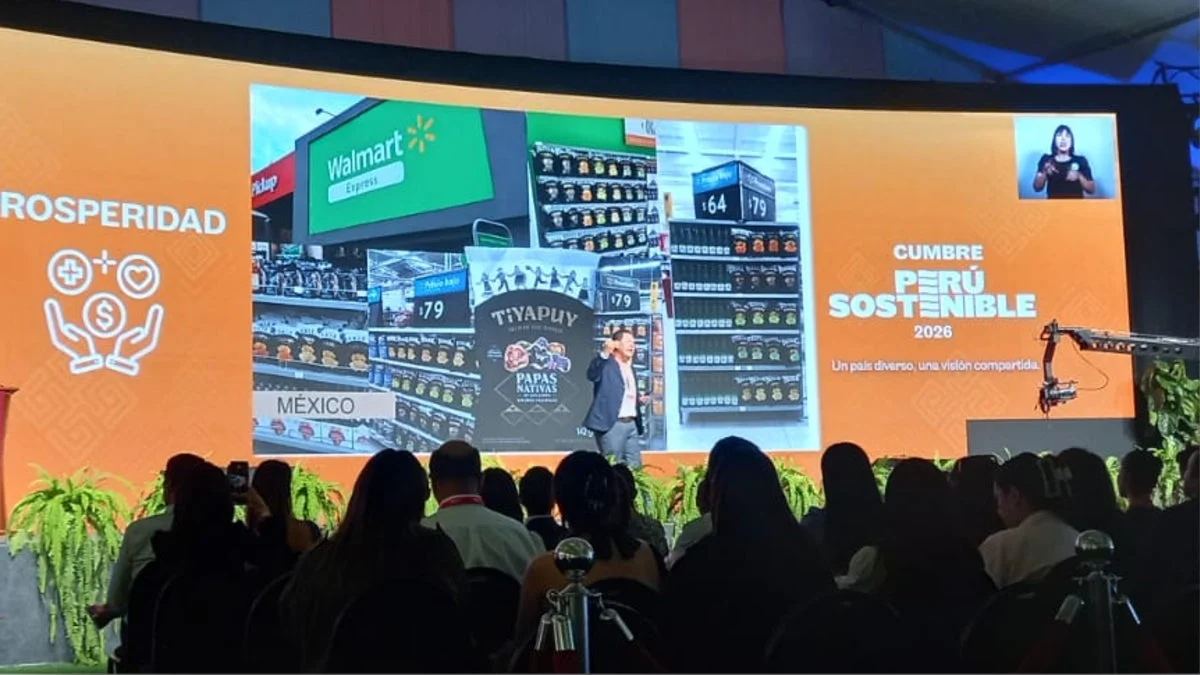
In a world increasingly concerned with food security, nutritional quality, and sustainable agriculture, the humble Peruvian native potato is undergoing a radical transformation. Carlos Añaños, the visionary entrepreneur behind the global beverage giant AJE Group and the fast-growing snack venture Tiyapuy, is leading a movement to shift the paradigm of how the world views Andean agriculture. During his keynote address at the Perú Sostenible 2026 forum, Añaños issued a stinging critique of a paradoxical reality: Peru, the ancestral home of the potato, continues to import mass-market pre-fried potatoes while its own high-altitude, nutrient-dense varieties remain underutilized in the global supply chain.
For Añaños, the path forward is clear: Peru must move beyond exporting raw commodities and instead invest in industrial-scale value addition. By combining ancient agricultural wisdom with state-of-the-art processing technology, he believes Peru can claim its rightful place as a premium supplier to the global food market.
The Chronology of a Vision: From Ayacucho to the World
The journey of Carlos Añaños is defined by a relentless drive to democratize consumption and elevate local products. His business philosophy has consistently centered on the idea that "privileged" markets are not the only ones deserving of quality.
- The Formative Years: Añaños’ background in Ayacucho—a region deeply tied to the Andean landscape—provided the cultural bedrock for his business ventures. After building AJE Group into a multinational powerhouse without reliance on traditional capital or external privileges, he turned his gaze toward the untapped potential of Andean biodiversity.
- The Pandemic Pivot (2020): During the height of the COVID-19 pandemic, Añaños launched Tiyapuy. The company was founded on the principle of "conscious consumption," focusing on snacks derived from Andean superfoods.
- Expanding the Scope (2022–2023): Realizing that snacks were only the beginning, the company began researching the viability of high-quality, pre-fried native potato lines, aiming to compete with the global giants that dominate the freezer aisles of supermarkets worldwide.
- Industrial Scaling (2024): A critical milestone was reached with a $15 million investment in a cutting-edge processing facility in Lurín, Peru. This plant serves as the cornerstone for Tiyapuy’s export strategy, allowing for the precise processing and freezing of native potato varieties at scale.
- Global Footprint (2025–Present): Tiyapuy has aggressively expanded its reach. Today, the brand is present in 18 countries, proving that there is a sophisticated global appetite for the unique flavors and health benefits of native Andean varieties.
The Economics of "Parvecho": Reclaiming Ancient Agricultural Wisdom
A central pillar of Añaños’ philosophy is the concept of parvecho. Often overlooked by modern industrial agriculture, this ancestral practice is, according to Añaños, the "secret sauce" behind the quality of the Andean potato.
Parvecho refers to the traditional system of land rotation and fallow periods, typically lasting three to five years. During this time, the soil is allowed to recover its natural mineral composition. "You cannot simply plant potatoes in the same place repeatedly," Añaños explained during his presentation. "By rotating crops, we allow the earth to perform its magic."
This method is not just a cultural heritage; it is a scientific necessity for high-quality production. The resulting potatoes, cultivated at altitudes exceeding 2,500 meters, possess high concentrations of anthocyanins—the powerful antioxidants that give many native potatoes their deep, rich colors. Añaños argues that by ignoring these practices, the global food industry has sacrificed nutritional quality for the sake of speed and volume.
Supporting Data: Why the Market is Ready for a Shift
The case for Peruvian native potatoes is built on three pillars: nutritional superiority, environmental sustainability, and economic sovereignty.
The Nutritional Value
Unlike mass-produced, commodity potatoes, native varieties are rich in health-promoting compounds. The deep pigments of the papa nativa are a direct result of their high antioxidant content. In an era where consumers are increasingly looking for "functional foods," these potatoes are perfectly positioned to capture market share from the traditional, processed starch options that currently dominate the market.
The "Black Label" Branding Strategy
Añaños has challenged conventional marketing wisdom. Tiyapuy’s signature packaging is black—a color often avoided in the food industry, which typically favors bright reds and yellows to stimulate hunger. Añaños explains that for the Andean farmer, black represents the earth at 3,600 meters above sea level. It is a tribute to the soil that produces these "jewels of color." This storytelling approach has resonated with international consumers who are seeking authenticity and provenance in their food purchases.
Investment and Infrastructure
The $15 million investment in the Lurín plant is the most significant indicator of the shift from a boutique artisanal model to a globally competitive industrial model. This facility is specifically designed to handle the delicate logistics of processing varieties that vary in shape, size, and density, ensuring that the final frozen product maintains its texture and taste—key requirements for the HORECA (Hotel, Restaurant, and Café) sector.
Official Perspectives and Industry Implications
The implications of Añaños’ strategy go far beyond a single company’s balance sheet. His advocacy has sparked a wider conversation among economists, policymakers, and agricultural experts in Peru.
Challenges to the Status Quo
Añaños’ critique of Peru’s import habits serves as a wake-up call. The country currently spends millions of dollars importing pre-fried potatoes from international markets, despite being the birthplace of over 3,000 varieties of the crop. Economists note that this is a classic example of "resource curse" or, more accurately, a failure in value-added processing. By transitioning from a raw material exporter to a processed goods exporter, Peru could significantly improve its trade balance and increase rural incomes.
The Ecosystem Approach
Añaños envisions more than just corporate growth; he speaks of an "ecosystem for entrepreneurs." He suggests that the success of Tiyapuy should serve as a blueprint for other Peruvian companies to leverage local biodiversity. This includes:
- Direct Trade: Eliminating unnecessary intermediaries to ensure that farmers receive a fair share of the value chain.
- Technological Integration: Adopting modern freezing and packaging technologies that preserve the integrity of the native product.
- Global Positioning: Marketing the "Andean Origin" not just as a geography, but as a stamp of quality and sustainability.
The Path Forward: Challenges and Opportunities
While the momentum is clearly in favor of native potatoes, the road to total market dominance is not without obstacles.
Scalability vs. Biodiversity
One of the primary challenges for Tiyapuy and its peers is the logistical difficulty of scaling the production of diverse native varieties. Unlike the uniform Russet or Maris Piper potatoes, native varieties come in hundreds of shapes and sizes, making uniform industrial processing a complex mechanical challenge. However, Añaños views this complexity as a competitive advantage rather than a hurdle, noting that it creates a "moat" around the product that global competitors cannot easily replicate.
International Regulatory Hurdles
Expanding into new markets requires navigating complex phytosanitary regulations and food safety standards. Tiyapuy’s presence in 18 countries is a testament to the fact that these hurdles can be overcome, but sustaining this growth will require consistent investment in international certifications and marketing education.
Sustainability as a Competitive Edge
As the global food industry faces increasing scrutiny over its carbon footprint and use of pesticides, the traditional, low-input methods of the Andes represent a sustainable future. If Peru can successfully market its "Parvecho" method as a standard of environmentally responsible agriculture, it will position itself at the forefront of the global "Green Food" movement.
Conclusion: A Call to Action
Carlos Añaños’ message is one of national pride intertwined with hard-nosed business logic. He posits that the magic of the Andes has been ignored for too long, treated as a curiosity rather than a commodity of immense global potential. With the Lurín plant now operational and a growing international footprint, the experiment is proving successful.
The lesson for the global market is simple: the future of food may lie in the past. By honoring the agricultural traditions of the Andes and applying the rigor of modern industrial science, Añaños is not just selling potatoes; he is selling a vision of a more sustainable, equitable, and delicious global food system. As he continues to push into new markets, the question is no longer whether the world will accept the native potato, but how quickly the Peruvian industry can rise to meet the global demand that he has helped to create.