Date: September 11, 2026
For decades, a persistent narrative has echoed through the halls of Peruvian politics: the claim that the country’s economic model—rooted in the 1993 Constitution—is the primary obstacle to national industrialization. Critics from the political left frequently argue that the constitutional framework is too restrictive, effectively chaining the nation’s productive potential. However, a deeper examination of the economic reality reveals a starkly different truth. The Constitution provides the foundational architecture for growth, centered on the principle of private initiative. The true bottleneck, however, lies not in the supreme law, but in the thicket of secondary regulations, bureaucratic red tape, and administrative hurdles that have suffocated investment.
The Myth of the Failing Economic Model
The argument that Peru’s economic stagnation is the fault of its market-oriented Constitution is increasingly seen as a populist deflection. In practice, the Constitution establishes broad, flexible rules of the game designed to encourage enterprise. The failure to achieve widespread industrialization is not a result of "too much capitalism," but rather the consequence of legislative and bureaucratic overreach.
Over the years, successive administrations have allowed a "regulatory jungle" to flourish. Each new law, decree, and municipal requirement adds a layer of complexity that discourages entrepreneurs from scaling their operations. By prioritizing rigid state control over flexible, competitive markets, these policies have effectively paralyzed the industrial sector, proving that the problem is not the blueprint of the economy, but the mechanics of its implementation.
The Agro-Export Miracle: A Blueprint for Success
If there is a definitive counter-narrative to the claim that Peru cannot industrialize, it is the meteoric rise of the agro-export sector. Two decades ago, this industry was a marginal player, with exports hovering around $500 million. Today, that figure has ballooned to $15 billion.
This transformation is nothing short of a miracle. It turned arid, inhospitable deserts into globally competitive agricultural powerhouses capable of supplying the most demanding markets in the world. The success of this sector offers a crucial lesson: industry thrives when it is provided with stable, long-term promotional frameworks rather than being treated as a cash cow for the state.
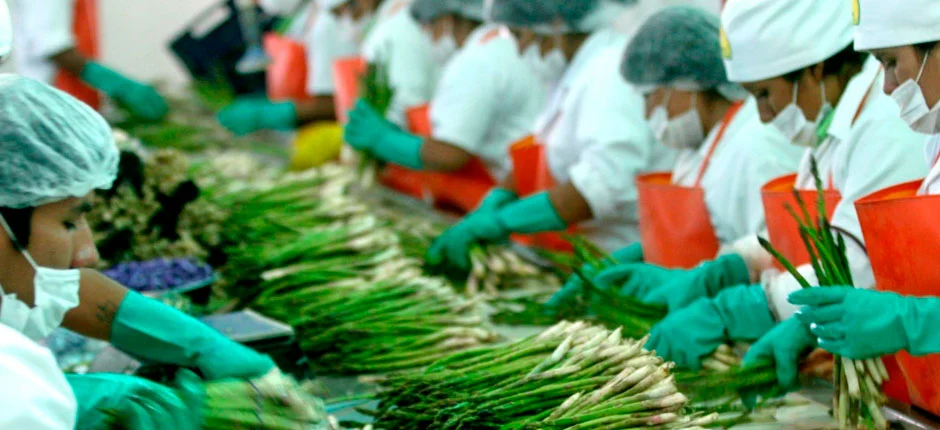
This progress was achieved by ignoring the dogmas of ideologically driven sectors. Instead, policymakers recognized that agro-exporting is a high-risk, capital-intensive industry—one that often faces subsidized competition from abroad. By fostering an environment that encouraged investment, rewarded innovation, and allowed for the integration of small-scale farmers into the value chain, the sector became a primary engine for job creation and tax revenue.
Chronology of a Sector Under Siege
The success of the agro-export industry has, ironically, made it a target. The following timeline outlines the evolution and subsequent political friction surrounding the sector:
- 2006–2016: The Golden Decade. Driven by the Agricultural Promotion Law, the sector experiences exponential growth. Deserts in Ica, La Libertad, and Piura are transformed, creating hundreds of thousands of formal, high-quality jobs.
- 2020: The Turning Point. Amidst social unrest and political instability, the original promotional framework is heavily modified. Critics argue the sector has "gained enough," leading to the implementation of a 30% increase in labor costs.
- 2023–2025: The Regulatory Squeeze. As the country faces economic headwinds, political discourse shifts toward eliminating tax incentives that remain essential for maintaining global competitiveness.
- 2026: The Climate Challenge. The onset of El Niño brings severe weather volatility. As the industry faces the dual threat of climate disruption and reduced margins, the debate over the future of agricultural policy reaches a fever pitch.
Supporting Data: Competitiveness vs. Intervention
The economic data provides a clear warning for those who seek to dismantle the incentives that built the sector. The agro-export industry is not merely a collection of large farms; it is a complex ecosystem.
- Export Growth: A 30-fold increase in value over 20 years.
- Employment: The sector is one of the largest employers in rural regions, significantly reducing poverty levels in areas that were previously left behind by the state.
- Fiscal Impact: Contrary to the "tax loophole" narrative, the sector contributes billions in direct and indirect taxes, driven by its scale and international success.
- Productivity Metrics: Peru consistently ranks among the top global suppliers for commodities like blueberries, avocados, and asparagus—a status that depends entirely on the ability to compete on price and quality, both of which are threatened by rising regulatory costs.
Official Responses and Political Dissonance
The current political atmosphere is defined by a deep divide. On one side, labor unions and populist factions argue that the industry’s "excess profits" should be redistributed to cover broader social expenditures. Their narrative centers on the idea that the sector is an elite enclave that has benefited enough from state support.
Conversely, industry leaders and economic experts warn that this "enough is enough" rhetoric is a fallacy. They point out that in a global market, profit margins are thin and highly sensitive to international price fluctuations and logistics costs. By stripping away tax benefits and imposing arbitrary wage hikes, the state is effectively eroding the very mechanisms that allowed these companies to survive the "lean years."
The government’s tendency to view the sector as a static pot of gold rather than a dynamic, investment-heavy industry is, according to analysts, a dangerous miscalculation. If the fiscal incentives that made Peru a global leader in agro-exports are withdrawn, investors will inevitably pivot to more stable jurisdictions, such as Chile or Mexico.
Implications: The Path Forward
The implications of continuing on the current trajectory are clear: a slowdown in industrial expansion, a decline in rural employment, and a lost opportunity to diversify the Peruvian economy.
To reverse this trend, the state must move beyond the "successful enough" narrative. The priority should not be the extraction of revenue from current winners, but the expansion of the "miracle" to other regions and sectors. This requires three distinct actions:
- Unlocking Irrigation Projects: Large-scale irrigation infrastructure that has been stalled or left incomplete for years must be prioritized. These projects are the "arteries" of industrial agriculture; without them, the potential for future growth is artificially capped.
- Structural Deregulation: The "maraña" (tangle) of laws and regulations that hinder new investments must be dismantled. A simplified, transparent, and stable regulatory framework is the single most effective stimulus package the government can offer.
- Stability as Policy: Investors require predictable rules. Frequent, populist-driven changes to tax codes and labor laws create a risk premium that drives away long-term capital.
Conclusion: Honoring the Model
The economic model that has governed Peru for the last three decades is not a failed experiment; it is a tool that has been inconsistently applied. The success of the agro-export industry proves that when the state focuses on creating the right environment—infrastructure, stable rules, and fair competition—private initiative can deliver prosperity that reaches the most remote corners of the country.
If Peru aspires to become a truly industrialized nation, it must stop treating its successful sectors as enemies of the people and start treating them as templates for development. The goal should be to replicate the agro-export success story across other industries, not to tear it down in a misguided attempt to force an ideological agenda. The path forward is not found in more regulation, but in the courage to clear the path for the private sector to do what it has already proven it can do: transform the landscape, create wealth, and provide a future for millions.