Executive Summary: A Nostalgic Revolution
In a stunning revelation that bridged the gap between 1990s pop-culture nostalgia and the bleeding edge of 2026 artificial intelligence, Meta CEO Mark Zuckerberg unveiled "Muse Charm" during the annual Meta Connect 2026 event. Designed as a portable, keychain-sized hardware device, Muse Charm serves as a dedicated physical host for Meta’s advanced AI agent, "Muse."
Moving away from the screen-centric experience of modern smartphones, the device aims to provide instantaneous, voice-first access to artificial intelligence. By stripping away the distractions of notifications and app-switching, Meta is betting that the future of personal computing lies in specialized, low-friction interfaces that feel more like a digital pet than a complex computational tool.
The Chronology of a Vision: From Concept to Reality
The journey toward Muse Charm began years ago with Meta’s pivot toward open-source AI and the development of the Llama model series.
- 2023–2024 (The Foundation): Meta established its dominance in the LLM (Large Language Model) space with the Llama series, while concurrently exploring hardware through the Ray-Ban Meta smart glasses collaboration.
- Early 2025 (The AI Agent Shift): Meta transitioned from chat-based interfaces to "Agentic AI"—systems capable of performing multi-step tasks autonomously.
- September 2026 (The Reveal): During the keynote address at Meta Connect, Zuckerberg demonstrated how the "Muse" engine, previously confined to software apps and smart glasses, could be miniaturized into a standalone hardware unit.
- Q4 2026 (The Roadmap): The company confirmed that distribution is slated for the upcoming holiday season, targeting early adopters and tech enthusiasts.
Understanding Muse Charm: The "Tamagotchi" for the AI Age
To describe Muse Charm simply as a "gadget" would be a disservice to its design philosophy. Meta has explicitly marketed the device as an "encantador y divertido" (charming and fun) companion.
Design and Form Factor
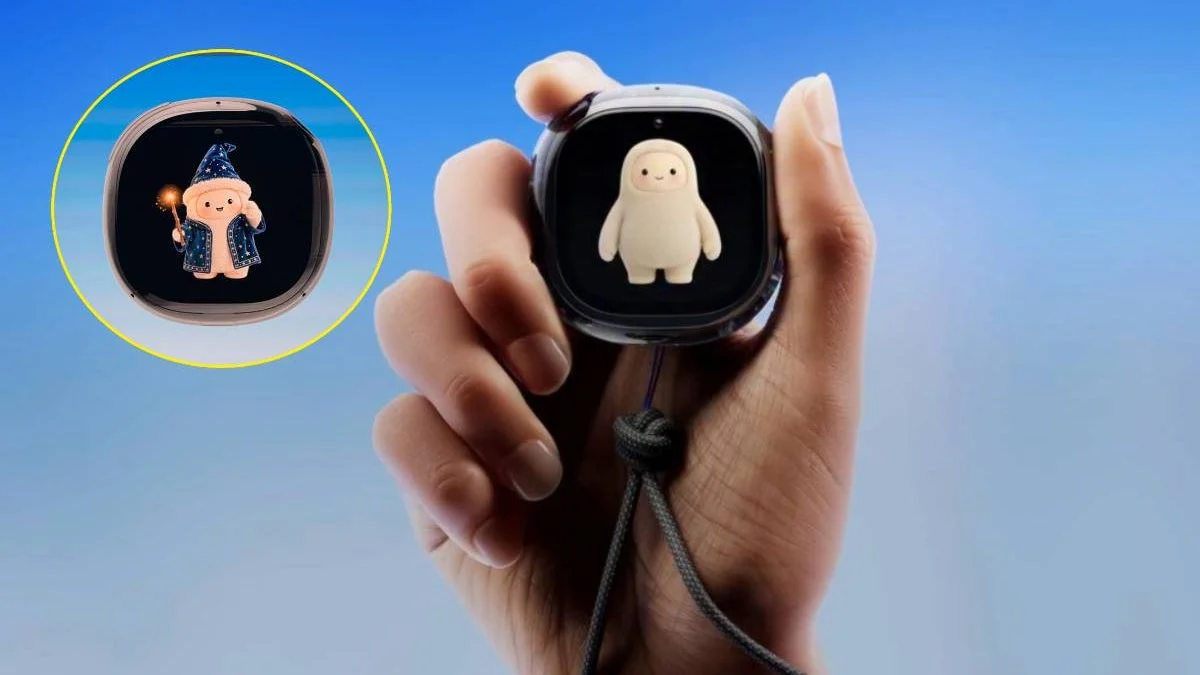
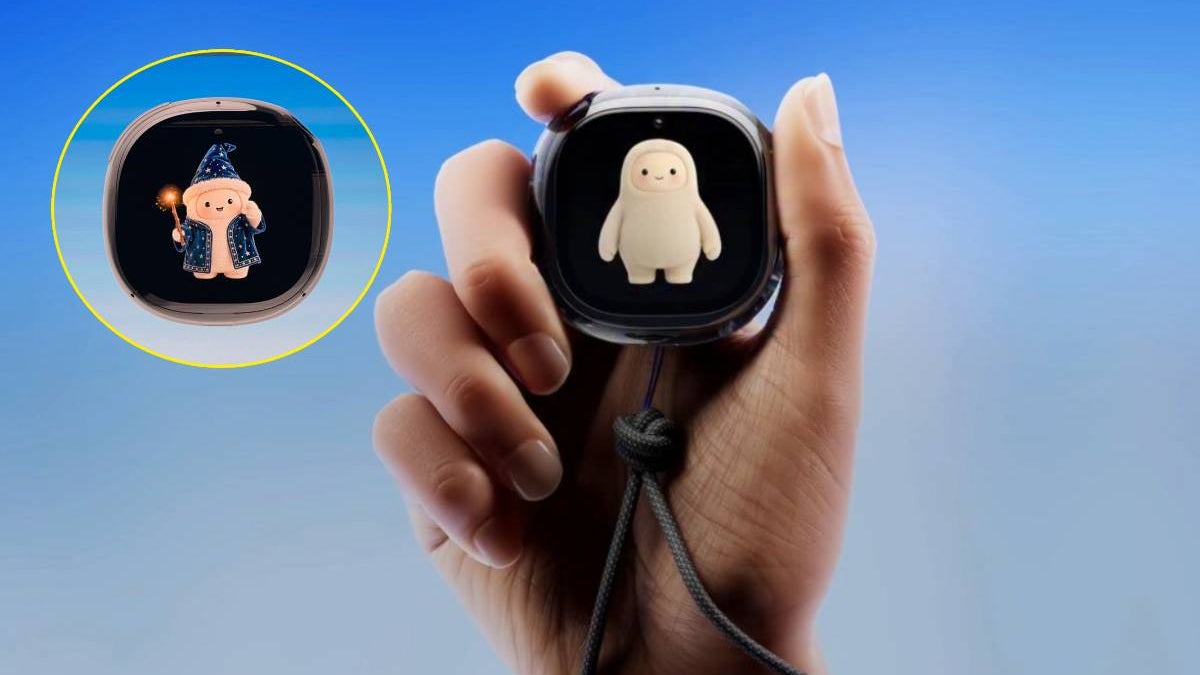
The device is remarkably compact, roughly the size of a standard keychain fob. It features a minimalist aesthetic, reminiscent of the iconic 1990s Tamagotchi handhelds, but housing a sophisticated neural processing unit (NPU) capable of handling real-time voice synthesis and complex data reasoning.
The "Muse" Ecosystem
Unlike previous attempts at AI hardware, such as the Humane Pin or Rabbit R1, Muse Charm is built upon the existing, highly refined Muse agent architecture. This includes:
- Voice Pila: A highly responsive, low-latency audio processing stack that mimics natural human conversation.
- Real-Time Avatar: The device can project or render a dynamic visual representation of the AI, providing users with a sense of "presence."
- Autonomous Tasking: The device does not merely answer questions; it acts. If a user asks to "find a flight," Muse Charm scans travel APIs, compares pricing, and navigates web interfaces to execute the reservation.
Supporting Data: Why Hardware Matters
The move into dedicated hardware is a calculated strategic maneuver for Meta. According to industry analysis, users spend an average of 4.5 hours per day on smartphones, with 80% of that time consumed by social media feeds. By decoupling the AI agent from the smartphone, Meta is attempting to create a "zero-distraction" zone.
Technical Specifications (As Reported)
- Connectivity: Standalone Wi-Fi and 5G connectivity, removing the need for a tethered smartphone.
- Processing: Proprietary Meta silicon optimized for agentic workflows.
- Interface: Primary voice-command input with a micro-LED screen for status updates and avatar interaction.
- Battery Life: Optimized for a full day of "active engagement" (estimated 12-16 hours).
Official Responses and Strategic Rationale
During his presentation, Mark Zuckerberg addressed the elephant in the room: Why do we need another device?
"For a long time, the smartphone has been the gateway to the internet," Zuckerberg explained. "But it is a high-friction environment. When you want to get something done—book a table, check a flight, or summarize an email—you shouldn’t have to unlock a device, open an app, and navigate through menus. Muse Charm is about bringing that intelligence to the surface. Outside of our smart glasses, this is the fastest way to interact with Muse."
The company’s leadership maintains that the device is not meant to replace the phone entirely, but to serve as a "specialized companion" for people on the go.

Implications: The Future of Agentic AI
The release of Muse Charm carries significant implications for the broader technology ecosystem.
1. The Rise of "Invisible" Computing
Meta is pushing the industry toward a paradigm where AI is no longer something you "go to" by opening an application, but something that is "always there" via a physical totem. This shift could redefine how we view consumer electronics—shifting from high-powered, multipurpose machines to specialized, intelligent agents.
2. Privacy and Security Concerns
With a device that is constantly listening for commands, Meta faces the inevitable scrutiny regarding data privacy. Zuckerberg has previously defended the company’s stance, emphasizing that each enterprise—including Meta—must assume full responsibility for the security of its models. Users will be watching closely to see if Meta’s commitment to "local-first" processing holds true for the Muse Charm.
3. Economic Impact
By integrating booking and transaction capabilities directly into the AI, Meta is positioning Muse Charm as a potential competitor to travel agencies, personal assistants, and concierge services. If the device succeeds, it could create a new marketplace for "AI-native" services where companies optimize their websites to be "navigable" by Muse, rather than by human clicks.
Looking Ahead: The December Rollout
While Meta has remained tight-lipped regarding the specific price point, market analysts suggest a competitive entry-level price, potentially subsidized by the company’s broader subscription service, "Meta One."

The upcoming holiday season will serve as the ultimate litmus test. If consumers embrace the concept of a "digital companion" as a gift, Meta will have successfully secured a foothold in the hardware market that has eluded other tech giants.
Conclusion
Muse Charm is more than a piece of hardware; it is a declaration of intent. Meta is signaling that the era of the passive, screen-staring user is evolving into an era of the active, task-oriented participant. Whether Muse Charm becomes a staple of modern life or a footnote in the history of wearable technology depends on one factor: the utility of its "Muse" agent. If the AI can genuinely simplify our lives, the device will be an essential companion. If it remains a novelty, it will likely follow the path of its 90s predecessors into the annals of tech nostalgia.
As we approach December 2026, all eyes remain on Menlo Park. The stage is set for the most ambitious experiment in human-AI interaction to date.