
Executive Summary: The Push for Structural Change
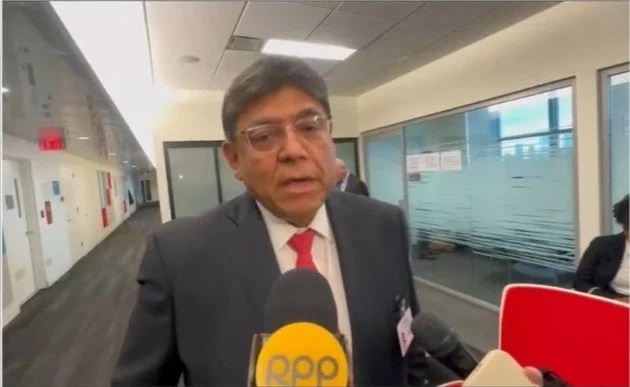
In the sidelines of the United Nations General Assembly in New York, the Peruvian Minister of Economy and Finance, Elmer Cuba, outlined a definitive strategy for the administration’s economic agenda. The core of the government’s plan rests on a request for legislative powers from Congress, a move designed to bypass the traditional, often stagnant, legislative process to implement urgent structural reforms. Minister Cuba emphasized that while the Executive is prepared to act via executive decree in areas of administrative efficiency, significant reforms regarding taxation, labor, and public-private partnerships (PPPs) require a broader legislative mandate.
The government’s message is clear: if the requested facultades legislativas (legislative powers) are denied by the legislative branch, the Executive is prepared to pivot to a "Plan B," which involves submitting individual bills to Congress. While this path is recognized as significantly more time-consuming, the Ministry of Economy and Finance (MEF) remains committed to its core objective of reducing informality and boosting economic productivity.
The Three Pillars of Reform: A Strategic Overhaul
Minister Cuba highlighted that the requested legislative powers are not intended for broad, sweeping changes without purpose, but rather for three specific, highly technical reforms aimed at revitalizing the Peruvian economy.
1. Reimagining the Micro-Enterprise Tax System
The current taxation framework for micro-enterprises has long been criticized as dysfunctional. According to the Minister, the existing structure fails on three fronts: it creates a burden for the tax authority, it is overly complex for the businesses themselves, and it acts as a disincentive for formalizing labor. The proposed reform seeks to simplify the tax regime to encourage small businesses to enter the formal sector, thereby expanding the tax base while reducing the administrative costs of compliance.
2. Labor Market Flexibility and Formalization
The second pillar involves a comprehensive review of labor regulations. Cuba argued that current laws have failed to catalyze formalization within the micro-enterprise sector. By recalibrating these regulations, the Executive hopes to create a more attractive environment for workers to transition from the informal to the formal economy, providing them with greater social security and stability while allowing businesses to operate with more predictable costs.
3. Streamlining Public-Private Partnerships (PPPs)
Perhaps the most ambitious component is the reform of the PPP framework. The Minister pointed to the "bottleneck" that occurs between the adjudication of a project and the actual commencement of construction. Under current protocols, the State is bogged down by excessive administrative processes post-award. The government’s proposal aims to shift the burden of initial costs and management to the winning bidder, allowing for faster execution, with the State recognizing these expenditures later. This change is intended to drastically shorten the timeline for infrastructure development.
Chronology of Events: From Lima to New York
- Initial Proposal: The Executive branch formally requested legislative powers from Congress, citing the need for speed in implementing economic recovery measures.
- Legislative Deliberation: The request faced scrutiny within the Chamber of Deputies, leading to a period of debate regarding the scope of the delegation of powers.
- The UN General Assembly Meetings: Minister Elmer Cuba traveled to New York as part of the presidential delegation. It was here that he articulated the government’s contingency plan to the press.
- Current Status: The government continues to lobby for the approval of the powers while simultaneously preparing the groundwork for individual legislation should the initial request be rejected.
Supporting Data and Administrative Efficiency
Minister Cuba noted that while major reforms require congressional approval, the MEF is not standing idle. There are several levers of the economy that the Executive can pull without new legislation.
"We are focusing on immediate improvements in the management of public investment," Cuba stated. By optimizing how public funds are deployed and tightening the net on tax evasion—specifically regarding the General Sales Tax (IGV) and Income Tax—the government intends to boost fiscal revenue without necessarily needing to pass new, complex laws. These administrative actions are seen as a "bridge" to sustain the economy while the more structural, legislative reforms move through the political pipeline.
Official Responses and Political Implications
The tone from the Ministry of Economy and Finance is one of pragmatic urgency. "We will have to go to Congress to present bills to lower informality," Minister Cuba admitted during his interview with RPP. "We will have to go and convince them with arguments, and it will take longer than the requested powers, but there is no other way. The ‘Plan B’ is simply to go to Congress."
This statement underscores the tension between the Executive and the Legislative branches. The government is attempting to frame the request for powers as an essential tool for national growth, positioning any obstruction from Congress as a delay to progress. Conversely, the Legislative branch maintains its prerogative to oversee and approve such powers, leading to a classic separation-of-powers friction point.
International Cooperation: The BID Connection
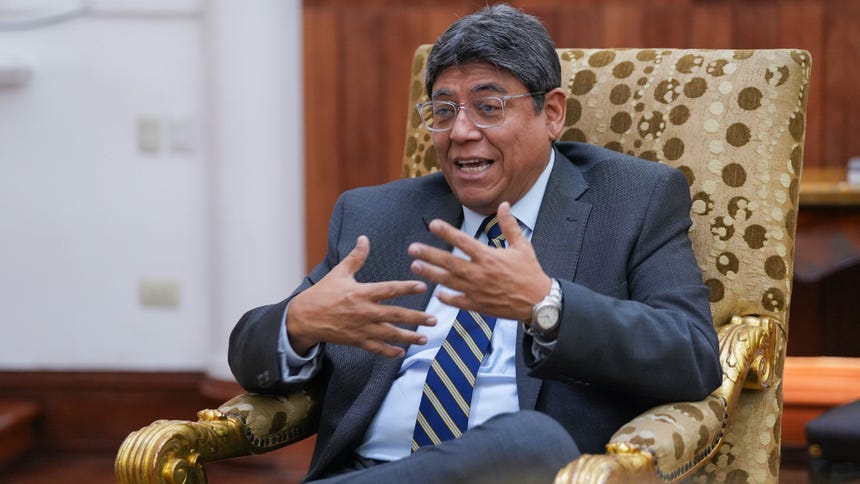
Beyond domestic reform, the government is looking toward multilateral support to stabilize and grow the economy. During the UN assembly, President Keiko Fujimori held a high-level bilateral meeting with the President of the Inter-American Development Bank (BID).
Minister Cuba, who participated in the discussions, confirmed that the meeting served to reaffirm a strategic roadmap for cooperation in four key areas:
- Education: Investments aimed at long-term human capital development.
- Infrastructure: Addressing the country’s persistent logistical deficits.
- Climate Resilience: Specifically focusing on mitigation efforts against the El Niño phenomenon.
- Modernization of the State: Streamlining bureaucratic processes to make the government more efficient.
While no specific dollar amounts have been finalized, the framework for collaboration has been set. The next phase involves technical working groups between the BID’s vice presidents and Peruvian sector representatives to translate these broad goals into concrete, fundable projects.
Analysis: The Path Forward
The situation facing the administration is a litmus test for the government’s ability to manage its political capital. The reliance on legislative powers suggests a desire for "shock" reforms, while the acknowledgment of a "Plan B" reveals an awareness of potential political defeat.
The Cost of Delay
If the government is forced to pursue the "Plan B" of individual bills, the primary casualty will be time. In the context of global economic volatility, time is a luxury. The legislative process in Congress can be subject to amendments, committee delays, and partisan stalling, which could dilute the impact of the proposed economic reforms.
The Informal Economy Challenge
At the heart of all these debates is the staggering rate of informality in Peru. By targeting the tax regime and labor laws simultaneously, the MEF is attempting a two-pronged attack on the informal sector. However, success is not guaranteed. Previous administrations have attempted similar reforms with mixed results, often encountering resistance from small business owners who fear the increased cost of compliance and from labor unions concerned about the erosion of rights.
Strengthening State Capacity
The partnership with the BID is an essential safety valve. By focusing on the modernization of the state and climate resilience, the government is attempting to build "soft power" and internal capacity. This provides a narrative of stability and institutional strength, which is vital for maintaining investor confidence, even as the internal political debate over legislative powers continues to unfold.
Conclusion
As the government continues its efforts on the international stage, the domestic focus remains firmly on the legislative battle in Lima. Minister Elmer Cuba’s message is clear: the administration has a vision for economic structural change, and while they prefer the efficiency of delegated legislative powers, they are prepared for the arduous task of convincing Congress bill-by-bill.
The coming months will be critical. Whether through the granting of legislative powers or a protracted series of debates in the Chamber of Deputies, the outcome will define the economic trajectory of the current administration. With international partners like the BID waiting to provide the necessary support for development, the government’s ability to navigate these internal political waters will be the ultimate determinant of whether these ambitious reforms become reality or remain merely a strategy on paper.