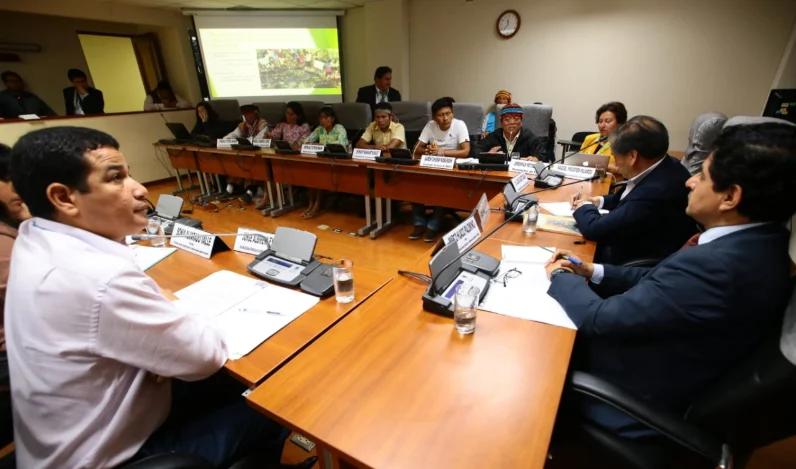

In a decisive move to bolster national resilience against climate volatility, the Peruvian government is leveraging the "Obras por Impuestos" (OxI) Exprés mechanism to fast-track critical infrastructure projects. During a high-level assembly of the Commission for Productive Development, Energy, Mines, Infrastructure, and Labor of the Senate, held in the northern region of Piura, officials from PROINVERSIÓN underscored the strategic importance of the Emergency Decree (DU) N° 010-2026. This policy framework is designed to bridge the gap between resource availability and the urgent need for disaster prevention and rehabilitation in the face of the El Niño phenomenon.
Main Facts: The Architecture of OxI Exprés
The "Obras por Impuestos" (Works for Taxes) mechanism has long been a pillar of public-private collaboration in Peru, allowing private companies to finance and execute public infrastructure projects in exchange for tax credits. However, the introduction of the OxI Exprés (under DU N° 010-2026) marks a significant evolution in this model, shifting the focus from standard development to high-velocity emergency intervention.
Luis Del Carpio, Executive Director of PROINVERSIÓN, emphasized that the agency is currently providing technical assistance with a "sense of urgency" to public entities across the country. The core objective is to bypass traditional bureaucratic hurdles that have historically delayed the execution of critical defenses against natural disasters. Under this decree, the mechanism can be utilized for:
- Preventative measures and disaster preparedness.
- Rapid response to imminent danger.
- Rehabilitation of infrastructure following climate-related catastrophes.
- IOARR (Investments of Optimization, Expansion, Reposition, and Rehabilitation) of emergency services.
By simplifying the procurement process, the government aims to safeguard essential public services—such as water, electricity, and transport—before they are compromised by extreme weather events.
Chronology and Procedure: The 24-Day Path to Implementation
One of the most transformative aspects of the OxI Exprés model is its structured timeline. PROINVERSIÓN has streamlined the process into a three-phase cycle that can be completed in approximately 24 business days, a significant reduction compared to standard public procurement cycles.
Phase 1: Prioritization
The process begins with the public entity identifying the emergency service or registering an IOARR. The entity must verify the availability of resources, secure the necessary approvals for the priority list, and appoint a "Special Committee" tasked with managing the procurement.
Phase 2: Preparatory Acts
Once prioritized, the entity conducts technical and legal feasibility assessments. The head of the public entity then formally authorizes the "direct contracting" of the project, a measure that bypasses the need for lengthy competitive bidding while maintaining oversight.
Phase 3: Direct Contracting
The Special Committee invites at least two companies to present proposals. Following an expedited evaluation, a winner is selected, and an Investment Agreement is signed.
Crucially, the regulation mandates transparency throughout this phase. PROINVERSIÓN acts as a monitor, requiring the publication of the authorization resolution, the invitations issued, the winning proposal, and the final investment agreement. Furthermore, while the Controller’s Office (Contraloría) does not need to provide a prior report for each project, the agency maintains its full mandate for concurrent and post-project control to prevent corruption.
Supporting Data: The Potential of Piura
The selection of Piura as the venue for this announcement was not coincidental. As a region frequently hit by the El Niño phenomenon, Piura represents both the greatest challenge and the greatest opportunity for the OxI model.
Currently, Piura possesses a staggering S/ 4,352 million in potential capacity for Obras por Impuestos. This resource pool is divided among key stakeholders:

- Regional Government: S/ 2,657 million.
- Local Governments: S/ 1,614 million.
- Public Universities: Over S/ 80 million.
This financial capacity, if fully activated, could catalyze a massive shift in the region’s vulnerability profile. Between 2009 and 2026, Piura successfully executed 97 interventions totaling S/ 1,671 million, focusing largely on the sectors of education, transportation, sanitation, and public security. With a current "potential portfolio" of 44 additional projects valued at S/ 1,430 million, the region is poised to significantly upgrade its resilience if the OxI Exprés model is applied with efficiency.
Nationally, the trend is equally promising. In 2026 alone, Peru has adjudicated 653 interventions nationwide, representing a total investment of over S/ 8,800 million.
Official Responses and Stakeholder Alignment
The Senate Commission session in Piura brought together a diverse group of stakeholders, signaling broad institutional support for the accelerated model. Key figures in attendance included:
- Marco Vinelli, Minister of Agrarian Development and Irrigation.
- Javier Bereche, President of the Chamber of Commerce and Production of Piura.
- Felipe James, President of the National Society of Industries (SNI).
- César Tello, President of the Association of Exporters (ADEX).
- Karla Schaefer, Senator of the Republic.
The consensus among these leaders is that the traditional state-led procurement process is too slow to keep pace with the urgency of climate-driven threats. By empowering the private sector to take a lead role in technical execution, the government is essentially "outsourcing" the project management burden while maintaining public oversight.
Luis Del Carpio noted that the responsibility for the success of these projects lies squarely with the heads of the public entities and their technical teams. "The framework exists to protect our families and preserve infrastructure," Del Carpio stated. "The challenge now is for regional and local governments to effectively utilize these tools."
Implications: A New Era for Public Infrastructure?
The implementation of OxI Exprés represents a fundamental shift in the philosophy of public spending in Peru. By moving from a reactive stance to a proactive, "emergency-ready" model, the government is attempting to mitigate the economic shock of natural disasters before they occur.
Economic Impact
By allowing private companies to perform works in lieu of taxes, the state effectively de-risks infrastructure projects. Companies that have a vested interest in the region—such as those in the agricultural and industrial sectors—are often more motivated to deliver quality, timely infrastructure because it directly affects their supply chains and operational stability.
The Challenge of Oversight
While the "Exprés" nature of the program offers speed, it also places a higher burden of transparency on the government. The requirement for PROINVERSIÓN to issue a monthly report to the Ministry of Economy and Finance (MEF) is a safeguard designed to ensure that the rapid procurement does not lead to cost overruns or the selection of unqualified contractors.
Long-term Resilience
The ultimate test of this policy will be the 2027-2028 rainy seasons. If the projects currently in the pipeline are completed on time, the reduction in flood damage and service disruptions will serve as a powerful proof-of-concept for the OxI Exprés model.
In conclusion, the integration of private sector agility with public sector oversight, as evidenced by the OxI Exprés initiative, provides a blueprint for how developing nations can address infrastructure gaps in the age of climate change. For a region like Piura, the ability to turn billions of soles in tax capacity into physical barriers, improved roads, and resilient sanitation systems is not just a policy success—it is a matter of survival. As the government continues to refine this process, the focus will remain on balancing the urgent need for speed with the uncompromising requirements of transparency and technical excellence.