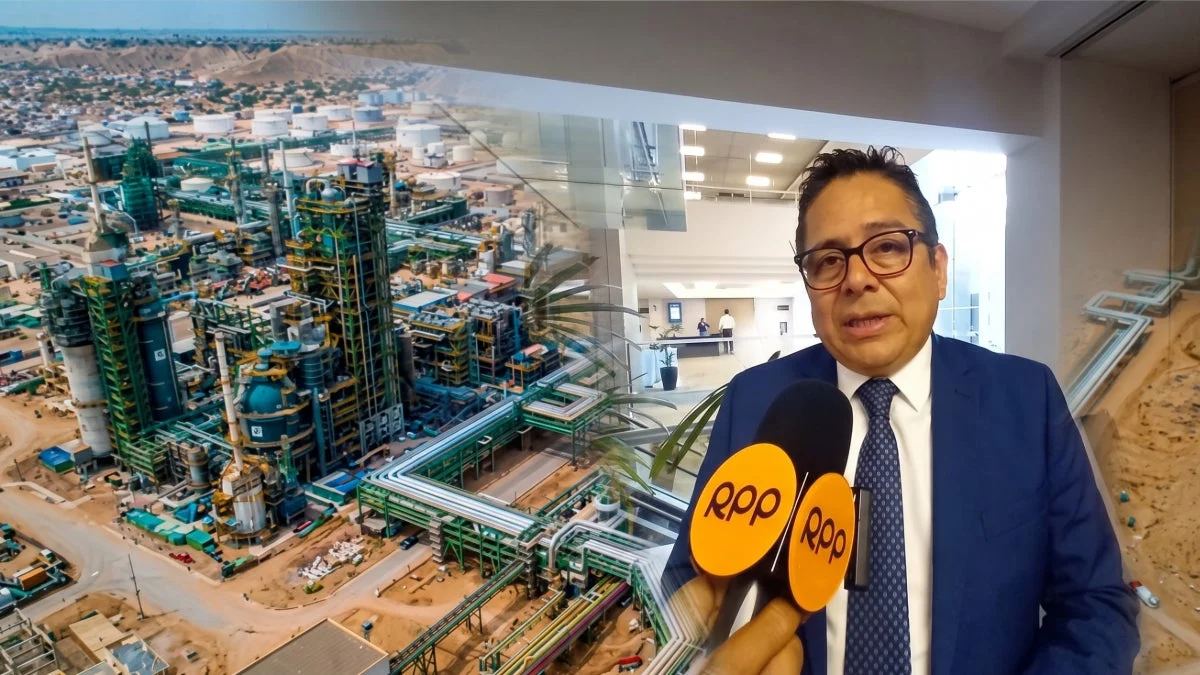

In a stark presentation before the Congressional Labor Commission, Minister of Labor Juan Sheput unveiled a grim diagnostic of the Peruvian Social Health Insurance system (EsSalud), describing the institution as being in a state of terminal decline. With a projected cash deficit of S/1,957 million for 2026—the highest in the institution’s history—the Minister warned that without radical structural reform, the backbone of public healthcare in Peru faces total operational paralysis.
The figures presented are not merely accounting errors; they represent an existential threat to millions of citizens. Sheput’s analysis suggests that the cost to "rescue" and fully modernize EsSalud is approximately S/39,494 million, a staggering sum he likened to the cost of "one and a half Talara Refineries."
The Financial Abyss: A Snapshot of 2026
The financial trajectory of EsSalud has been deteriorating at an accelerating pace. In 2025, the institution reported its highest fiscal deficit in recent years, reaching S/576 million. However, the projection for 2026 is nearly triple that amount.
"In 2025, the deficit was S/576 million; for 2026, it would be S/1,957 million if we do nothing today," Sheput warned. "There is a deficit situation that was unimaginable for the entire country. Simply put, we cannot continue like this."
This liquidity crisis has immediate implications for patient care. When an institution cannot meet its cash flow requirements, it fails to pay suppliers, leading to critical shortages of essential medicines, delays in medical equipment maintenance, and the suspension of necessary surgical procedures. The systemic lack of liquidity effectively compromises the institution’s ability to fulfill its primary mandate: the health of its insured population.
Chronology of Institutional Decay: Five Years of Chaos
Minister Sheput attributed the current catastrophic state of EsSalud to a profound deterioration of governance over the last five years. During this brief period, the institution was managed by 14 different executive presidents and 22 general managers.
A History of Instability
- Historical Context: In previous eras, the institution maintained a stable leadership model, averaging only two executive presidents per five-year cycle.
- The Last Quinquennium: The rapid turnover rate of 14 heads and 22 general managers has, according to Sheput, "destroyed the institution." This lack of continuity has prevented the execution of long-term strategies.
- Failed Reform Attempts: The Ministry of Labor and Employment Promotion (MTPE) identified at least 10 separate attempts at reforming EsSalud in recent years. None of these initiatives reached completion, leaving the institution stuck in an archaic and inefficient model that lacks the agility required for modern healthcare delivery.
The Minister’s testimony emphasized that institutional strength is built on continuity. The "revolving door" policy at the executive level has effectively crippled the organization’s ability to implement fiscal discipline or long-term infrastructure planning.
Supporting Data: The Anatomy of a Deficit
The financial woes of EsSalud are multi-faceted, involving a complex interplay of debt, mismanagement, and demographic shifts.
The Debt Burden
The total financial obligations of EsSalud are estimated to reach S/5,756 million. Of this, S/3,406 million is classified as short-term debt—obligations that must be met immediately to avoid legal actions, labor disputes, and service disruptions. This includes judicial debts, arbitral awards, and outstanding payments to suppliers.
Escalating Personnel Costs
One of the most contentious points raised by the Minister was the ballooning cost of personnel.
- Budget Growth: Personnel expenditures surged from S/2,981 million in 2010 to a projected S/9,419 million in 2026, a 216% increase.
- Productivity Bonuses: Between 2019 and 2024, approximately S/10,000 million was disbursed in "productivity bonuses." Sheput criticized these payments heavily, noting that there was virtually no performance metrics or KPIs associated with these disbursements, suggesting that taxpayer money was used to pad salaries without achieving measurable improvements in patient outcomes.
The Physician Gap
While the workforce has grown to approximately 79,000 employees, the allocation of human resources is skewed. Since 2021, the number of physicians contracted by the institution has fallen by 4%. The resulting physician-to-patient ratio is dire:
- EsSalud: 12.5 doctors per 10,000 insured.
- Colombia: 24.5 doctors per 10,000.
- Chile: 31.7 doctors per 10,000.
This data highlights a systemic imbalance: the administrative and support staff costs have grown exponentially while the core clinical personnel necessary for patient care have seen a decline.
The "State Debt": Institutional Embezzlement by Proxy
Perhaps the most inflammatory revelation in the Minister’s report is the debt owed to EsSalud by other government entities. Public sector bodies currently owe S/2,330 million in social security contributions, with S/1,469 million coming from regional governments and S/425 million from local municipalities.
"The Ministry of Economy and Finance (MEF) transfers the money to the regional governments to pay their obligations to EsSalud, but the regional governments do not transfer it," Sheput explained. "They do anything with that money except transfer it. We have had regional governors tell past executive presidents of EsSalud, ‘I’m not going to pay, don’t even try to collect, I don’t have the money.’"
Because there is currently no robust legal framework to penalize this misappropriation, these funds—intended for the healthcare of public workers—are routinely diverted to other expenditures. The Minister has called for immediate legislative changes to mandate and enforce the transfer of these funds, which would provide an immediate, albeit temporary, liquidity injection for the struggling insurance giant.
Implications: The Long Road to Recovery
The price tag for a full recovery is staggering. To achieve a functional, modern, and sustainable health system, the government must secure S/39,494 million.
The Breakdown of the "Rescue Plan"
- Infrastructure: The structural gap in infrastructure is projected to hit S/31,000 million by 2035.
- Equipment: The urgent need for medical equipment modernization alone requires an investment of S/2,738 million.
The Path Forward
The implications of inaction are severe. If the current trajectory continues, the social security system will likely face a complete collapse of its primary services. The Minister’s message to Congress was clear: the era of incremental patches and short-term appointments is over.
- Legislative Reform: Changes must be made to the law governing the transfer of social security contributions from regional and local governments.
- Performance Management: The institution must pivot from an organization that pays bonuses without metrics to one that ties compensation strictly to clinical performance and patient satisfaction.
- Governance Stability: The appointment of leadership must be decoupled from political volatility to ensure that 10-year plans can be executed over a 10-year timeline, rather than being discarded every few months.
As the Congressional Labor Commission deliberates, the fate of EsSalud remains in the balance. The institution is no longer just facing a financial crisis; it is facing a crisis of legitimacy. For millions of Peruvians, the outcome of these debates will determine whether they have access to life-saving care or whether the country’s largest social safety net will disintegrate under the weight of its own administrative failure.