Executive Summary: A New Chapter in Urban Development
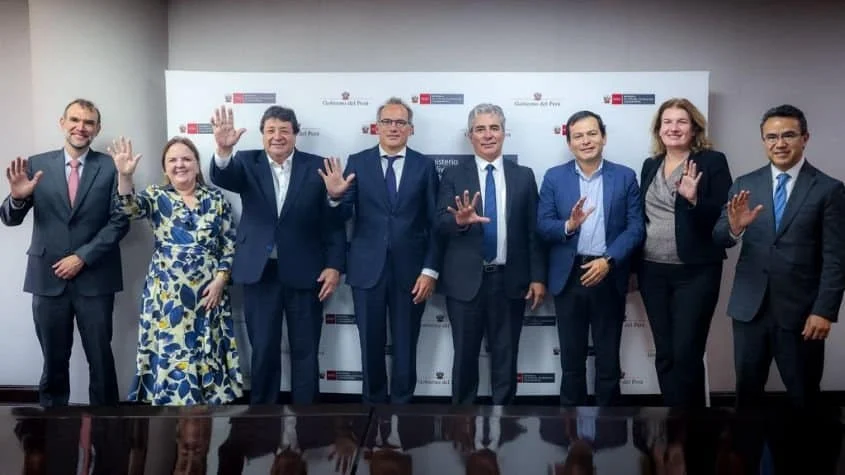
In a significant move toward closing the persistent infrastructure gap in Peru, the Minister of Housing, Construction, and Sanitation, Mauricio Arnillas, has officially initiated a high-level collaboration with the World Bank. This partnership aims to catalyze large-scale investments in water, sanitation, and social housing, with a focus on sustainable urban planning. By aligning local policy goals with international financial and technical expertise, the Ministry seeks to address the systemic challenges that have historically hindered the expansion of basic services across the country.
The meeting marks a pivotal moment in the current administration’s agenda, prioritizing "quality of life" as the primary metric for success. With a dual focus on environmental sustainability and social inclusion, the Ministry is preparing to roll out a series of initiatives designed to modernize water treatment plants, expand sewage networks in underserved regions, and introduce innovative, cost-effective models for social housing.
Main Facts: The Core Pillars of the Partnership
The dialogue between Minister Arnillas and the World Bank representatives centered on four strategic pillars, each critical to the nation’s socio-economic development:
- Universal Access to Water and Sanitation: The primary focus remains the expansion of potable water distribution networks. The partnership intends to leverage World Bank financing to reach remote and vulnerable communities that currently rely on tanker trucks or untreated water sources.
- Water Security and Climate Resilience: Given the increasing impact of climate change on water resources in the Andes and the coastal regions, the Ministry is prioritizing projects that emphasize water harvesting, watershed management, and the protection of natural water springs.
- Modernization of Wastewater Treatment: A significant portion of the proposed technical assistance involves upgrading existing municipal wastewater treatment plants to meet international environmental standards, thereby reducing pollution in local rivers and coastal waters.
- Social Housing Innovation: Moving away from traditional construction models, the Ministry is looking to adopt "Smart Urbanism" principles. This involves creating housing developments that are not just structures, but integrated communities with access to public transport, green spaces, and essential commercial services.
Chronology of Institutional Efforts
To understand the significance of this meeting, one must look at the recent trajectory of the Ministry of Housing under Minister Arnillas’s leadership:

- Q1 2026: The Ministry conducted a comprehensive audit of existing national infrastructure, identifying critical bottlenecks in project execution and financial management.
- Q2 2026: Initial feasibility studies were completed for the "Plan de Saneamiento Integral" (Integral Sanitation Plan), focusing on the northern and central regions of Peru.
- Early September 2026: Minister Arnillas held preliminary virtual consultations with international development banks, establishing the framework for the current face-to-face negotiations.
- Present Day: The formalization of the alliance with the World Bank signals a shift from planning to implementation, with specific project timelines expected to be released in the coming quarter.
Supporting Data: The Magnitude of the Challenge
Peru faces a significant infrastructure deficit, a reality that both the government and international observers acknowledge. According to data from the Ministry and independent economic research groups:
- The Sanitation Gap: Nearly 3 million Peruvians still lack access to potable water through public networks, while approximately 5 million people remain without adequate sanitation services.
- Housing Deficit: Estimates suggest a national quantitative housing deficit of over 400,000 units, with a qualitative deficit—referring to homes that lack basic services or are built with inadequate materials—reaching over 1.2 million households.
- Investment Needs: Analysts suggest that closing these gaps requires a sustained annual investment of at least 1.5% to 2% of the national GDP over the next decade. The World Bank’s involvement is seen as a "seal of approval" that will likely attract further private sector investment through Public-Private Partnerships (PPPs).
Official Responses and Strategic Vision
Minister Mauricio Arnillas emphasized during the summit that the partnership is not merely about funding; it is about "institutional strengthening."
"Our goal is to leave behind the era of fragmented projects," the Minister stated. "By working with the World Bank, we are integrating best practices in public procurement, transparent project management, and environmental compliance. This is about building cities that are not only habitable but resilient to the challenges of the 21st century."
Representatives from the World Bank echoed this sentiment, highlighting that Peru’s commitment to administrative reform is a key prerequisite for international support. They noted that the focus on "quality of life" metrics—rather than just the number of homes built—aligns with the bank’s global mandate to reduce poverty and boost shared prosperity.

Implications for the Future of Peruvian Cities
The implications of this collaboration are far-reaching. If successful, the projects supported by the World Bank will transform the urban landscape of Peru in three key ways:
1. Enhanced Public Health
The expansion of sewage networks and modern wastewater treatment will drastically reduce the prevalence of waterborne diseases, which continue to disproportionately affect children in marginalized peri-urban areas. This, in turn, will reduce the long-term fiscal burden on the national public health system.
2. Economic Decentralization
By investing in infrastructure outside of the metropolitan capital of Lima, the government is incentivizing the growth of secondary cities. Improved infrastructure is a prerequisite for regional economic growth, as it attracts local businesses and improves the overall quality of the workforce.
3. Sustainability and Environmental Stewardship
The inclusion of "Water Security" as a pillar ensures that projects are planned with the next 50 years in mind. By integrating climate-resilient designs, the Ministry is preparing the country for potential droughts and extreme weather events, ensuring that the infrastructure built today does not become obsolete tomorrow.

Conclusion: A Long-Term Commitment
The partnership between the Peruvian Ministry of Housing and the World Bank represents a mature, forward-looking approach to governance. While the road ahead involves complex logistical, political, and financial challenges, the commitment to transparency and sustainable planning provides a robust foundation.
As the Ministry moves toward the finalization of these strategic agreements, the focus will shift to local municipal execution. The success of these initiatives will depend heavily on the ability of local governments to manage these projects effectively and maintain the infrastructure once completed. With international oversight and local political will, the promise of universal access to water, sanitation, and dignified housing for all Peruvians appears closer to realization than ever before.
This initiative stands as a testament to the fact that, in the modern age, infrastructure is not just concrete and steel—it is the bedrock upon which the future of a nation’s social contract is written.