By Editorial Staff
In a decisive move to fortify national infrastructure against looming climate threats, the Peruvian government has authorized a substantial emergency budget injection. As meteorologists signal an escalating risk of a catastrophic climate event, the administration of President Keiko Fujimori is pivoting resources toward urgent preventive measures to shield the nation’s transport network from the anticipated impacts of the El Niño phenomenon.
Executive Summary: A Strategic Financial Intervention
The Peruvian government has officially authorized a budget transfer of S/ 205,263,400 to the Ministry of Transport and Communications (MTC). This funding, formalized through the publication of Supreme Decree 191-2026-EF in the official gazette El Peruano, is explicitly earmarked for critical preparation and response interventions.
Recognizing that the threat posed by the El Niño Costero requires immediate action beyond the constraints of the standard annual budget, the Ministry of Economy and Finance (MEF) has tapped into its Contingency Reserve. This mechanism is reserved for unforeseen events of high national priority, underscoring the severity with which the executive branch views the current meteorological projections. The decree, which bears the signatures of President Keiko Fujimori and Minister of Economy Elmer Cuba, highlights a government-wide commitment to minimizing the potential disruption to national logistics, trade, and public safety.
The Meteorological Crisis: An Escalating Threat
The urgency of this fiscal measure is underscored by the latest findings from the Multisectoral Commission in Charge of the National Study of the El Niño Phenomenon (ENFEN). In its most recent update released on September 14, 2026, the commission issued a stark warning: the probability of an "extraordinary" magnitude El Niño event occurring in September has been revised upward to 85%.
This figure represents a significant jump from previous estimates. As recently as August 28, ENFEN had placed that probability at 75%. The ten-percentage-point increase in just over two weeks reflects the rapid development of anomalous warming in the surface waters of the Niño 1+2 region, which encompasses the critical coastal zones of northern and central Peru.
Chronology of Forecast Revisions (2026-2027)
The trajectory of the current El Niño event has been characterized by consistent upward revisions in severity. Based on ENFEN’s latest data, the anticipated outlook for the coming months is as follows:
- September 2026: 85% probability of extraordinary magnitude.
- October 2026: 82% probability of extraordinary magnitude.
- November 2026: 78% probability of extraordinary magnitude.
- December 2026: 70% probability of extraordinary magnitude.
- January 2027: 59% probability of extraordinary magnitude.
This timeline indicates that the impact will not be a fleeting weather incident, but a sustained environmental challenge that will persist through the start of 2027. ENFEN scientists have noted that the coupling between oceanic and atmospheric conditions is currently highly persistent, suggesting that the warming anomaly will likely endure until at least the middle of the autumn of 2027.
Supporting Data: Why the MTC Needs Urgent Funding
The Ministry of Transport and Communications serves as the backbone of Peru’s disaster response capability. In the event of extreme rainfall, mudslides (huaicos), and flooding—hallmarks of a strong El Niño—the immediate preservation of road connectivity is a matter of national security.
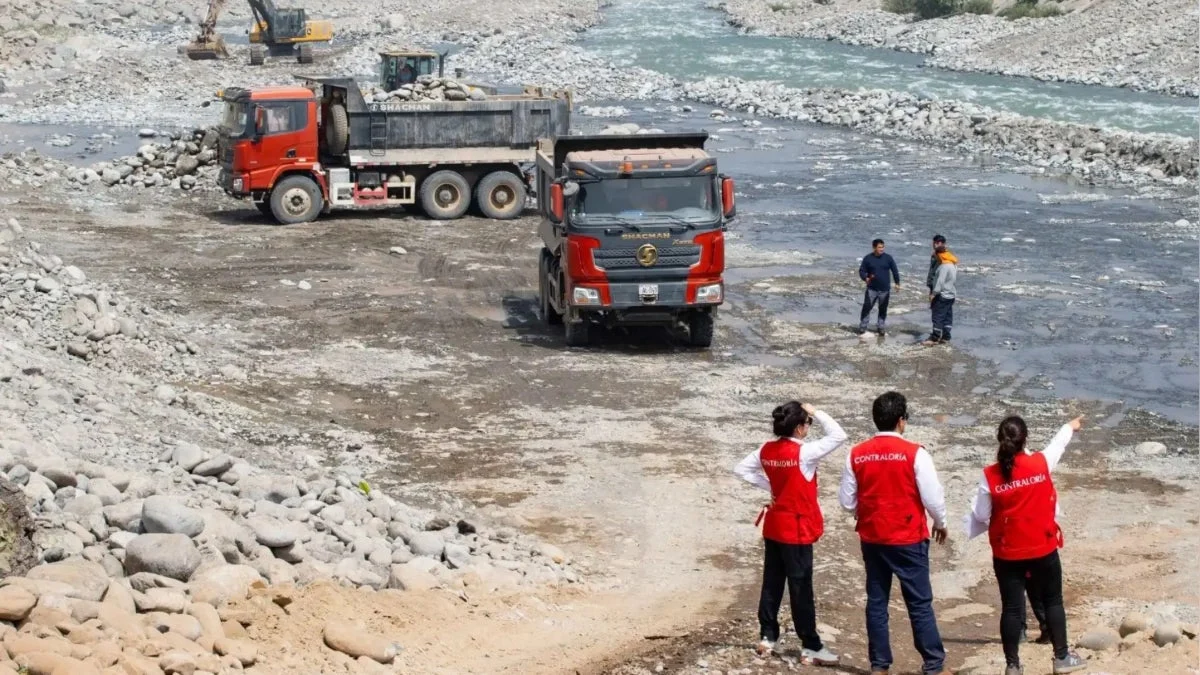
The S/ 205 million allocation is intended to bolster the MTC’s capacity to deploy heavy machinery, reinforce bridge foundations, and clear vital transport arteries before they are rendered impassable. Historically, the destruction of road infrastructure has been the single largest obstacle to delivering humanitarian aid to isolated coastal and Andean communities. By proactively funding these interventions, the government hopes to avoid the prohibitive costs associated with post-disaster reconstruction and the economic losses caused by the paralysis of regional supply chains.
Official Responses and Administrative Implementation
The issuance of Supreme Decree 191-2026-EF represents a high-level administrative coordination between the MEF and the MTC. Under Peruvian budgetary law, the Contingency Reserve is intended for "extraordinary" and "unpredictable" events. By invoking this clause, the government has bypassed the lengthy standard appropriation process, allowing for the immediate release of funds.
Minister of Economy Elmer Cuba has emphasized that this transfer is just one component of a broader fiscal strategy to protect the Peruvian economy from climate-induced volatility. For her part, President Keiko Fujimori has signaled that her administration will continue to monitor ENFEN’s reports with the highest level of scrutiny, leaving the door open for further financial adjustments should the probability of the climate event continue to rise.
The Broader Implications: Economic and Social Vulnerability
The threat of an extraordinary El Niño goes far beyond the logistics of the Ministry of Transport. It poses a fundamental risk to the Peruvian economy, particularly sectors reliant on coastal stability, such as agriculture, fisheries, and tourism.
The Macroeconomic Impact
Previous iterations of El Niño have historically dampened GDP growth due to the destruction of agricultural exports and the disruption of port operations. The government’s decision to spend over S/ 205 million now is a classic "ounce of prevention" approach. Economists argue that for every Sol spent on disaster mitigation, the state saves between four and seven Soles in reconstruction costs.
Infrastructure and Social Stability
The coastal region of Peru is densely populated and home to the country’s primary manufacturing hubs. An extraordinary El Niño carries the risk of damaging the electrical grid and water sanitation systems. The MTC’s focus on transport is therefore an entry point for wider civil protection. If the roads remain open, the government can move medical supplies, potable water, and food into affected areas, preventing the social unrest that often follows large-scale natural disasters.
Long-term Climate Adaptation
The persistence of the warming event into 2027 suggests that Peru is entering a period of prolonged climatic instability. This poses a challenge to the government’s long-term planning. Experts are calling for a permanent increase in the budget allocated to the National Infrastructure Authority to ensure that schools, hospitals, and homes are built with "El Niño-proof" standards. The current emergency decree is a stop-gap measure, but it serves as a wake-up call for the structural reforms needed in the coming decade.
Conclusion: A Race Against the Elements
As September progresses, the focus in Lima and across the coastal provinces is shifting from standard governance to active disaster preparation. The 85% probability of an extraordinary event is not merely a statistical data point; it is a call to action for the private sector, local governments, and citizens to prepare for significant environmental disruption.
With the financial resources now secured for the Ministry of Transport and Communications, the burden of proof shifts to the executive agencies tasked with executing these works. The speed and efficiency with which these funds are deployed will determine the resilience of Peru’s infrastructure in the face of what may prove to be one of the most challenging climate events of the current decade.
The government remains on high alert, with the ENFEN commission continuing its round-the-clock monitoring. As the ocean warms and the atmosphere responds, the state’s proactive stance remains the primary line of defense in protecting the lives and livelihoods of millions of Peruvians. Further updates from the Ministry of Economy and the Presidency are expected in the coming weeks as the country braces for the peak of the phenomenon.