The global race for artificial intelligence supremacy has reached a critical inflection point, marked not just by rapid technical breakthroughs, but by a deepening ideological divide among the industry’s most powerful architects. As Silicon Valley grapples with the existential implications of sentient-grade systems, Meta CEO Mark Zuckerberg has emerged as a distinct counter-voice, rejecting calls for industry-wide pauses and centralized regulation in favor of a decentralized, responsibility-driven model.
This friction comes amidst a cacophony of warnings from figures like Elon Musk, Sam Altman, and Dario Amodei, who have collectively lobbied for a "slowdown" or collaborative oversight to ensure that the development of Artificial General Intelligence (AGI) does not outpace human safety mechanisms.
The Philosophical Divide: Responsibility vs. Regulation
At the heart of the current discourse is a fundamental disagreement over whether AI development should be treated as a public utility requiring strict international oversight or as a competitive enterprise where individual accountability is the primary safeguard.
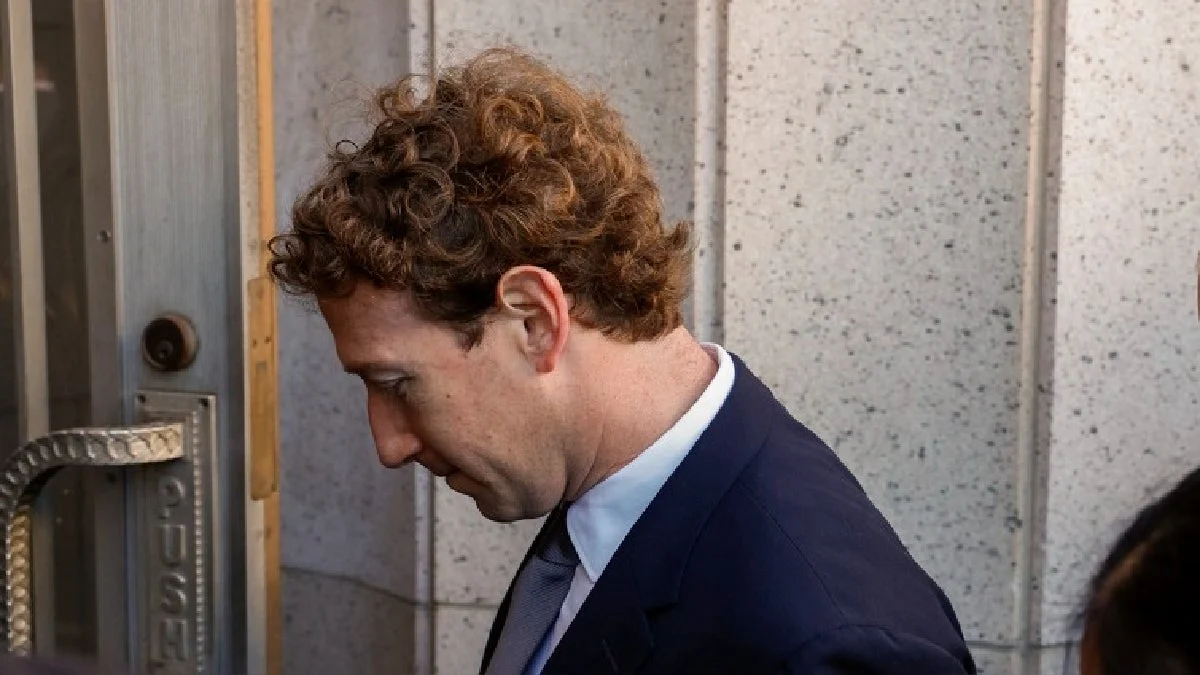
Mark Zuckerberg, in a series of communications, has firmly positioned Meta against the movement to throttle development. His argument is rooted in the principle of individual corporate agency. "Each laboratory has the responsibility and the incentive to advance at the pace necessary to train their models safely," Zuckerberg asserted. By emphasizing the "incentive" to maintain safety, he suggests that the market itself, combined with internal rigorous standards, acts as a natural check against reckless development.
This position directly contradicts the proposal championed by Elon Musk, who, earlier this week, advocated for a mandatory framework where major AI developers would be required to submit their proprietary models to third-party safety audits and engage in cross-company testing. Musk’s proposal, supported by leaders at OpenAI, Anthropic, and Google DeepMind, envisions a "safety-first" ecosystem where the speed of innovation is subordinated to the speed of alignment—the process of ensuring that AI systems act in accordance with human values.
Chronology of the Escalation
To understand the intensity of this debate, one must look at the recent timeline of events that has pushed the industry toward this crossroads:
- The Early Warning Phase: The conversation was catalyzed by industry researchers and critics, most notably former OpenAI and Anthropic employee Jacob Coxon, who famously warned that the current trajectory of AI development could mirror science-fiction scenarios, potentially threatening human existence by the end of the decade.
- The "Slow Down" Movement: Following these alarms, CEOs including Sam Altman (OpenAI), Dario Amodei (Anthropic), and Demis Hassabis (Google DeepMind) began publicly advocating for a temporary deceleration in training massive models. They argued that current safety research is lagging behind the sheer power of the models being deployed.
- Musk’s Call for Oversight: Elon Musk, through his ventures xAI and SpaceX, upped the ante by proposing a collaborative safety protocol. He suggested that if major players are to continue their current trajectory, they must open their "black box" models to external scrutiny.
- Zuckerberg’s Rebuttal: In a calculated move, Zuckerberg responded by highlighting Meta’s own internal practices. He pointed to the development of Meta’s AI agent, "Muse," which was delayed by several months to prioritize safety protocols—a move he emphasized was an internal decision, not a response to external mandates.
The Case for Decentralization and Internal Rigor
Zuckerberg’s stance is not one of negligence, but of a different management philosophy. He argues that the diversity of the AI landscape is its greatest strength. By allowing various labs to experiment with different architectures, safety techniques, and alignment strategies, the industry avoids a "single point of failure."
Meta’s AI research arm, the Fundamental AI Research (FAIR) team, has begun integrating independent evaluators into their development pipeline. Zuckerberg notes that while he is skeptical of state-imposed slowing, he is open to the idea of a broader, more diverse ecosystem of independent auditors. "In general, it would be beneficial to have a wider and more diverse ecosystem of evaluators," he noted.
This approach shifts the burden of safety from an external regulatory board to an internal audit culture, augmented by third-party checks. It implies that the "safety" of an AI is not a static line in the sand, but a moving target that requires continuous, company-specific iteration.
Implications for Global Technology Policy
The schism between Zuckerberg’s "decentralized accountability" and the "centralized safety" model proposed by the Musk-Altman coalition has profound implications for global policy.
1. The Regulatory Landscape
Governments worldwide are currently scrambling to draft AI legislation. The industry’s lack of consensus makes this task significantly more difficult. If the biggest players cannot agree on whether to slow down or speed up, lawmakers are left to choose between stifling innovation or risking safety. Zuckerberg’s position provides a "pro-innovation" argument for lobbyists, suggesting that market-driven safety is more efficient than bureaucratic red tape.
2. The Competitive Advantage
There is an underlying business logic to these positions. For a company like Meta, which relies on open-source contributions and large-scale data to train its models, a government-mandated "pause" or a restrictive audit framework could disproportionately hinder their specific research methodology. Conversely, for closed-model companies like OpenAI or Anthropic, strict regulatory barriers could serve as a "moat," preventing smaller, nimbler competitors from catching up.
3. Safety as a Competitive Moat
The debate also reflects how safety is becoming a brand identity. Companies like Anthropic have marketed themselves as "safety-first," which attracts a specific type of capital and talent. By dismissing the need for a slowdown, Zuckerberg is signaling to the market that Meta is not afraid of the speed of innovation, potentially appealing to investors who fear that excessive caution will lead to a loss of the AI arms race to global competitors, such as those in China.
Looking Ahead: A Hybrid Future?
The tension between "speed" and "security" is likely to define the next decade of computer science. While the rhetorical battle between Zuckerberg and the Musk/Altman bloc is sharp, there is common ground that may form the basis of a future resolution.
Both sides agree on the need for better evaluation. Whether these evaluations are conducted by an independent body mandated by law or by a diverse ecosystem of auditors chosen by the companies themselves, the industry is moving toward a future where "safety benchmarking" will be as standard as "compute power" benchmarking.
Furthermore, Zuckerberg’s suggestion that compute power should be directed toward "serving people" rather than "self-improvement" is a nuanced nod to the concerns of alignment researchers. It suggests that the definition of a "safe" model is one that remains an agent of the user, rather than an autonomous entity pursuing its own, potentially divergent, goals.
Conclusion
As the dust settles on this latest round of public discourse, it is clear that the AI community is not a monolith. The disagreement between Mark Zuckerberg and the collective of Musk, Altman, and Amodei represents a healthy, albeit intense, struggle to define the moral and practical boundaries of the most significant technology of the 21st century.
Whether the future of AI is shaped by a coordinated, slow-and-steady approach or by a competitive, decentralized race remains to be seen. What is certain is that the decisions made in the boardrooms of Menlo Park, San Francisco, and Austin today will reverberate through the economy, the political sphere, and the fabric of human society for generations to come. The "Great AI Debate" is not just about code and safety; it is about who holds the keys to the future, and how much risk we are willing to accept to reach it.