
Introduction: A Call to Unified Action
In a significant display of corporate social responsibility and proactive disaster management, the Peruvian private sector has stepped forward to fortify the nation’s defenses against the impending threat of the El Niño phenomenon (FEN). During the high-level forum titled "El Niño Phenomenon: Prevention, Infrastructure, and Defense of Regional Production," organized by the National Society of Industries (SNI), Jorge Zapata Ríos, president of the National Confederation of Private Business Institutions (CONFIEP), underscored the critical nature of these contributions.
As climate forecasts suggest a period of heightened atmospheric volatility, the private sector is moving beyond traditional tax contributions, directly engaging in infrastructure and preventive measures. By pledging over S/ 115 million in combined resources, the agricultural and industrial sectors, alongside private foundations, are signaling a paradigm shift: businesses are no longer merely observers of climate risk, but active participants in the mitigation of national disasters.
Main Facts: The Scope of the Investment
The commitment, led by the Association of Agrarian Producer Guilds of Peru (AGAP) and the Romero Foundation, represents one of the largest private-sector mobilizations for disaster prevention in recent history. The financial breakdown of this initiative is twofold:
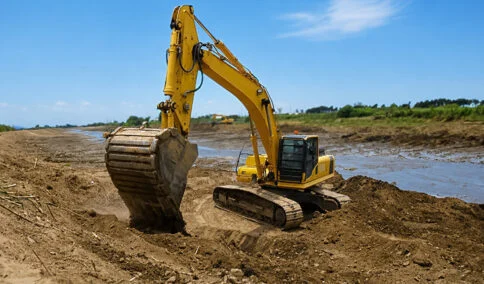
- Immediate Operational Support (AGAP): AGAP, its associated guilds, and member agro-industrial firms have earmarked S/ 8 million for immediate deployment. These funds are designated for the procurement of fuel, heavy machinery, and technical resources necessary for the desilting of riverbeds, the reinforcement of riverbanks (defensas ribereñas), the protection of water intakes (bocatomas), and the structural integrity of bridges and irrigation systems.
- Long-Term Infrastructure Commitment: Beyond the immediate S/ 8 million, AGAP has committed an additional S/ 100 million to be deployed over the coming years. This capital will be funneled through mechanisms such as "Works for Taxes" (Obras por Impuestos – OxI) and "Services for Taxes" (Servicios por Impuestos – SxI), ensuring a sustainable pipeline of infrastructure projects designed to harden regional resilience against climate shocks.
- Targeted River Engineering (Romero Foundation): The Romero Foundation has solidified a strategic partnership with the National Water Authority (ANA). This agreement involves a donation exceeding S/ 7 million, specifically intended to provide the fuel necessary for the intensive cleaning and desilting of approximately five kilometers of the Piura River. This work is critical to restoring the river’s hydraulic capacity and preventing the catastrophic flooding that historically devastates the region.
Chronology: From Warning to Mobilization
The urgency of these contributions stems from a months-long progression of meteorological warnings and the resulting private-sector response:
- Early Detection: Following initial climate models indicating a robust El Niño event, the Peruvian government declared states of emergency in several northern departments, identifying the need for immediate hydraulic infrastructure intervention.
- The Private Sector Dialogue: Throughout late 2023 and early 2024, industry leaders, particularly in the agro-export sector—which is heavily concentrated in the regions most vulnerable to flooding—began coordinating with regional and national authorities to identify critical bottlenecks.
- The Forum of Consensus: The SNI-organized forum served as the platform for the formal announcement of these investments. It provided a venue for dialogue between the state, represented by various ministerial stakeholders, and the business community, represented by CONFIEP and AGAP.
- Current Execution Phase: With the agreements signed, the current phase involves the physical deployment of machinery and the logistical coordination of fuel distribution, ensuring that the work is performed in accordance with the technical specifications set by the ANA and local disaster management committees.
Supporting Data: Why This Matters
The vulnerability of Peru’s geography to El Niño is well-documented. Historically, the phenomenon has caused billions of soles in damage to both public infrastructure and private enterprise.
The Economic Stakes
The agricultural and agro-export industries are the lifeblood of the northern Peruvian economy. These sectors provide thousands of jobs and contribute significantly to the national GDP. When a river overflows or a bridge collapses, the supply chain is severed, leading to:
- Loss of Perishable Goods: Millions of dollars in produce are often stranded, resulting in total loss.
- Regional Isolation: The destruction of transport infrastructure isolates communities, making the delivery of food, water, and medical supplies difficult.
- Long-term Economic Contraction: The costs of reconstruction often exceed the costs of prevention, leading to a cycle of debt and diminished investment.
By focusing on "descolmatación" (desilting), the private sector is addressing the primary cause of flooding in the Piura region. Increasing the hydraulic capacity of the river is not merely a precautionary measure; it is a direct protection of the economic engine that sustains the regional population.
Official Responses: The Call for Agility
The leadership of CONFIEP has been vocal about the need for a more flexible legal framework to allow these investments to materialize faster. Jorge Zapata Ríos emphasized that while the intent is present, the bureaucratic hurdles associated with public-private cooperation often slow down the execution of critical infrastructure.
The "Services for Taxes" (SxI) Debate
"We must approve the ‘Services for Taxes’ mechanism, making it significantly more agile," stated Zapata Ríos during the SNI forum. The current tax-based investment models (OxI and SxI) are often hampered by complex administrative requirements that, while intended to ensure transparency, can paralyze emergency projects during the critical months before the rainy season.
The private sector is calling for:
- Simplified Contracting: Allowing companies to directly manage or supervise the procurement of specific services to bypass slow government bidding processes.
- Regulatory Streamlining: Establishing an "express lane" for environmental and technical permits when the work is strictly for disaster prevention.
- Coordinated Governance: Ensuring that the ANA, regional governments, and private donors are aligned under a single, simplified oversight structure to prevent duplication of efforts.
Implications: A New Era of Corporate Citizenship
The decision by AGAP and the Romero Foundation to invest S/ 115 million represents a fundamental shift in how the Peruvian private sector views its role in the nation’s security.
1. The Multiplier Effect
By setting this precedent, these organizations are challenging other sectors—such as mining, banking, and retail—to examine their own roles in national disaster prevention. The message is clear: if the infrastructure collapses, the entire national economy suffers. Investing in prevention is, ultimately, an investment in the stability of the entire market.
2. Strengthening Public-Private Partnerships
The collaboration between the Romero Foundation and the ANA demonstrates a successful model for future interventions. By leveraging private funding to solve public problems, the state gains access to resources that would otherwise be tied up in the budgetary cycle. This "bridge" between the state’s technical expertise and the private sector’s execution efficiency is essential for modern governance in climate-vulnerable nations.
3. Sustainability and Resilience
This is not merely about surviving the next El Niño; it is about building the infrastructure that will last for decades. Through the Obras por Impuestos (OxI) model, companies are essentially pre-paying their tax obligations to fund permanent infrastructure. This transforms a temporary expense into a long-term asset, providing the country with better bridges, sturdier roads, and more resilient water management systems.
Conclusion: The Road Ahead
As Peru faces the uncertainties of the future climate, the actions taken by AGAP, the Romero Foundation, and the support of CONFIEP provide a glimmer of hope and a blueprint for action. The investment of S/ 115 million is a substantial commitment, but its true value lies in the message it sends to the country: that when the stakes are at their highest, the private sector is prepared to stand shoulder-to-shoulder with the government to protect the nation’s most vulnerable.
The challenge now remains in the implementation. As the rainy season approaches, the focus must shift from the signing of agreements to the rapid, efficient, and transparent execution of these works. If the requested agility for the "Services for Taxes" mechanism is granted, this initiative could serve as the gold standard for public-private cooperation in disaster risk reduction, not just in Peru, but across the Latin American region. The corporate sector has done its part in committing the resources; now, the institutional framework must ensure that those resources reach the riverbanks and the irrigation canals before the first major rains arrive.