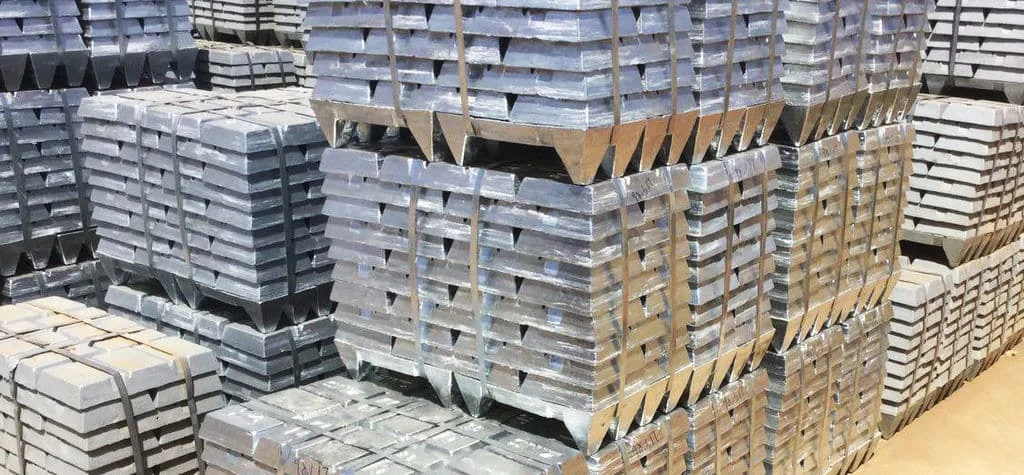
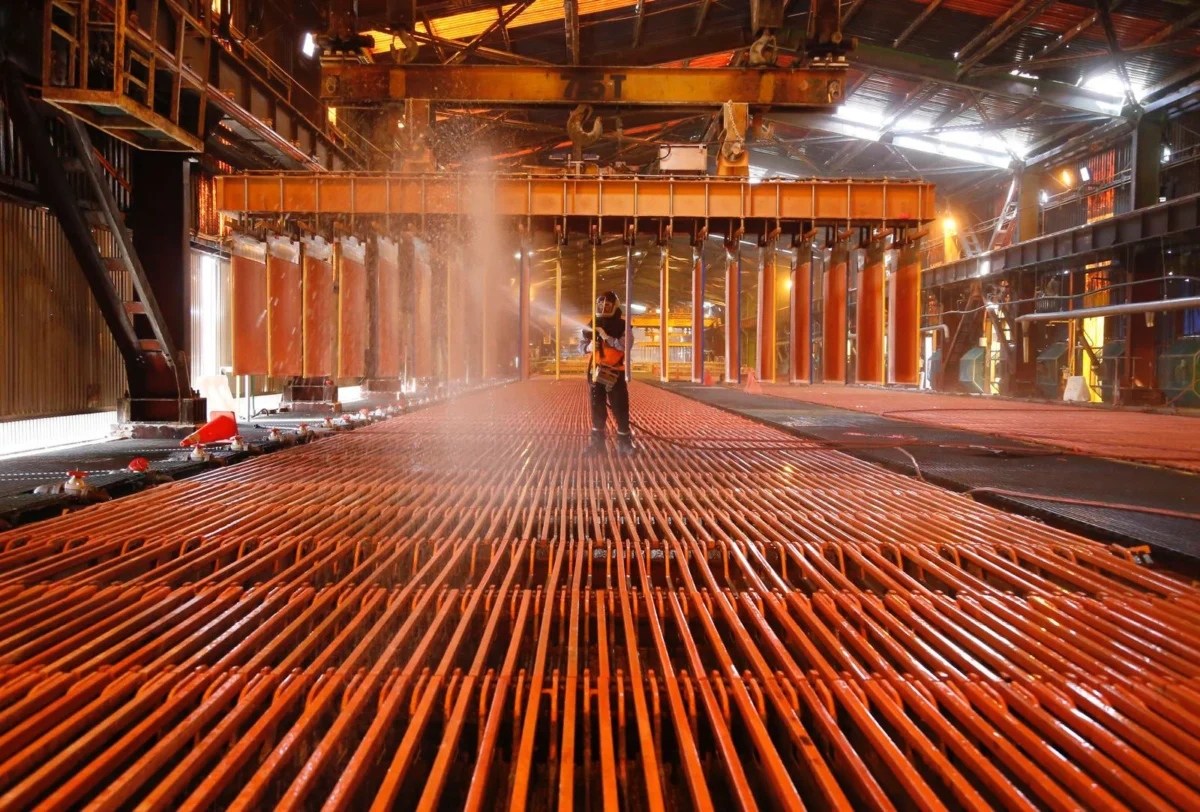
The global copper market, long considered the "canary in the coal mine" for the health of the world economy, is currently navigating a period of intense turbulence. After hitting historic price peaks, the red metal has retreated to hover near the $14,000 per metric ton threshold. This stabilization comes as fresh data from the London Metal Exchange (LME) reveals a significant easing in supply constraints, marking a potential turning point in what has been a year of unprecedented market tightness.
Main Facts: The Market Reaches an Inflection Point
The current state of the copper market is characterized by a transition from extreme scarcity to a more balanced, albeit fragile, equilibrium. Following a dramatic rally that pushed prices to all-time highs last week—driven largely by speculative maneuvers and fears of impending U.S. tariffs—the market has experienced a sharp, corrective pullback.
As of Tuesday morning, LME three-month copper futures were trading at approximately $14,014.50 per ton. This move represents a marginal 0.1% increase, providing a sense of calm after the asset touched its lowest closing point in four weeks. The cooling of the rally is primarily attributed to a sudden influx of inventory into LME-supervised warehouses, which recorded their largest deliveries in nearly a month. This physical manifestation of supply has effectively punctured the bubble of panic that had gripped the market.
Perhaps most tellingly, the market has slipped into a state of "contango." In this structural formation, the price for future delivery is higher than the spot price. Specifically, LME three-month futures are now trading at an $86.75 premium over immediate-delivery copper. For traders and industrial consumers, this is the clearest signal yet that the acute, short-term supply crunch that defined the first half of the year is beginning to dissipate.
Chronology of a Market Rally and Retreat
The volatility observed this week is the culmination of a sequence of events that began with aggressive positioning in the U.S. market.
- Early Last Week: Speculation surrounding potential U.S. tariffs on refined metal triggered a "scramble for cover." Traders began aggressively diverting copper shipments toward American ports, anticipating that domestic access would soon be restricted or become significantly more expensive.
- Mid-Week: This diversion created a localized supply vacuum in the rest of the world, specifically in European and Asian hubs. As the LME inventory levels plummeted, prices surged to historical records, fueled by panic-buying and short-covering.
- The Weekend: The anticipated policy announcement regarding tariffs failed to materialize with the force expected by the market. This led to a cooling of speculative fervor.
- Monday: The LME reported a massive influx of metal into its warehouse network. The sudden availability of physical copper halted the price slide, leading to the current stabilization phase.
- Tuesday: Markets assessed the new equilibrium, with commodity prices reflecting a cautious outlook amidst broader macroeconomic pressures from China and the United States.
Supporting Data: The China Divergence
While the LME inventory data provides a snapshot of physical supply, the demand side remains tethered to the complex economic performance of China, which consumes roughly half of the world’s copper.
Recent industrial output data from Beijing paints a picture of a "two-speed" economy. August figures revealed that industrial production—a primary driver for copper-intensive sectors like construction and manufacturing—grew at a rate exceeding analyst expectations. However, this growth is being undermined by a persistent stagnation in consumer spending and fixed-asset investment.
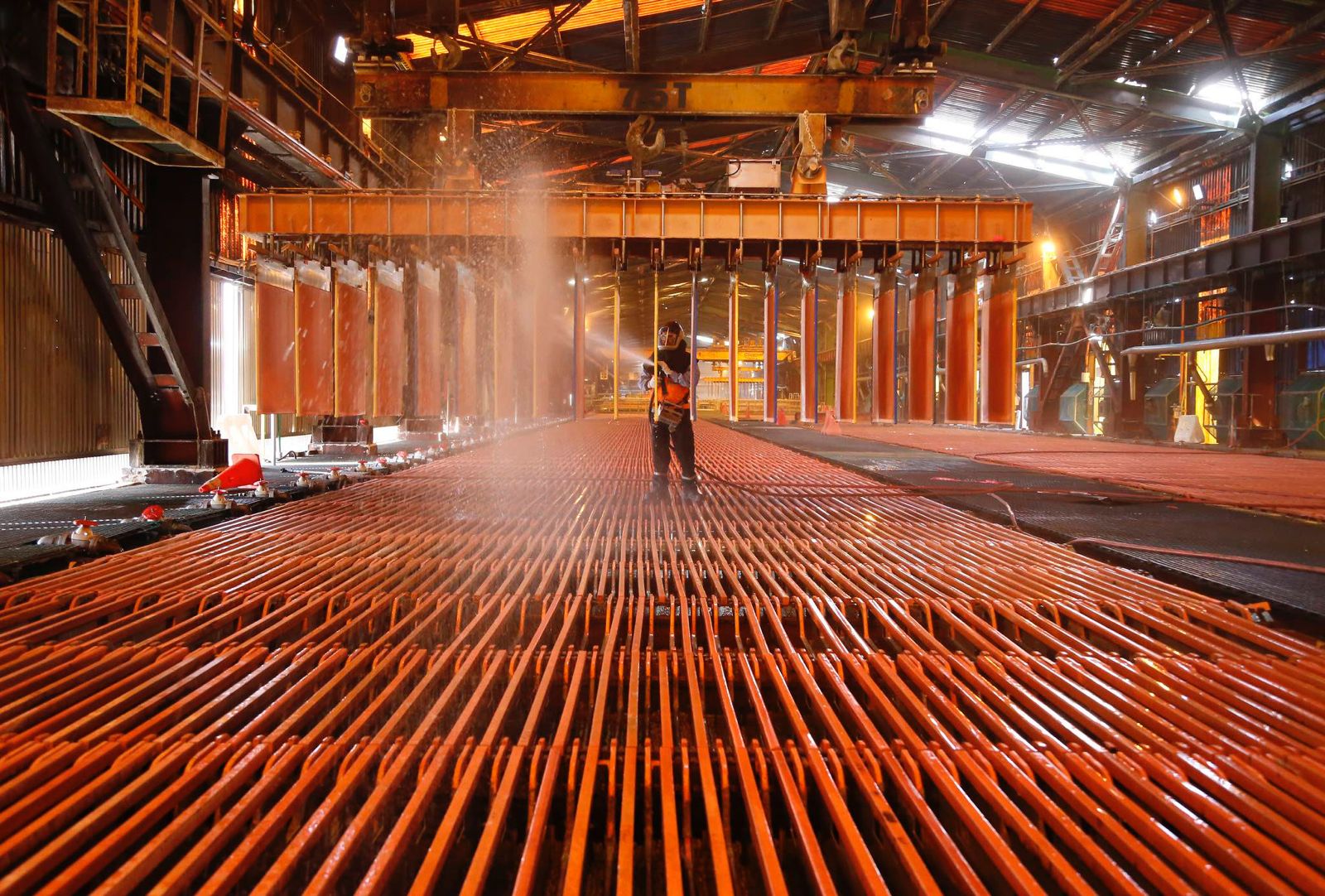
This divergence places the Chinese government in a precarious position. Policy makers must decide whether to deploy further stimulus measures. While more stimulus would likely provide a floor for copper prices, the current reluctance to engage in broad-based liquidity injections suggests that the demand side of the copper equation may remain muted in the short term.
Beyond China, the broader commodities complex has reacted with similar restraint. Aluminum prices have remained stagnant, while zinc has retreated by 0.6%. Iron ore futures, another critical indicator for global industrial demand, have held steady at $95.55 per ton, suggesting that the current cooling is not unique to copper but is part of a broader re-evaluation of industrial commodity valuations.
Official Responses and Monetary Policy Implications
The market’s current indecision is being compounded by the shadow of the U.S. Federal Reserve. With the next meeting of the Federal Open Market Committee (FOMC) on the horizon, the consensus expectation of a interest rate hike is creating a "headwind" for commodities.
In a high-interest-rate environment, the opportunity cost of holding non-yielding assets like physical copper increases. When money becomes more expensive to borrow, the incentive for manufacturers to hold large inventories of raw materials decreases, leading to "just-in-time" supply chains that are inherently more sensitive to sudden shocks.
Market analysts note that the Fed’s path is the most significant "macro" variable for the remainder of the year. If the Fed maintains a hawkish stance to combat lingering inflation, the dollar is likely to strengthen. Since copper is denominated in U.S. dollars, a stronger greenback effectively makes the metal more expensive for buyers in emerging markets, potentially further suppressing demand.
Implications: A New Era of Price Discovery
The transition from a deficit-driven spike to a more stable "contango" market has profound implications for the global supply chain:
1. Reduced Speculative Risk
The rapid retreat from all-time highs serves as a warning to speculative traders. The volatility of the past week demonstrated that supply chain fears, while real, can be mitigated by the fluidity of global logistics. When prices reach unsustainable levels, physical metal naturally flows to where it is most valued, a mechanism that acts as a self-correcting thermostat for the market.
2. The Role of Inventory Levels
The LME’s ability to replenish its stocks is critical. It suggests that while supply is tight, it is not broken. The mining sector, particularly in key jurisdictions like Peru and Chile, remains the foundational element of this market. Any further disruption to production in these regions would quickly reverse the current "contango" structure and return the market to a volatile "backwardation" (where spot prices are higher than futures).
3. Industrial Strategy
For companies in the automotive, renewable energy, and construction sectors, the current stabilization offers a window of opportunity. The volatility of the past weeks has underscored the need for more robust hedging strategies. Relying on spot markets during periods of low inventory has proven to be a high-risk gamble. Firms are now being pushed toward long-term offtake agreements to ensure supply security rather than relying on the volatile spot price of the LME.
4. The Geopolitical Factor
The threat of tariffs remains the "X-factor" in this equation. Even if the immediate threat has subsided, the mere possibility of protectionist trade policy has permanently altered how companies view their supply chains. The drive to "near-shore" or "friend-shore" metal supplies is a long-term structural trend that will likely keep the copper market more fractured and prone to localized price spikes than in previous decades.
Conclusion: Looking Ahead
As the copper market finds its footing near the $14,000 mark, the focus shifts from the immediate panic of supply-side constraints to the long-term fundamentals of global growth. The influx of metal into LME warehouses has provided a much-needed cooling effect, allowing the market to transition from a speculative frenzy to a more pragmatic assessment of demand.
However, the road ahead remains complex. With the Chinese industrial sector showing mixed signals, the Federal Reserve poised to tighten monetary policy, and the ongoing shadow of trade protectionism, the copper market is unlikely to return to the quiet predictability of the past. For stakeholders across the mining, manufacturing, and financial sectors, the message is clear: the era of "easy" supply is over, and the new era of price discovery will be defined by the delicate balance between geopolitical reality and the relentless demand for the world’s most essential industrial metal.