Executive Summary
A brewing political confrontation has erupted within the halls of the legislature, as lawmakers from the Fuerza Popular party have formally challenged the scheduling of a crucial debate regarding the Executive branch’s request for legislative powers. The contention centers on the Commission of Constitution’s decision to postpone the debate on the predictamen until September 28, a move that opposition members argue constitutes a direct violation of established parliamentary regulations. As the clock ticks toward what critics call a procedural dereliction of duty, the tension between the legislative oversight bodies and the executive agenda has reached a fever pitch, threatening to stall critical governance initiatives.
The Core Conflict: A Question of Timelines
The controversy, which surfaced during Monday’s session of the Commission of Constitution, hinges on the interpretation of Article 116 of the Chamber of Deputies’ Regulation. This article mandates that commissions are strictly bound by a 15-business-day window—without the possibility of extension—to issue an opinion on matters referred to them by the Executive.
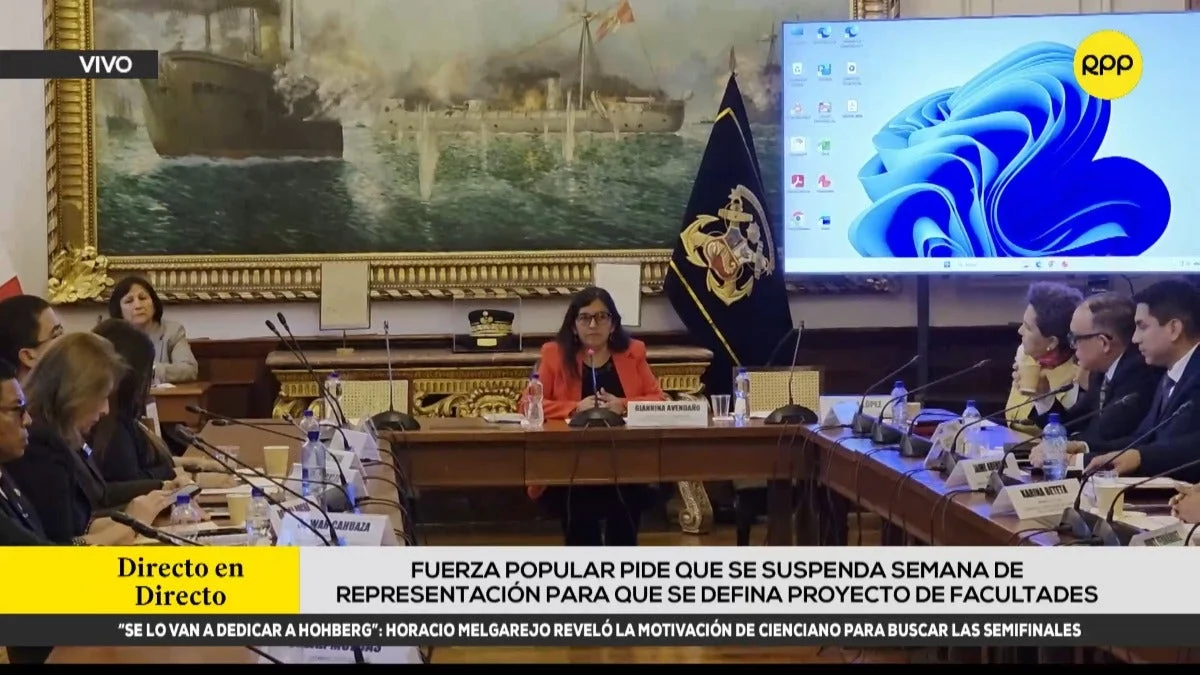
Fuerza Popular, a prominent opposition force, has expressed profound skepticism regarding the timing set by the Commission’s president, Giannina Avendaño. By scheduling the debate for September 28, the Commission effectively pushes the deliberation past the statutory deadline of September 18. This delay, according to party representatives, is not merely a logistical oversight but a calculated political maneuver aimed at hindering the Executive’s ability to implement urgent legislative reforms.
Chronology of Events
To understand the gravity of the current situation, one must trace the recent sequence of parliamentary interactions:
- Submission of Request: The Executive branch formally submitted its request for 120 days of legislative powers, citing an urgent need to address systemic national issues, including security concerns and preparations for the El Niño phenomenon.
- The Referral: The petition was formally referred to the Commission of Constitution, triggering the 15-day regulatory clock.
- The Monday Session: During the most recent plenary session of the Commission, President Giannina Avendaño informed members that the debate on the predictamen would be held on September 28.
- Immediate Backlash: Lawmakers, led by Jaime Abensur of Fuerza Popular, immediately flagged the date as a violation of the parliamentary calendar, given that the legal window for deliberation expires on September 18.
- The Call for Action: Fuerza Popular offered a compromise, proposing to truncate their scheduled "Representation Week"—an annual recess for MPs to visit their constituencies—to accommodate an earlier debate. This offer was met with resistance from the Commission leadership.
Supporting Data and Regulatory Context
At the heart of the legal dispute is the rigidity of the Chamber of Deputies’ procedural code. Article 116 is designed to prevent "parliamentary paralysis," a mechanism where the legislature might intentionally stall an executive request by simply not scheduling a debate.
The 15-day deadline serves as a safety valve. By missing this deadline, the Commission is not only failing in its administrative duty but is also encroaching on the constitutional balance of power. According to legislative analysts, the failure to adhere to this timeframe could render the resulting predictamen legally vulnerable or, at the very least, subject to a formal ethics investigation.
The Commission, led by Avendaño, has countered this narrative. A representative from the Juntos Por el Perú party, speaking on behalf of the Commission, defended the delay by citing the necessity of gathering technical input. The Commission is currently awaiting reports from 12 distinct working groups tasked with reviewing the complex technical aspects of the Executive’s request. The argument posits that an incomplete review would be a greater disservice to the nation than a slight delay in the timeline.
Official Responses and Political Posturing
The Stance of Fuerza Popular
Jaime Abensur, acting as the voice of his party, has taken a hardline stance. In his public remarks, he did not mince words regarding the potential consequences for the Commission’s leadership. "I do not wish to engage in a prolonged discussion, but there is a clear procedural obligation here," Abensur stated. He emphasized that his party is fully prepared to forgo their upcoming constituency work (scheduled for September 21–27) to ensure the legislative process remains compliant with the law.
"We are willing to suspend our representation week if it means upholding the dignity and the rules of this Chamber," he asserted. Furthermore, he explicitly mentioned the possibility of filing a formal complaint with the Ethics Commission against President Avendaño, should the September 18 deadline pass without a convened session.
The Defense of the Commission
Giannina Avendaño has maintained a measured but firm position. She argues that the accusations of "obstructionism" are unfounded. In her view, the complexity of the Executive’s request—which covers a broad array of public policy sectors—requires a comprehensive approach that cannot be rushed by an arbitrary deadline.
"We are conducting a thorough review," a spokesperson for the Commission noted. "To rush the debate without the feedback from the 12 relevant working groups would be irresponsible governance. We are prioritizing the quality of the legislative outcome over the speed of the calendar."
The Broader Implications: A Fragile Balance
The dispute over the legislative calendar is emblematic of the current political climate, characterized by a deep-seated distrust between the Executive branch and the legislative chambers. The request for powers—which seeks to bypass the standard, slow-moving legislative process for specific reforms—is viewed by some as an Executive overreach, while others see it as a necessary tool for effective governance.
Implications for Executive Power
If the Commission succeeds in delaying the debate, the Executive loses valuable time. The 120-day window for legislative powers is finite; every day of delay is a day lost in the implementation of programs meant to mitigate the impact of the El Niño climate phenomenon and combat rising crime rates. If the Commission ultimately denies or significantly trims the requested powers, the Executive may find itself unable to fulfill its primary campaign promises.
Implications for Parliamentary Integrity
Conversely, for the Chamber of Deputies, the integrity of the process is at stake. If rules are ignored to facilitate the Executive, the legislature risks becoming a mere rubber stamp. If they are used as a weapon to delay, the legislature risks being perceived as an obstructionist body that puts political maneuvering above the welfare of the citizenry. The decision of the Ethics Commission—should a complaint be filed—will set a significant precedent for how future requests for powers are handled.
Conclusion: The Road Ahead
As the September 18 deadline approaches, the pressure on President Avendaño to reconsider the schedule will undoubtedly intensify. With Fuerza Popular signaling its intent to escalate the matter to the Ethics Committee, the coming week promises to be a defining moment for the current legislative session.
The public, meanwhile, remains caught in the middle. While the political class debates deadlines and procedural articles, the practical concerns—national security and disaster preparedness—remain in a state of suspended animation. The resolution of this standoff will not only determine the scope of the Executive’s future actions but will also serve as a litmus test for the effectiveness and impartiality of the Chamber of Deputies.
Whether a middle ground can be reached—perhaps by convening an emergency session during the representation week or by streamlining the input process from the 12 working groups—remains the central question. For now, the clock continues to tick, and the legislative impasse remains the most significant hurdle in the country’s current political trajectory. The eyes of the public, and the mandates of the law, are fixed firmly on the Commission of Constitution.