In the annals of world literature, few tropes are as haunting as the "eternal return"—a cycle where humanity is condemned to repeat its failures despite possessing full knowledge of the impending catastrophe. Yet, even the most imaginative authors, perhaps including Jorge Luis Borges, would likely struggle to craft a narrative as absurd as the current reality of Northern Peru. In Piura, a region defined by its resilience and economic dynamism, the recurring devastation caused by natural disasters is not a product of fate, but a deliberate consequence of systemic administrative paralysis.
This is a story of a country that receives advance warnings of disaster yet chooses to stand idle. It is a chronicle of institutional inertia that defies logic, where the cost of inaction is measured not just in balance sheets, but in the irredeemable loss of human life.
The Geography of Abandonment: A Case Study in Piura
The crisis in Piura is emblematic of a broader national malaise. During a recent multi-sectoral visit to the region, representatives from various business guilds sought to engage in a constructive dialogue. The objective was clear: to bridge the gap between technical planning and execution. We met with congressmen, central government officials, regional chamber of commerce executives, and academic experts.
However, the most telling aspect of these meetings was the conspicuous absence of the region’s own leadership. Not a single official from the regional government, nor any municipal mayor, nor even a delegated representative, deemed the situation worthy of their attendance. This absence speaks volumes. Since the last major El Niño (FEN) phenomenon, these authorities have had years to implement the structural works necessary to prevent rivers from overflowing and cities from drowning. The result? Stagnation.
While the physical landscape remains vulnerable, the bureaucratic landscape is equally stagnant. The National Infrastructure Authority (ANIN) took nearly a decade to achieve technical viability for critical urban drainage projects and riverbank protection services. Their approvals, finally granted in mid-2026, come after years of technical deliberation that prioritized procedure over the survival of the population.
Chronology of Institutional Inertia
To understand how Piura arrived at this juncture, one must look at the timeline of missed opportunities:
- 2016–2017: The aftermath of major flooding events leaves the region exposed. Initial promises for reconstruction are made, but implementation is stalled by administrative bottlenecks.
- 2018–2022: A period characterized by "technical studies" that cycle through various government agencies. The focus shifts from executing physical works to debating the feasibility of master plans.
- 2023–2025: Despite increased fiscal resources, the regional and local governments struggle with budget execution rates that hover near historic lows.
- June–July 2026: The ANIN finally grants technical viability for essential drainage and protection projects. The delay is viewed by many as a decade of "lost time."
- Late 2026: Business guilds and civil society attempt to intervene, identifying the need for emergency mitigation as the next rainy season looms.
This timeline reflects a chronic failure to transition from "planning mode" to "action mode." The delay in approving infrastructure projects is not merely a bureaucratic hurdle; it is a policy failure that effectively invites disaster to repeat itself.
The Myth of the Empty Coffer: Analyzing Supporting Data
Whenever the failure to execute public works is exposed, a predictable narrative emerges from the offices of the accused: the lack of budget. "We would build, but we do not have the funds," they claim.
The data, however, tells a radically different story. Between 2016 and 2025, the Piura region accumulated nearly S/4,000 million (approximately $1 billion USD) from canon, over-canon, and royalties. Furthermore, the region currently possesses a budget exceeding this amount specifically designated for "Works by Taxes" (Obras por Impuestos), a mechanism designed to bypass traditional bureaucratic delays by allowing private companies to execute public infrastructure in exchange for tax credits.
The problem is not a scarcity of resources; it is a staggering incapacity to manage them. When a region is sitting on billions of soles while its citizens prepare to wade through floodwaters, the issue is not financial—it is political and managerial. The cost of this inactivity far exceeds the unspent budget. It is a compound interest of misery: first, the immeasurable cost of lost lives and health; second, the destruction of physical property; and third, the systemic erosion of the region’s productive capacity.
The Silent Stance of Officialdom
The vacuum of leadership in Piura is not just an observation; it is an official policy of silence. Despite formal invitations to sit at the table with industry leaders, the regional administration has remained elusive. This distance creates a dangerous "accountability void."
When officials refuse to engage with the private sector or academic stakeholders, they shield themselves from scrutiny regarding their low execution rates. By ignoring the stakeholders who provide the data and the capacity for rapid deployment, the government effectively silences the very people trying to hold them to account. This posture suggests a disconnect between the political class and the reality on the ground, where the urgency of the next rainy season is felt by every resident who lives near a riverbed.
Implications: The High Cost of Inaction
The implications of this paralysis are profound and far-reaching.
1. The Human Toll
The most immediate consequence is the risk to human life. When riverbeds are not cleaned and drainage systems are not constructed, a moderate rain event becomes a humanitarian crisis. The psychological trauma of repetitive displacement, loss of homes, and the constant fear of the next deluge destroys the social fabric of the region.
2. Economic Destabilization
Piura is a cornerstone of the Peruvian economy, particularly in agriculture and fisheries. When the infrastructure that supports these sectors is allowed to rot, the entire national economy suffers. The lack of proactive investment leads to higher emergency response costs, which are consistently higher than the costs of preventive maintenance.
3. The Erosion of Trust
The most dangerous long-term implication is the total breakdown of trust between the governed and the government. When the state consistently fails to protect its citizens from predictable hazards, it loses its legitimacy. The population begins to view the state not as a protector, but as an indifferent observer of their suffering.
A Path Forward: From Fiction to Reality
We have reached a point where there is no longer time for grandiose, multi-year projects. The immediate future requires a shift toward "surgical" interventions. We have approximately three months—a narrow window—to execute critical, high-impact tasks:
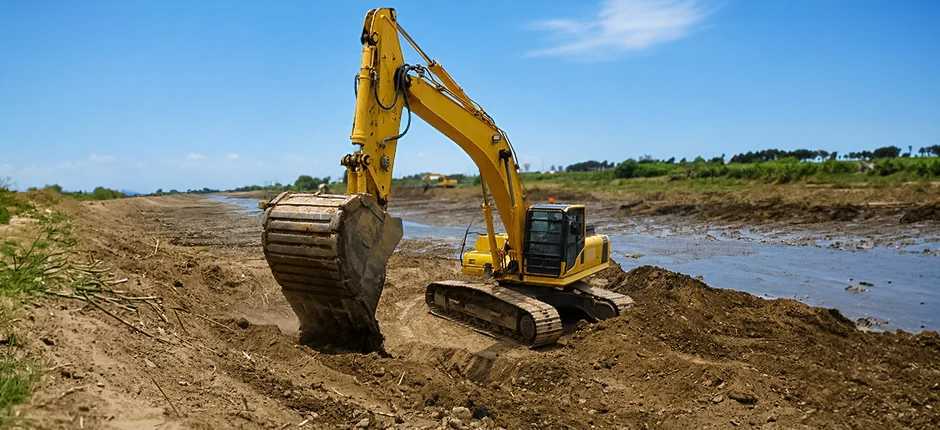
- Desbrozar and Clean: The immediate removal of vegetation and debris from river channels.
- Deepen Cauces: Increasing the depth of riverbeds to accommodate higher water volumes.
- Expand Relief Channels: Specifically, widening the discharge canal of the Piura River to prevent urban flooding.
The private sector stands ready to deploy. We have the technical capacity, the agility, and the resources to assist in these emergency efforts. However, this partnership requires a catalyst: the Executive branch must immediately approve a Supreme Decree expanding the scope and speed of the Obras por Impuestos mechanism. This tool is the only bridge capable of moving resources into action before the rains begin.
Conclusion: Ending the Cycle
The leyenda of the country that forgets its past and ignores its future is a story that must be brought to a close. We have lived long enough in this cycle of circular disaster. It is time for the authorities to stop viewing these events as "acts of God" and start viewing them as "failures of governance."
If we act now—with speed, transparency, and a willingness to collaborate—we can ensure that the next rainy season is not another chapter in a tragic book, but a managed event. Let us anchor these failures in the past, so that in the years to come, the story of Piura’s struggle remains, as it should, firmly in the realm of fiction.