By ProActivo Editorial Staff
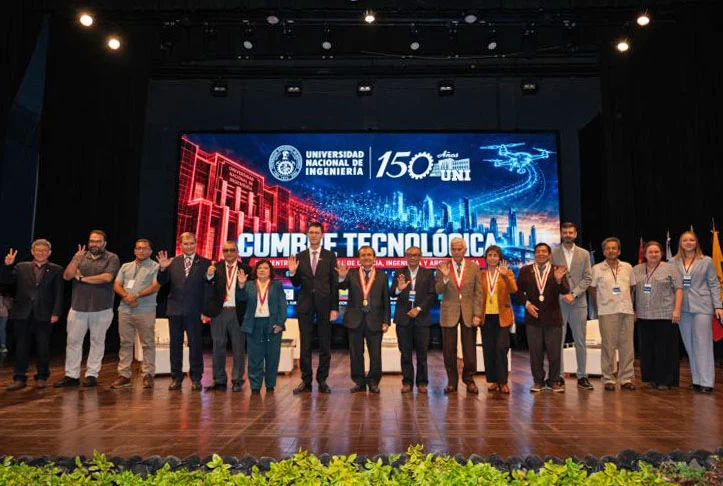
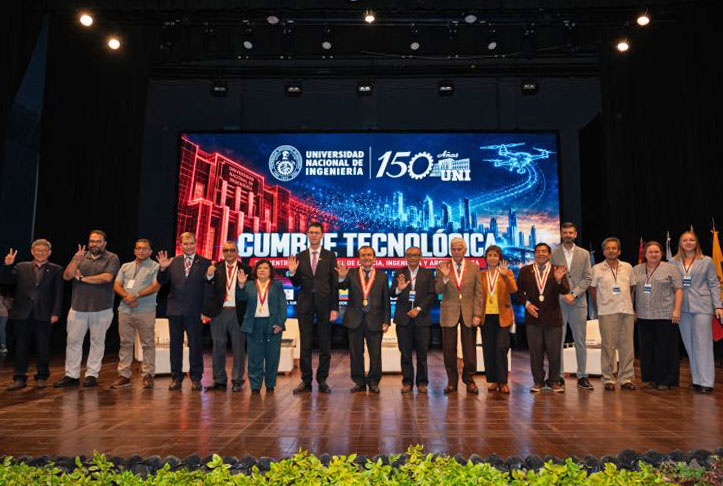
In a landmark event that underscores its historical commitment to national development, the Universidad Nacional de Ingeniería (UNI) has officially inaugurated its "Technological Summit: International Meeting of Engineering, Science, and Architecture." Held at the prestigious Gran Teatro of the university, the event serves as a cornerstone of the institution’s year-long Sesquicentennial celebrations, marking 150 years of shaping the scientific and technological landscape of Peru.
The summit, which has convened global experts, researchers, and government officials, is more than a commemorative gathering; it is a strategic platform designed to foster international cooperation and assert Peru’s role in the global innovation ecosystem.
Main Facts: A Vision for Technological Sovereignty
The core message resonating throughout the opening ceremony was the urgent need for Peru to cultivate "technological sovereignty." UNI Rector, Dr. Arturo Talledo Coronado, set the tone for the summit by emphasizing that the development of proprietary technology is not merely an academic exercise, but a national imperative.
"The development of technology must be a tool for national growth and the preservation of our independence," Dr. Talledo declared. He argued that in a rapidly changing world, nations that rely solely on imported solutions risk losing their competitive edge and economic autonomy.
The summit acts as a bridge between theoretical research and practical application. By gathering representatives from countries as diverse as South Korea, Japan, Russia, the United States, Brazil, and Spain, the UNI is actively building a multilateral framework for knowledge exchange. This collaborative approach, according to the Rector, is the only viable path to ensuring that technological progress benefits the broader society rather than serving narrow, short-term interests.
Chronology: A Legacy of 150 Years
To understand the weight of this summit, one must view it through the lens of the university’s history. Founded in 1876 by Polish engineer Eduardo de Habich, the UNI has evolved from a school of civil engineering and mining into the premier technical institution in Peru.
- 1876–1950 (The Formative Era): Establishing the backbone of Peruvian infrastructure, from mining railways to urban architecture.
- 1950–2000 (Modernization): The integration of electronics, advanced materials, and computer science into the curriculum.
- 2000–2025 (The Global Integration): A period defined by international research partnerships and a focus on high-impact innovation.
- September 2026 (The Sesquicentennial Summit): A moment of reflection and redirection. The summit, scheduled to conclude on September 12, marks a definitive shift toward Industry 4.0 and sustainable development.
Throughout these 150 years, the university has survived economic fluctuations and political instability, consistently producing the talent required to build the nation’s power grids, water systems, and telecommunications networks.
Supporting Data: Innovations and Research Frontiers
Despite facing significant budgetary constraints, the UNI continues to punch above its weight in research and development. The summit features a dedicated showcase of prototypes that highlight the ingenuity of Peruvian students and faculty.
The Focus Areas
The current research trajectory at the UNI is focused on five high-impact pillars:
- Electromobility: Developing local solutions for electric public transport, essential for reducing the carbon footprint of Lima’s urban sprawl.
- Hydrogen and Fuel Cells: Researching clean energy alternatives that could transform the mining and agricultural sectors.
- Automation and Robotics: Creating adaptive systems for the manufacturing and agricultural industries to improve output efficiency.
- Industry 4.0: Integrating IoT (Internet of Things) and data analytics into the Peruvian industrial workflow.
- Sustainable Architecture: Focusing on resilient materials and designs that mitigate the impact of natural disasters—a critical need for a country with high seismic activity.
Dr. Jorge Butler Blacker, the Vicerector of Research, noted that while these projects often start in the laboratory, their success is measured by their "transferability." "Knowledge is only half the equation," Dr. Butler stated. "The other half is innovation and the ability to turn that knowledge into concrete, market-ready solutions for the state and the private sector."
Official Responses and International Alliances
The international nature of the summit is a testament to the UNI’s global standing. The presence of diplomatic and scientific delegations from across the globe underscores the university’s role as a geopolitical asset for Peru.
Russia’s Perspective
Artem Lovenko, Minister Counselor of the Embassy of the Russian Federation, highlighted the enduring historical ties between his country and the UNI. He specifically pointed to joint ventures in aerospace engineering as a model for future cooperation. "Our history of collaboration with this university is deep-rooted," Lovenko said. "We view the UNI not just as an educational partner, but as a gateway to high-level scientific cooperation in the Andean region."
The Strategic Vision for Collaboration
The summit is explicitly designed to identify "gaps" in the national innovation system that can be filled through international partnerships. By bringing together academia, the state, and industry, the organizers hope to create a "triple-helix" model that facilitates funding and pilot programs.
"We are not looking for simple donors," a senior research coordinator noted during a panel. "We are looking for co-investors in knowledge."
Implications: The Road Ahead
The implications of this summit extend far beyond the university campus. For Peru, the ability to transition from a resource-exporting economy to a knowledge-based economy depends heavily on the success of institutions like the UNI.
Implications for the State
The government is increasingly looking toward the UNI to provide technical expertise for major infrastructure projects. The message from the summit is clear: if the state provides the necessary financial support, the university has the intellectual capital to solve critical national problems, from water management to digital transformation.
Implications for the Private Sector
For Peruvian industries, the summit offers a rare opportunity to access cutting-edge research. The "Technological Fair" component of the event allows businesses to witness firsthand the prototypes that could revolutionize their supply chains. The goal is to move beyond the traditional reliance on foreign technology and instead look to local talent to provide custom, cost-effective solutions.
Implications for Students and Faculty
For the university community, the summit serves as a massive networking event. By opening doors to international internships, collaborative PhD programs, and joint ventures, the UNI is ensuring that its graduates remain competitive in a globalized labor market.
Conclusion: Engineering a Sustainable Future
As the summit proceeds through its final days, the overarching sentiment is one of cautious optimism. The challenges are real—limited funding, the need for better integration between academia and the private sector, and the constant pressure of global competition. However, the energy displayed at the Gran Teatro suggests that the UNI is ready to face these challenges.
By emphasizing "technology for the benefit of all," the university is anchoring its 150th anniversary in a moral and professional commitment to society. The Technological Summit is not just a celebration of the past; it is a launchpad for the next century of engineering excellence in Peru. As the world watches, the UNI continues to prove that in the realm of science and innovation, the most important projects are those that seek to build a more equitable, efficient, and independent future.