Executive Summary: A Call to Efficiency
In a decisive move to address the chronic inefficiency plaguing the Peruvian public sector, Minister of Economy and Finance, Élmer Cuba, has announced the implementation of a national "census" of stalled and incomplete infrastructure projects. This strategic initiative aims to audit thousands of public works—ranging from essential school facilities and police stations to critical road networks—that have been left in limbo, consuming significant taxpayer funds without providing any tangible service to the citizenry.
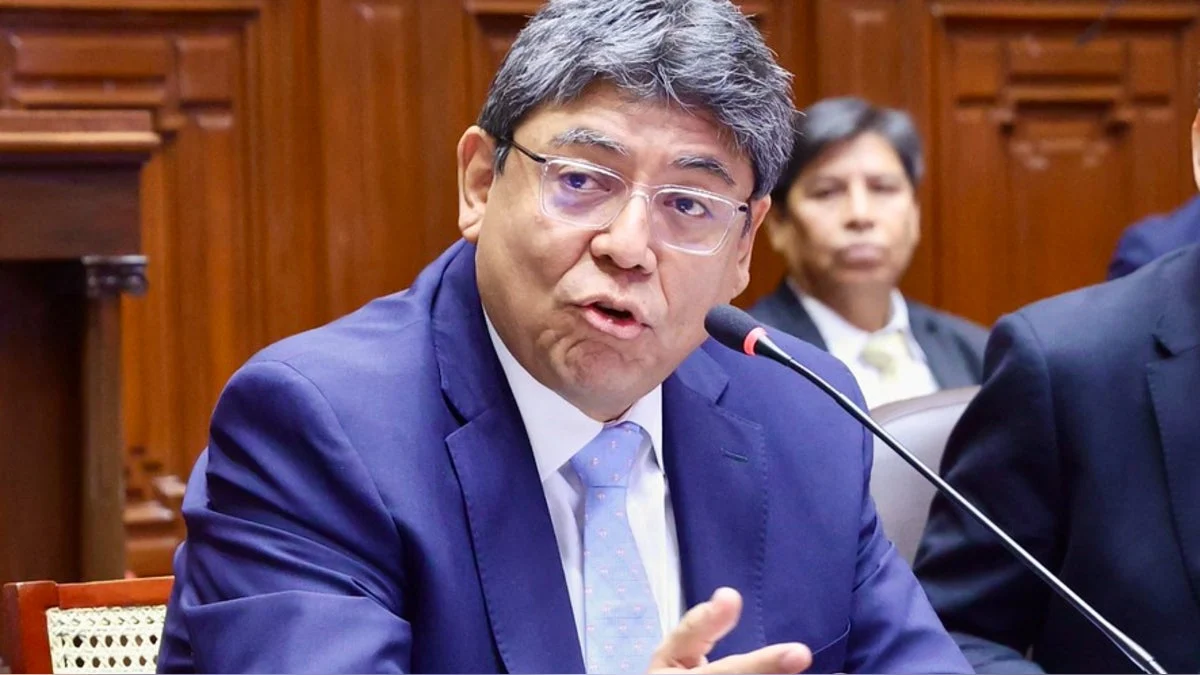
Minister Cuba, speaking before the Bicameral Commission for the Budget and General Account of the Republic, delivered a scathing critique of current public investment management. He highlighted that while the state continues to allocate vast budgets to infrastructure, a staggering proportion of these resources is effectively "lost" in unfinished projects, failing to bridge the country’s deep-seated infrastructure gaps. The government’s objective is now clear: shift the focus from mere budget execution to the actual completion of services that benefit the public.
1. The Current Landscape: Unmasking the "Cement Cemetery"
For years, the Peruvian landscape has been marked by what experts often describe as a "cemetery of projects": steel beams rusting in the rain, half-built classrooms, and unfinished roads that lead nowhere. During his testimony, Minister Cuba pointedly remarked, "We have spent money on bricks, cement, and steel, but the service never reaches the people."
The "Census" Methodology
The Ministry of Economy and Finance (MEF) is currently conducting an exhaustive diagnostic audit to categorize these thousands of stalled investments. The goal is to move away from a "blind" investment policy toward a data-driven approach. By analyzing the current status of each project, the MEF intends to establish a taxonomy of stalled works, classifying them based on the complexity of their paralysis. This systematic categorization will allow the government to distinguish between administrative bottlenecks, technical failures, and projects mired in complex legal or judicial disputes.
2. Chronology of the Crisis: From Growth to Stagnation
To understand the current urgency, one must look at the evolution of public investment over the last two decades.
- The Early 2000s (The Era of Efficiency): Peru experienced a period where public investment was characterized by high levels of execution and tangible impacts on poverty reduction and service delivery. During this phase, infrastructure projects were generally managed with higher technical standards and strict accountability.
- The Mid-2010s (The Onset of Deterioration): As the economy expanded, the proliferation of smaller, fragmented projects began to outpace the capacity of local and regional governments to monitor them. This period saw a rise in projects initiated with political motivations that lacked the long-term technical or financial viability to reach completion.
- The Present Day (The Reckoning): The current administration faces a legacy of thousands of dormant projects. The MEF has identified that while the quantity of spending remains high—and in some cases, has even increased—the quality and impact of this spending have reached a historical low. The focus has shifted from "spending for the sake of spending" to "finishing for the sake of utility."
3. Prioritization Strategy: The 10% Rule
One of the most pragmatic elements of the MEF’s new strategy is the implementation of a "triage" system. Not all stalled projects are created equal, and Minister Cuba emphasized that the government must be selective in how it allocates its limited fiscal resources.
The Logic of Marginal Gains
The government has adopted a prioritization model based on the "level of completion." The logic is straightforward: if a project is 90% or 95% complete, it requires a relatively small injection of capital to become fully operational. In contrast, a project that is only 20% finished carries higher risks of cost overruns and technical obsolescence.
"If a project is almost done, it is much more efficient to invest the remaining funds to finish it immediately, rather than spreading resources thin across projects that have barely begun," Cuba explained. This policy is designed to generate "quick wins"—projects that can be handed over to the community within months, thereby restoring public trust in the state’s ability to deliver.
4. Addressing Legal and Judicial Bottlenecks
A significant portion of the stalled works in Peru is trapped in legal limbo. These include projects abandoned due to contract disputes, corruption investigations, or failures by contractors to fulfill their obligations.
Minister Cuba acknowledged that these projects require a completely different approach compared to those that are merely awaiting funding. "There are some that have legal complications; because there is an ongoing lawsuit, we have to proceed with much greater caution," he noted. The MEF plans to work in coordination with the Comptroller General and the judicial system to find legal pathways to resume these works without violating public procurement laws. This segment of the census will likely take longer to resolve, but the government aims to establish a roadmap for each, ensuring that legal disputes do not permanently paralyze essential services.
5. Implications: The Broader Economic Reform
The focus on stalled infrastructure is not an isolated initiative; it is a fundamental pillar of the government’s wider economic agenda. The MEF views the current inefficiency in public investment as a structural hurdle to the country’s long-term productivity and growth.
The Double Challenge
Minister Cuba framed the task ahead as a "double challenge": the state must not only improve its ability to collect tax revenue but must also drastically improve the quality of its expenditure. He emphasized that an efficient public sector is a prerequisite for private sector growth. When the state provides reliable infrastructure, the cost of doing business decreases, and the standard of living for the general population rises.
A Holistic Reform Agenda
Beyond the census of infrastructure projects, the MEF is pushing for a series of structural reforms:
- Labor Market Flexibility: Aiming to increase formal employment.
- Financial System Modernization: Enhancing access to credit for small and medium-sized enterprises.
- Tax Compliance: Reducing the informal economy and increasing the efficiency of tax collection.
- Institutional Strengthening: Ensuring that regional and local governments have the technical capacity to manage their budgets effectively.
6. Official Outlook: Towards a More Efficient State
The narrative from the MEF is one of cautious optimism. By acknowledging the failures of the past 15 years, the ministry is positioning itself to be more proactive. The message to the public is clear: the era of "monumental" public works that serve as empty shells is coming to an end.
The success of this initiative will be measured not by how many projects are "started," but by how many schools are opened, how many kilometers of roads are paved, and how many police stations are fully operational. For the citizens of Peru, the promise of this "census" is the potential for the government to finally fulfill its primary obligation: to translate public funds into tangible, life-improving services.
As the MEF continues its audit, the eyes of the public and the legislature will remain fixed on whether the government can sustain this commitment to quality over quantity. The road ahead is complex, fraught with legal hurdles and administrative inertia, but for the first time in recent years, there is a clear, prioritized strategy to turn the country’s stagnant infrastructure into a catalyst for national development.