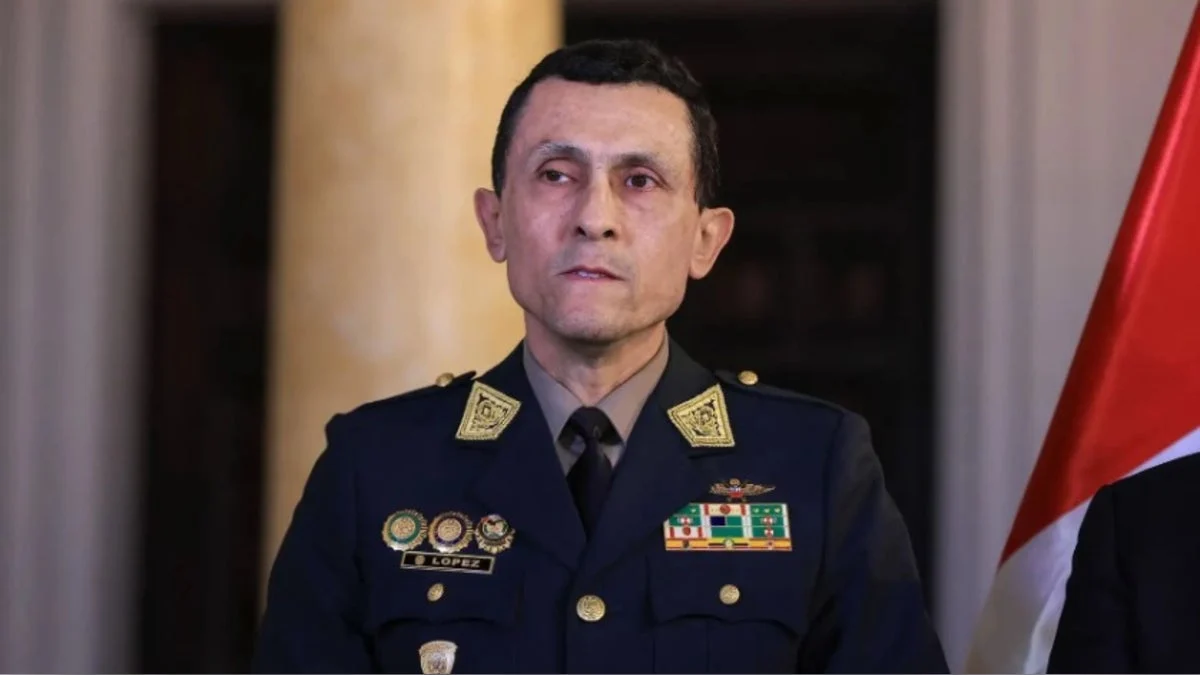
In a definitive move to quell mounting speculation, the Peruvian National Police (PNP) issued a formal communique this week addressing concerns regarding the medical fitness of Lieutenant General Fredy López Mendoza. As the officer prepares to assume his role as the new Commander General of the institution, his physical health had become the subject of intense, albeit unverified, discussion across social media platforms and various media outlets.
The official statement from the PNP serves as a comprehensive rebuttal to claims suggesting that López Mendoza suffers from a chronic or debilitating condition that might impede his ability to lead the force. By providing medical context and emphasizing his history of high-intensity service, the institution aims to stabilize the transition of command and maintain public trust in the leadership of the country’s primary law enforcement agency.
Main Facts: The Official Position on General López Mendoza
The central pillar of the PNP’s announcement is the unequivocal denial of current health issues. According to the institution, Lieutenant General Fredy López Mendoza is in full possession of the physical and mental faculties required for the high-ranking office he is set to occupy.
The police force noted that while historical medical documentation exists—specifically a "Code 2" fitness classification—this status is a relic of the past that does not reflect his present condition. The PNP underscored that since undergoing a successful treatment, the officer has remained free of any symptoms or ailments linked to that prior diagnosis.
Furthermore, the institution emphasized that the transition to his current role is backed by the standard administrative protocols, which were handled through the official channels of the PNP’s Directorate of Health. By framing the discourse around both medical clearance and procedural transparency, the PNP is attempting to preempt further misinformation that could undermine the incoming Commander General’s authority.
Chronology of the Controversy
The situation surrounding General López Mendoza’s health did not arise in a vacuum. It follows a period of heightened sensitivity regarding the leadership of the PNP and the broader security challenges facing Peru.
Initial Rumors and Social Media Escalation
In the days leading up to the official announcement of his appointment, various anonymous accounts and speculative media reports began circulating claims that the incoming Commander General was suffering from a condition that would disqualify him from field operations. These rumors gained traction, forcing the hand of the PNP’s public relations department.
The "Code 2" Disclosure
The controversy specifically centered on a past medical classification known as "Code 2." In the context of the Peruvian Police, such codes are used to categorize an officer’s aptitude for various duties. The PNP acknowledged that at one point, López Mendoza had indeed been assigned this code following a specific medical procedure. However, the institution clarified that this was a temporary designation that had long been rectified through subsequent evaluations.
The Formal Rebuttal
On Tuesday, the PNP issued its formal statement. The timing was critical, occurring just as the officer was preparing to transition into his new role. The document was designed to provide a "point-by-point" refutation of the allegations, shifting the narrative from one of health concerns to one of administrative rigor and professional excellence.
Supporting Data: A History of High-Altitude and Operational Service
To dispel the notion that the incoming Commander General is physically unfit, the PNP provided specific examples of his professional career that serve as a testament to his vigor. A key element of the defense was the assertion that López Mendoza has served in diverse and physically demanding environments, including high-altitude regions of the Andes and tropical zones.
Physical and Operational Readiness
The PNP highlighted that the officer has consistently participated in demanding physical and athletic activities. These are not merely individual routines but, in many cases, sanctioned events organized in conjunction with other major public and private entities, such as the Municipality of Lima and the National Commission for Development and Life without Drugs (Devida). By citing his participation in these programs, the institution provides verifiable proof of his ability to withstand the physical pressures inherent in high-level police leadership.
Administrative Oversight and Health Management
The PNP clarified that any changes to his health status—from the period of the "Code 2" classification to his current "fully fit" status—were handled strictly according to regulations. This indicates that there was no "shortcut" or irregular waiver provided to the officer. Instead, he underwent the standard re-evaluations required by the Directorate of Health of the National Police of Peru, ensuring that his fitness for command is documented and legally sound.
Official Responses and Institutional Integrity
The tone of the PNP’s response was one of firm institutional defense. The organization expressed its gratitude to the public and the media for their interest but issued a stern warning against "tendentious information."
"We urge the community and various media outlets not to be taken in by tendentious information aimed at discrediting the Police Institution," the statement read. This language suggests that the PNP views the attacks on General López Mendoza’s health as part of a wider effort to destabilize the police force during a critical transition period.
By focusing on the "institutional integrity," the PNP is attempting to frame the health rumors as an attack on the organization itself. This serves to galvanize support for the incoming commander, positioning him not just as an individual, but as a representative of the institution’s commitment to procedural meritocracy.
Implications for the Future of the PNP
The resolution of this health-related controversy has significant implications for the Peruvian National Police as it enters a new chapter under General López Mendoza.
Leadership and Stability
The primary implication is the solidification of the command structure. By addressing the rumor mill early, the PNP has cleared a path for the new Commander General to begin his term without the baggage of ongoing public doubt. Stability in leadership is essential for the PNP as it faces ongoing challenges related to organized crime, corruption, and social unrest.
The Importance of Professional Pedigree
The inclusion of details regarding the officer’s previous leadership roles—such as his tenure at the head of the Directorate Against Corruption (Dircocor) and the Directorate of Aviation (Diravpol)—serves to remind the public of his extensive background. His career trajectory is defined by high-stakes management, which the PNP argues is a better metric of his suitability than the speculative rumors regarding his medical history.
The Role of Media and Digital Literacy
This episode underscores the challenges faced by public institutions in the age of social media. The speed at which misinformation can travel necessitates a proactive communication strategy. The PNP’s decision to publish a formal, detailed, and data-backed response represents a modern approach to crisis communication. It signals that the institution is prepared to defend its personnel against smear campaigns and that it prioritizes transparency as a means of maintaining public legitimacy.
A Test of Institutional Resilience
Ultimately, the incident serves as a test of the PNP’s resilience. By successfully navigating this period of scrutiny, the force has demonstrated its ability to manage internal personnel issues while simultaneously protecting its public image. The focus now shifts to the actual performance of General López Mendoza, who must now deliver on the operational goals of the force, having successfully overcome the initial hurdles of his appointment.
In conclusion, the PNP’s formal clarification regarding Lieutenant General Fredy López Mendoza’s health is a calculated effort to restore confidence in the institution’s leadership. By grounding their argument in medical history, procedural compliance, and a record of active duty, the police have effectively neutralized a potential scandal, allowing the focus to return to the critical task of maintaining security and order across Peru.