Executive Summary: A Lifeline for Local Farmers
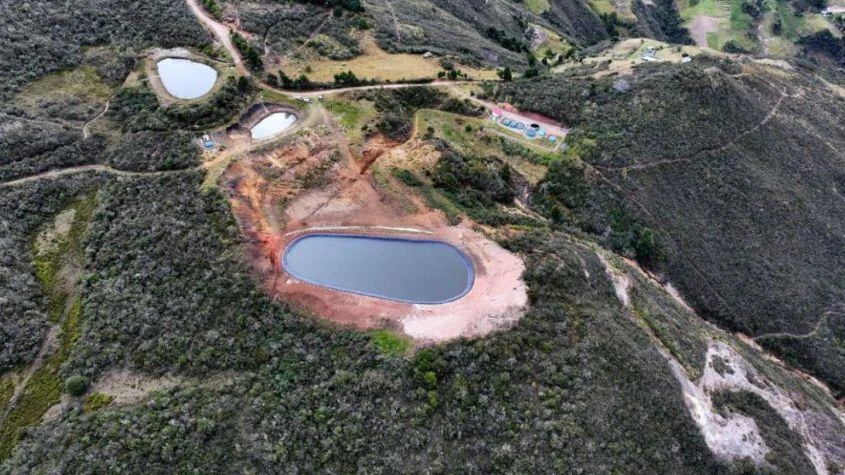
In a significant stride toward agricultural resilience and food security, the Prefectura del Azuay has successfully completed the comprehensive rehabilitation of the Ruco Ñan reservoir. Located within the Huantuc Loma module in the Chunazana commune of the Nabón canton, this vital infrastructure project serves as a cornerstone for local irrigation efforts. With a storage capacity of 6,000 cubic meters, the reservoir is now fully operational, providing a reliable water source for approximately 80 hectares of fertile land. This initiative directly improves the livelihoods of 512 residents, most of whom are small-scale agricultural producers who depend on consistent water access for their crops.
1. The Scope of the Crisis and the Restoration Effort
The rehabilitation project was not merely a maintenance upgrade but a critical response to environmental instability. Previously, the Ruco Ñan reservoir suffered severe structural damage due to a significant landslide, which threatened the irrigation capacity of the surrounding region. The collapse of the reservoir’s integrity left local farmers struggling to secure water, putting entire harvests at risk and threatening the economic stability of the Chunazana community.
Technical Interventions
To restore the functionality of the site, the provincial government initiated a multi-faceted engineering approach. The reconstruction process included:
- Geotechnical Stabilization: Extensive work was carried out to stabilize the surrounding terrain, ensuring the reservoir’s foundation could withstand future seismic or weather-related shifts.
- Hydraulic Infrastructure: A new 130-meter piping system was installed, significantly enhancing the efficiency of water conveyance from the reservoir to the fields.
- Seepage Mitigation: The installation of a high-grade geomembrane was a pivotal step in the project, effectively sealing the reservoir to prevent water loss through infiltration, thereby ensuring that every drop stored is available for irrigation.
2. Chronology of the Project: From Planning to Completion
The journey to restore the Ruco Ñan reservoir was a collaborative effort involving provincial authorities, the Junta de Riego León Monte (the local irrigation board), and the community members themselves.
- Initial Assessment: Following the landslide, engineers from the Prefectura del Azuay conducted an on-site evaluation to determine the extent of the damage. It was determined that a simple repair would be insufficient, necessitating a full-scale reconstruction.
- Resource Allocation: By mid-fiscal year, the financing structure was finalized. A total budget of $32,000 was established. The Prefectura provided $27,000, while the Junta de Riego León Monte contributed $5,000, underscoring the strong sense of local ownership and shared responsibility in the project.
- Implementation Phase: Construction began with earthworks aimed at stabilizing the slopes around the reservoir. This was followed by the installation of the specialized geomembrane and the new conduit pipes.
- Community Participation: Throughout the construction phase, local residents provided essential manual labor and logistical support, participating in auxiliary works to protect the area surrounding the reservoir from future erosion.
- Inauguration and Commissioning: The reservoir was officially reopened following a final inspection, marking the restoration of water access for the 512 beneficiaries and the stabilization of the local agricultural supply chain.
3. Supporting Data and Financial Context
The success of the Ruco Ñan project serves as a model for decentralized water management. The financial transparency of the project highlights the efficiency of utilizing local partnerships:

| Component | Investment Amount |
|---|---|
| Prefectura del Azuay Contribution | $27,000 |
| Junta de Riego León Monte Contribution | $5,000 |
| Total Project Cost | $32,000 |
| Storage Capacity | 6,000 m³ |
| Irrigation Reach | 80 Hectares |
Beyond the immediate scope of the Ruco Ñan reservoir, the regional government is managing a broader strategy for water management. The ongoing "León Monte Irrigation System Improvement Project" is currently at a 65% completion rate. This broader project represents a massive investment of $884,124.05 and is designed to modernize the irrigation infrastructure for a much larger population.
Strategic Expansion
The regional master plan aims to extend the benefits of these infrastructure improvements to multiple communities, including:
- Chunazana
- Tiopamba
- Huantuc Loma
- Pie de Ramada
- La Ramada
- La Playa
Once fully completed, this comprehensive irrigation network will serve approximately 3,600 people, transforming the agricultural output of the entire sector.
4. Official Perspectives and Policy Implications
The project has drawn praise from provincial leaders who view water infrastructure as the primary driver of rural poverty reduction. Prefect Alexandra Quintanilla emphasized the long-term strategic value of these works during the project’s review.
A Statement on Rural Opportunity
"A field with reliable irrigation signifies more than just water; it signifies increased production and better opportunities for our families," stated Prefect Alexandra Quintanilla. "These projects are critically important because they allow us to store and distribute water directly to the lands of our producers. By investing in this infrastructure, we are investing in the dignity and the future of the Azuay rural population."

The policy shift reflected in the Nabón project highlights a move away from temporary fixes toward durable, climate-resilient infrastructure. By incorporating geomembranes and modern piping, the province is attempting to "future-proof" its water supplies against the increasingly unpredictable weather patterns observed in the Andean region.
5. Socio-Economic Implications: The Future of Nabón Agriculture
The implications of the Ruco Ñan rehabilitation extend far beyond the technical specs of the reservoir. For the farmers of Nabón, the project represents a return to economic viability.
Agricultural Resilience
Reliable water access is the most significant variable in determining the success of high-value crops in the region. Before the restoration, farmers were forced to rely on rain-fed irrigation, which is increasingly erratic. With a 6,000 m³ buffer, the community now has a safety net that allows for the planting of seasonal crops that would have otherwise been deemed too risky.
The Multiplier Effect
The investment of nearly $900,000 into the wider León Monte system suggests that the regional government is viewing these small-scale reservoirs as the "connective tissue" of a much larger agricultural modernization effort. As irrigation becomes more efficient, farmers are expected to transition toward higher-yield crops and potentially enter more competitive markets.
Furthermore, the participation of the Junta de Riego León Monte in the financing and maintenance of the project serves as a crucial social experiment in decentralized governance. When local irrigation boards contribute financially, there is a higher level of community engagement in the long-term maintenance of the assets. This ensures that the infrastructure will not fall into disrepair, as the users themselves have a direct stake in the project’s longevity.

Addressing Infrastructure Gaps
The broader context of regional development in Ecuador remains focused on bridging the gap between urban centers and rural hinterlands. The ongoing efforts in Azuay province are part of a larger national narrative regarding the necessity of upgrading public works. By focusing on water security, the provincial government is proactively addressing the root causes of rural-to-urban migration, aiming to keep youth and families engaged in agriculture by making it a profitable and stable career path.
Conclusion
The restoration of the Ruco Ñan reservoir is a definitive success story for the Nabón canton. By combining a modest financial investment with strong community collaboration and sound engineering, the Prefectura del Azuay has secured the water supply for 512 people and 80 hectares of land. As the broader León Monte system moves toward completion, the region stands as a beacon for how localized, well-targeted infrastructure projects can stabilize rural economies and provide the foundational support necessary for agricultural prosperity in the 21st century.
The commitment shown by the local authorities to both the repair of existing assets and the construction of new, high-capacity systems suggests a bright, well-watered future for the farmers of Chunazana and beyond.