In a significant move aimed at stabilizing its operations and signaling a new chapter of financial discipline, Petroperú, the Peruvian state-owned oil company, has successfully secured an initial disbursement of US$ 475 million from international banking markets. This capital injection represents the first tranche of a broader, ambitious financing facility totaling up to US$ 2 billion. Crucially, this operation has been structured to operate independently of the national Treasury, marking a departure from previous reliance on direct state subsidies.
The operation is spearheaded by global financial giants JP Morgan and Citibank, serving as a critical endorsement of the current reorganization process being steered by the Private Investment Promotion Agency (Proinversión). As the company navigates deep structural changes, this influx of capital is earmarked for essential working capital, the procurement of crude oil, and the maintenance of operational continuity.
The Financial Framework: Independence and Oversight
A defining characteristic of this transaction is its fiscal autonomy. By securing funds from the private international market, the government seeks to alleviate the pressure on the Peruvian public purse. Proinversión has confirmed that these resources do not utilize funds from the Public Treasury, a move designed to insulate the state from the immediate volatility of the company’s operational costs.
To ensure the funds are utilized exclusively for their intended purposes—strengthening the company’s core business and ensuring the supply chain remains uninterrupted—the capital will be managed under a strictly supervised trust. This fiduciary structure, administered and monitored directly by Proinversión, acts as a firewall between these specific funds and Petroperú’s general accounts, ensuring that the liquidity is protected from non-essential expenditures and remains focused on stabilizing the firm’s precarious financial position.
A Strategic Timeline: From Crisis to Recovery
The journey toward this financing milestone is rooted in a broader strategy to rescue the state enterprise from a period of severe liquidity constraints and operational inefficiency.
- Initial Signs of Distress: Over the past two years, Petroperú faced significant headwinds, including the costly completion of the Talara Refinery modernization and fluctuating global oil prices, which severely strained its cash flow.
- The Appointment of New Leadership: In a strategic pivot, the government appointed a new Board of Directors, chaired by Oliver Stark. His mandate is clear: overhaul corporate governance, improve fiscal transparency, and restore the company’s damaged reputation among international lenders.
- The Proinversión Intervention: The Ministry of Economy and Finance (MEF) tasked Proinversión with guiding a profound administrative and patrimonial reorganization. This agency, typically focused on public-private partnerships, has taken an active role in restructuring Petroperú’s internal management.
- The $475 Million Disbursement: With the arrival of the first $475 million, the company gains the breathing room necessary to fulfill its immediate obligations, effectively preventing the supply shortages that previously threatened the national fuel market.
Expert Perspectives and Official Statements
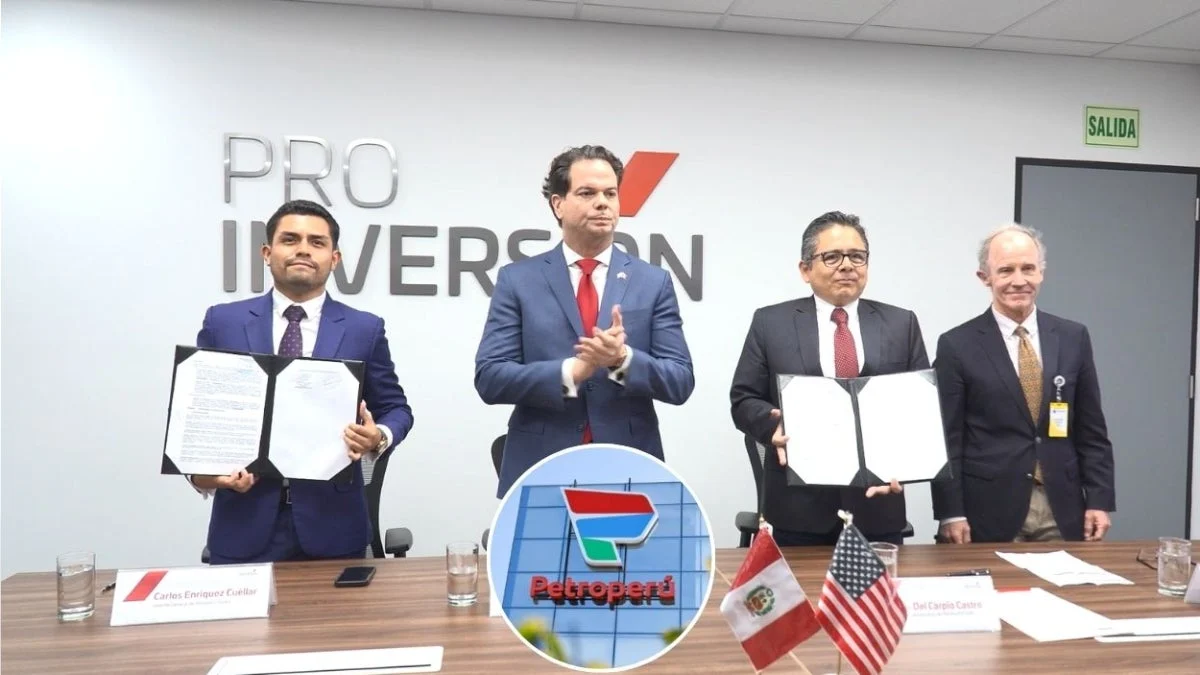
The success of this initial disbursement has been met with optimism by both government officials and international stakeholders. Luis Del Carpio, Executive President of Proinversión, emphasized that the operation is more than just a liquidity boost; it is a vital vote of confidence.
"This first disbursement is the result of rigorous work to advance the reorganization of Petroperú," Del Carpio stated. "It demonstrates that the international banking sector trusts the process we are implementing."
The diplomatic community has also played a supportive role. The United States Embassy in Peru has been instrumental in facilitating the dialogue between the state entity and global financial institutions. U.S. Ambassador to Peru, Bernie Navarro, underscored the importance of the deal, noting, "This is a very important step in the eyes of the world and a positive signal for the country." By leveraging the expertise of banking leaders like JP Morgan and Citibank, the government is attempting to reintegrate Petroperú into global capital markets, a prerequisite for long-term sustainability.
The Path to 2032: Institutional Transformation
The ultimate objective of this financial strategy is not merely to keep the lights on, but to achieve complete financial autonomy. Proinversión has established an ambitious roadmap that targets 2032 as the year in which Petroperú reaches a state of total financial self-sustainability.
Strengthening Corporate Governance
The new board, led by Stark, is tasked with implementing international best practices in transparency and risk management. This includes reducing political interference in operational decision-making and ensuring that hiring and procurement processes are governed by efficiency metrics rather than political considerations.
Optimizing Assets and Reducing Dependence
The reorganization includes an evaluation of the company’s massive asset portfolio. By optimizing the use of the Talara Refinery and other logistical assets, the government aims to maximize revenue generation. The goal is to move away from the model of "state-subsidized utility" and transition toward a model of "state-owned corporate enterprise," where the company covers its own operational costs through market-driven revenue.
The Role of Private Participation
A cornerstone of the 2032 plan is the increased involvement of private capital. While the company remains state-owned, the integration of private investment into specific projects or subsidiaries is being explored. This "hybrid" approach is designed to attract technical expertise and private-sector management standards, effectively diluting the risks that have historically plagued the company’s management.
Implications for the Peruvian Economy
The stabilization of Petroperú is not a peripheral issue; it is a macroeconomic imperative for Peru. As a major player in the energy sector, Petroperú’s financial health directly influences the country’s credit rating and the stability of fuel prices.
- Macro-Financial Stability: By securing private international credit, the Peruvian government avoids direct budgetary shocks, preserving its fiscal space for social investment and public infrastructure.
- Market Confidence: The success of the $2 billion facility sends a message to other international investors that Peru is capable of managing complex structural reforms without succumbing to populist impulses.
- Energy Security: The immediate benefit of this financing is the guarantee of crude supply. By ensuring that the company can purchase the necessary raw materials, the government mitigates the risk of domestic fuel shortages, which could otherwise lead to inflation and social unrest.
Conclusion: A Turning Point?
The securing of this $475 million disbursement marks a cautious but promising turning point for Petroperú. The combination of a new, professional board of directors, the fiduciary oversight of Proinversión, and the backing of global banking powerhouses creates a framework that was previously missing.
However, the road ahead remains arduous. The company must now prove that it can maintain this fiscal discipline, improve its operational margins, and successfully navigate the political complexities inherent in state-owned enterprises. If the company succeeds in its goal of achieving self-sustainability by 2032, it will serve as a landmark case study for the modernization of state-owned entities in emerging markets. For now, the focus remains on the judicious use of these funds and the continued execution of the reorganization plan, ensuring that the "trust" expressed by international lenders is matched by the performance of the company on the ground.