By Editorial Team, Peru Construye
In a concerted effort to foster a culture of safety and legal compliance, the Superintendency of National Labor Inspection (Sunafil) has intensified its outreach activities in the Ayacucho region. According to Alfonso Rebaza Iparraguirre, the regional intendant, the agency has successfully reached over 8,000 workers between January and August of this year, emphasizing the critical importance of workplace safety and adherence to labor regulations.
This proactive approach reflects a strategic shift from purely punitive measures toward education and prevention, particularly in high-risk sectors like construction, where the stakes—ranging from administrative fines to the preservation of human life—are exceptionally high.
Main Facts: A Commitment to Worker Protection
Between January and August 2026, the Sunafil Intendencia Regional de Ayacucho conducted 157 distinct orientation sessions. These initiatives have directly benefited 8,142 workers across various economic sectors. The core objective of these interventions is to bridge the information gap regarding labor rights and, more crucially, to enforce the safety and health protocols that employers are legally mandated to provide.
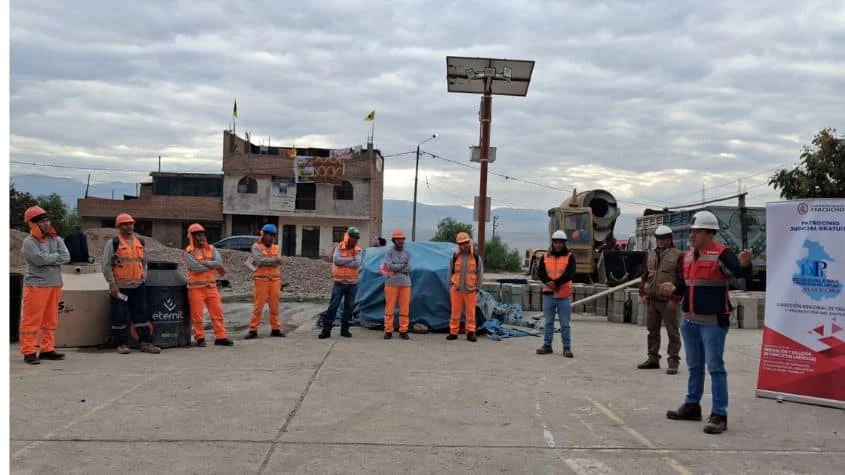
The most recent highlight of this campaign took place in the district of Ayacucho, Huamanga province. Inspectors visited the site of the public infrastructure project titled "Construction of Pavements and Sidewalks in the Cuchipampa Populated Center and the Río Seco Sector." This project, executed by the Municipalidad Provincial de Huamanga, serves as a microcosm for the broader challenges faced by the construction industry in the region.

Chronology of Outreach Efforts
The systematic outreach performed by Sunafil throughout 2026 follows a structured timeline designed to cover the maximum number of personnel before major construction milestones are reached.
- Q1 2026 (January–March): Sunafil initiated the year with a focus on administrative compliance, targeting medium-sized enterprises to ensure that labor contracts were properly registered.
- Q2 2026 (April–June): As construction activity peaked, the agency pivoted toward site-specific safety audits. During this phase, the focus shifted from bureaucratic documentation to the physical presence of Personal Protective Equipment (PPE) on active sites.
- Q3 2026 (July–August): The campaign consolidated its efforts in the Huamanga province, leading to the high-profile intervention at the Cuchipampa/Río Seco project. This period saw the highest frequency of "on-the-ground" inspections, ensuring that the initial directives from the start of the year were being sustained.
The Critical Importance of Safety in Construction
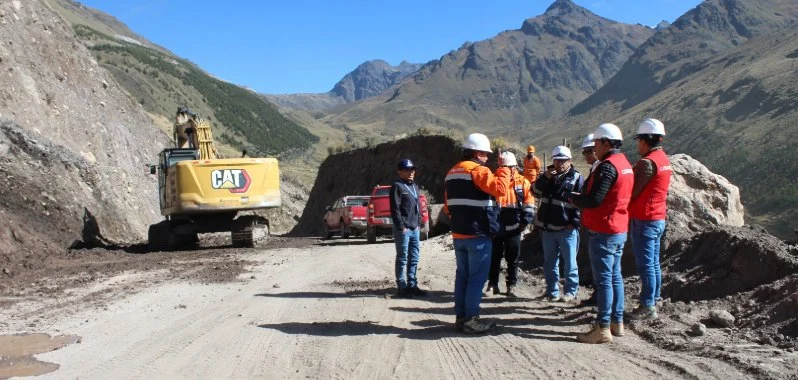
Construction remains one of the most hazardous industries globally. In the Peruvian context, the risks associated with manual labor, heavy machinery, and infrastructure development are significant. Sunafil’s intervention at the Huamanga municipal project focused specifically on the 25 workers currently engaged in the development of urban paving.
Essential Safety Protocols
During the workshops, inspectors emphasized the non-negotiable nature of Personal Protective Equipment (PPE). For any worker on a construction site, the minimum safety kit must include:
- Head protection: High-impact safety helmets.
- Ocular safety: Lenses designed to prevent debris entry.
- Auditory protection: Industrial-grade earplugs for noise mitigation.
- High-visibility attire: Vests equipped with reflective strips, essential for worker safety in zones with vehicular traffic.
- Manual and pedal protection: Durable gloves and steel-toed safety boots.
Beyond the physical gear, workers were briefed on the "Safety Culture," which encourages the reporting of "near-misses" and the active participation of workers in safety committees.
Legal Framework and Labor Regimes
A significant portion of the orientation provided by Sunafil focused on the "Special Regime for Civil Construction." This is a highly specialized area of Peruvian labor law that dictates specific pay scales, benefits, and working conditions that differ from the general labor regime.

Hierarchy of Roles and Remuneration
The inspectors clarified the distinctions between the three primary categories of construction workers:
- Operario (Skilled Worker): Those with specialized trades (bricklayers, carpenters, electricians).
- Oficial (Assistant/Apprentice): Workers who assist the skilled tradespeople and are gaining technical proficiency.
- Peón (General Laborer): The essential workforce responsible for site preparation, material transport, and basic tasks.
Understanding these classifications is vital, as the remuneration packages and legal protections vary significantly depending on the role. Sunafil’s role here is to ensure that employers are not misclassifying workers to avoid paying the legally mandated wages associated with higher-skilled roles.
Official Responses and Strategic Implications
Alfonso Rebaza Iparraguirre, the Intendant of the Ayacucho region, noted that the success of these outreach programs lies in the willingness of both employers and employees to engage in a dialogue. "Our doors are open," Iparraguirre stated, emphasizing that Sunafil is not merely an inspection body but a technical advisory entity.
Proactive vs. Reactive Inspection
The shift toward "orientation-led" enforcement is a strategic move to lower the accident rate in the region. By conducting sessions "oficio" (at the initiative of the agency) or "a petición" (at the request of the parties involved), Sunafil is attempting to foster a preventative culture.
The implications for the construction industry are profound:

- Reduced Liability: Companies that adhere to Sunafil’s safety recommendations significantly lower their risk of work-related accidents, which in turn reduces the likelihood of costly legal battles and massive administrative fines.
- Improved Productivity: A safe workplace is a more efficient one. By minimizing downtime caused by accidents or labor disputes, infrastructure projects can remain on schedule.
- Social License: For municipal projects like the one in Huamanga, demonstrating a commitment to the well-being of local workers enhances the public reputation of the governing body.
The Path Forward: Sustaining the Momentum
The data provided—157 orientations and over 8,000 workers reached—is impressive, but the challenge remains to institutionalize these practices. As urban growth continues in Ayacucho, the demand for infrastructure will persist.
Sunafil’s focus on the construction sector is a vital component of the regional development strategy. Future initiatives are expected to incorporate more digital monitoring tools, allowing for real-time tracking of site safety compliance. Furthermore, the agency has signaled that it will continue to provide free technical assistance to any company willing to align its practices with national labor standards.
Conclusion
The efforts of the Intendencia Regional de Ayacucho serve as a blueprint for other regions. By prioritizing education, clarifying legal requirements, and ensuring that safety gear is treated as a fundamental right rather than an optional expense, Sunafil is actively shaping a more professional and humane construction industry in Peru.
As the country continues to invest in its infrastructure, the human capital behind these projects—the bricklayers, the site managers, and the laborers—must remain the primary focus. With ongoing support from regulatory bodies like Sunafil, the construction sector can transition from a historically high-risk environment to a model of safety, legality, and sustainable growth.
For employers and workers seeking guidance, Sunafil’s regional offices remain the primary point of contact for technical consultations, ensuring that every project in Ayacucho is built on a foundation of both concrete and compliance.