By Editorial Staff, Infrastructure & Development Review
In a significant advancement for regional logistics and tourism, the Government of Mexico has officially announced the completion of the Amado Nervo Bridge. This critical infrastructure project serves as a vital artery connecting the municipality of Bahía de Banderas in the state of Nayarit with the world-renowned tourist destination of Puerto Vallarta, Jalisco. By crossing the Ameca River, this new conduit promises to redefine mobility for nearly half a million residents, slashing commute times and strengthening the economic integration of these two neighboring states.
The project, which was originally slated for completion in December 2026, has been delivered ahead of schedule, marking a rare and celebrated victory in public infrastructure management.
Main Facts: A New Gateway for Western Mexico
The Amado Nervo Bridge is not merely a concrete structure; it is a strategic solution to the chronic traffic congestion that has historically plagued the border between Nayarit and Jalisco. With the rapid expansion of the Riviera Nayarit as a premier global travel destination and the steady growth of Puerto Vallarta’s urban footprint, existing transit routes had become insufficient.

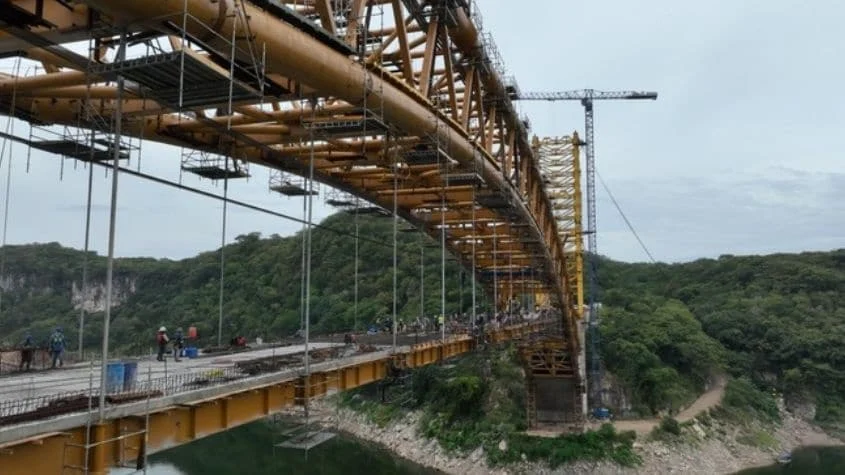
The new bridge provides a high-capacity alternative, effectively acting as a bypass that separates local transit from the heavy commuter traffic between the two states. Spanning a total length of 2 kilometers, the project consists of 800 meters of primary bridge structure complemented by 1.220 kilometers of access roads. Designed to handle modern traffic volumes, the infrastructure features three lanes per direction, ensuring a fluid transition and reducing the bottlenecks that have historically frustrated travelers and logistics operators alike.
Chronology: From Blueprint to Completion
The journey of the Amado Nervo Bridge began in July 2025, when the federal government greenlit the project as a cornerstone of the National Road Infrastructure Program 2025-2030.
- July 2025: Official groundbreaking ceremonies took place, initiating the massive mobilization of heavy machinery and labor force required to tame the banks of the Ameca River.
- Late 2025: Foundation work commenced. Engineers focused on the complex task of sinking 126 deep-seated piles, each 1.5 meters in diameter, to ensure the structural integrity of the bridge against seismic activity and the seasonal fluctuations of the river.
- Q1-Q2 2026: Vertical construction gained momentum. The installation of 21 pillar-column supports and the placement of 160 structural beams were executed with precision.
- September 2026: The project reached its final completion phase, officially opening ahead of the original December deadline. This rapid acceleration of the construction timeline is being cited as a model for future infrastructure projects in the country.
Technical Specifications and Engineering Feats
The scale of the project reflects the immense technical requirements needed to bridge the Ameca River effectively. Beyond its aesthetic appeal, the engineering team prioritized durability and load-bearing capacity to accommodate both heavy commercial transport and the high volume of daily tourist shuttles.
The project’s material footprint is substantial, underscoring the magnitude of the effort:

- Steel and Reinforcement: The main structure utilized 2,970 tons of high-grade steel, while the access roads required an additional 218 tons to ensure long-term stability.
- Concrete Volumes: A total of 18,500 cubic meters of high-resistance concrete were poured for the main span, with an additional 12,200 cubic meters dedicated to the access ramps and surrounding road works.
- Structural Design: The bridge is divided into 20 distinct clear spans of 40 meters each, a design choice that balances cost-efficiency with the need for broad, unobstructed passage over the riverbed.
Economic Implications and Social Impact
The primary beneficiary of this project is the populace of the region. Approximately 479,471 residents will see their daily quality of life improve as they save up to 25 minutes per one-way trip. For the workforce that travels daily between Nayarit and Jalisco, this translates to nearly an hour of reclaimed time each day.
Economically, the impact is expected to be profound. The bridge facilitates a more seamless supply chain, allowing for faster delivery of goods and services between the two states. Tourism—the lifeblood of both Bahía de Banderas and Puerto Vallarta—will also see a significant boost. Improved accessibility makes the region more attractive for international investment, as it removes one of the primary deterrents to growth: the "border" congestion that previously isolated these two municipalities during peak travel hours.
Furthermore, the construction phase itself acted as a regional economic engine, generating 2,790 direct and indirect jobs. These roles ranged from specialized engineering and project management to heavy equipment operation and general labor, providing a much-needed stimulus to the local economy during the 15-month construction window.
Official Stance and Future Outlook
Government officials have positioned the Amado Nervo Bridge as a testament to the success of the National Road Infrastructure Program 2025-2030. By prioritizing projects that address "bottleneck" points, the government aims to enhance the competitiveness of Mexico’s regional transport networks.

In official statements, representatives emphasized that the project was completed with strict adherence to safety and environmental standards. The integration of this bridge into the wider road network is expected to reduce the carbon footprint of regional transit, as the decrease in idling time in traffic congestion directly correlates to lower fuel consumption and reduced vehicular emissions.
Looking forward, the success of this project sets a high bar for upcoming infrastructure tenders. The ability to complete such a complex crossing ahead of schedule suggests improvements in supply chain management and project coordination that may be replicated in other high-priority corridors across Mexico.
Conclusion: A Bridge to a Better Future
The Amado Nervo Bridge stands as a symbol of modern development in Western Mexico. By successfully bridging the Ameca River, the government has addressed the immediate needs of nearly half a million people, proving that focused investment in infrastructure remains the most effective tool for regional socioeconomic advancement.
As the region continues to grow, the Amado Nervo Bridge will serve as more than just a crossing; it will be the physical manifestation of a more connected, efficient, and prosperous future for the people of Nayarit and Jalisco. With the project now fully operational, the focus shifts to monitoring its long-term impact on traffic flow and evaluating the potential for further expansion of the regional road network to keep pace with the continued, rapid growth of this dynamic corridor.