There is a haunting quality to the way certain regions in the developing world interact with natural disasters. It is a narrative that feels lifted from the pages of a Jorge Luis Borges short story—a labyrinthine, circular history where disaster is not an anomaly, but a recurring destiny. In this narrative, the protagonists, despite being warned of the approaching storm, remain paralyzed by a systemic inertia that borders on the surreal.
Yet, in the annals of universal literature, one struggles to find a fable that truly captures the sheer magnitude of the absurdity unfolding in the Piura region of Peru. Perhaps the reality is too illogical, too profoundly inefficient, even for the most ingenious literary minds. As we examine the state of preparedness in Northern Peru, we are forced to confront a sobering question: Is this cycle of destruction a product of fate, or is it a man-made tragedy of bureaucratic negligence?
The Anatomy of a Man-Made Disaster: The Piura Case Study
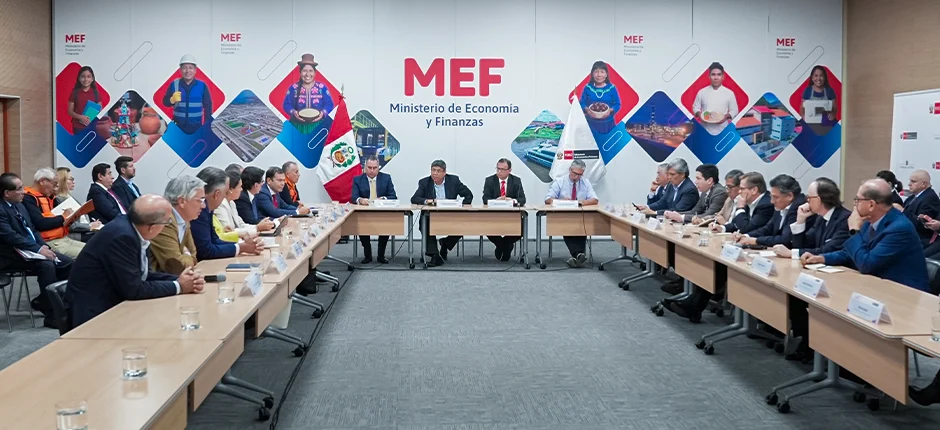
The evidence of this cycle is not found in dusty archives, but in the current, stark reality of Piura. A recent delegation of business leaders visited the region to assess the readiness of local infrastructure in the face of impending seasonal rains. The mission was clear: to engage with local stakeholders, including congressmen, central government officials, the regional Chamber of Commerce, and academics.
What transpired, however, was a profound demonstration of absenteeism. Despite the gravity of the situation, the delegation noted a conspicuous absence: not a single representative from the regional government, nor a single mayor, nor even a low-level delegate from the municipal offices appeared to participate in the dialogue. This void speaks volumes. It suggests a disconnect between the political class and the existential threat looming over their constituents—a threat that has been well-documented since the last major El Niño phenomenon (FEN).
Since that last event, there has been more than enough time to execute critical hydraulic works: river-widening projects, urban drainage systems, and the reinforcement of vulnerable riverbanks. Yet, the ground remains largely unchanged. The works that were meant to serve as the region’s shield remain, at best, conceptual blueprints, and at worst, forgotten promises.
Chronology of Stagnation: A Decade of Viability Delays
To understand the scale of the inertia, one must look at the timeline of the National Infrastructure Authority (ANIN). For nearly a decade, the technical viability of essential drainage and river protection projects remained trapped in a labyrinth of bureaucratic review. It is a staggering reality that the final approvals for these critical interventions were only secured in June and July of 2026.
This decade-long gestation period is a failure of governance that transcends partisan politics. While the technical requirements for flood prevention are complex, a ten-year timeline for approval in a region prone to periodic climatic upheaval is a diagnostic of systemic failure. The infrastructure that should have been operational years ago is only now reaching the stage of authorization, leaving the population of Piura exposed to the whims of the next major rainfall.
Supporting Data: The Paradox of Wealth and Neglect
When confronted with the lack of progress, apologists for the regional authorities often point to a supposed "lack of budget." This narrative, however, crumbles under the weight of fiscal reality. Between 2016 and 2025, the Piura region received approximately S/4,000 million (approx. $1 billion USD) in revenue through canon, over-canon, and royalties. Furthermore, the region holds an additional budget specifically earmarked for "Works by Taxes" (Obras por Impuestos) that exceeds that same amount.
The financial resources have been available. The failure, therefore, is not one of scarcity, but of execution. This represents a double tragedy:
- The Human Cost: The primary and most devastating loss is that of human life and physical well-being. These are losses that no fiscal audit can ever quantify.
- The Economic Cost: Beyond the human toll, there is the systematic destruction of the region’s productive apparatus. The agricultural fields, the urban businesses, and the connective infrastructure of Piura are decimated by every flood, setting back the region’s economic development by years with every cycle.
The "cost of inaction" far exceeds the cost of the investments that were never made. When a government fails to spend its allocated budget on prevention, it is effectively choosing to spend exponentially more on the disaster recovery and the lost GDP that follows.
Official Responses and the Culture of Silence
The lack of engagement from local authorities during the recent business delegation visit is symptomatic of a broader culture of silence. When questioned about the lack of progress, the common response from the political establishment is a mix of finger-pointing between regional and central governments and the invocation of complex legal hurdles.
This "circular" blame game is a classic feature of the bureaucratic labyrinth. By decentralizing responsibility while centralizing the obstacles, the current system ensures that no single entity is ever held accountable for the lack of progress. The absence of regional officials at critical planning meetings is not merely a lack of courtesy; it is a manifestation of an administrative culture that views accountability as an inconvenience rather than a duty.
Implications: The Urgent Need for a Pivot
While the window for large-scale, transformative infrastructure projects has effectively closed for the immediate future, there remains a narrow three-month window to implement emergency, high-impact interventions. These are not grand designs, but fundamental necessities:
- Desbrozar: Clearing the vegetation and debris from river channels.
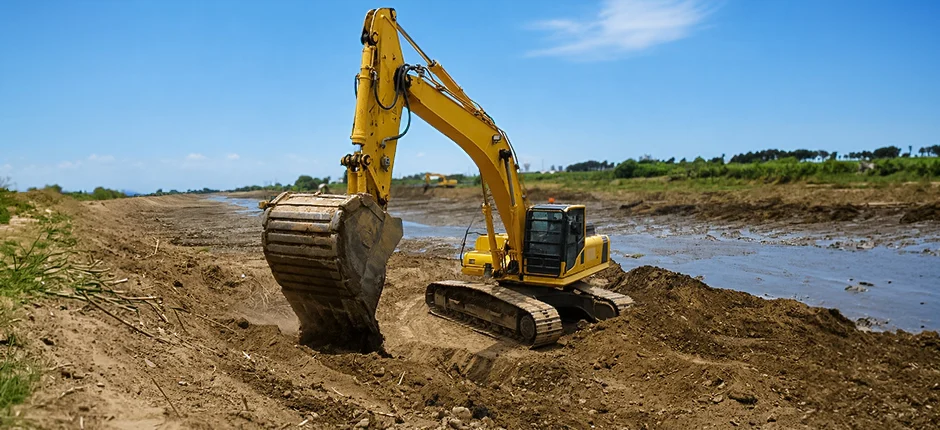
- Deepening Cauces: Excavating and deepening riverbeds to increase water-carrying capacity.
- Canal de Desfogue: Widening the discharge channels, particularly for the Piura River, to prevent urban overflow.
These actions are not optional; they are the bare minimum required to protect the population’s integrity and health.
Furthermore, the private sector stands ready. There is an inherent agility in the private sector’s ability to deploy resources, provided the regulatory framework allows for it. The Executive branch must act with speed to approve the Emergency Decree that expands the use of "Works by Taxes." This tool is the most efficient mechanism to bypass the typical, slow-moving public procurement processes and inject private sector efficiency into these urgent projects.
A Call to Break the Cycle
The legend of the country that forgets its past and is doomed to repeat it is no longer a matter of literary interpretation in Piura; it is a matter of public policy. If the current administration fails to act, they are not merely witnessing a natural disaster—they are facilitating one.
It is time to move beyond the fiction of "lack of funds" and confront the reality of "lack of capacity." The people of Piura deserve an administration that treats their lives as more than a variable in a long-standing failure of governance.
Our goal for the coming months must be to break the circularity. We must ensure that these interventions are carried out, that the rivers are cleaned, and that the mechanisms for investment are unblocked. Only then can we begin to relegate this story to the realm of fiction, where it belongs, and ensure that the future of Piura is no longer written by the next flood, but by the proactive hand of responsible, effective governance.
The history of this region should be one of growth and resilience, not one of repeating the same tragic errors while the authorities look the other way. The clock is ticking, and for the citizens of Piura, the cycle must be broken now.