Introduction: A Budget Under Siege
The newly published Multiannual Macroeconomic Framework (MMM) 2027-2030 has served as a sobering wake-up call for the Peruvian economy. Behind the technical projections and fiscal charts lies a stark reality: the nation’s development agenda is being cannibalized by a wave of legislative populism. According to the latest data from the Ministry of Economy and Finance (MEF), a series of 199 laws passed by the outgoing Congress—focused almost exclusively on permanent salary increases and pension hikes—has systematically dismantled the state’s capacity to invest in infrastructure.
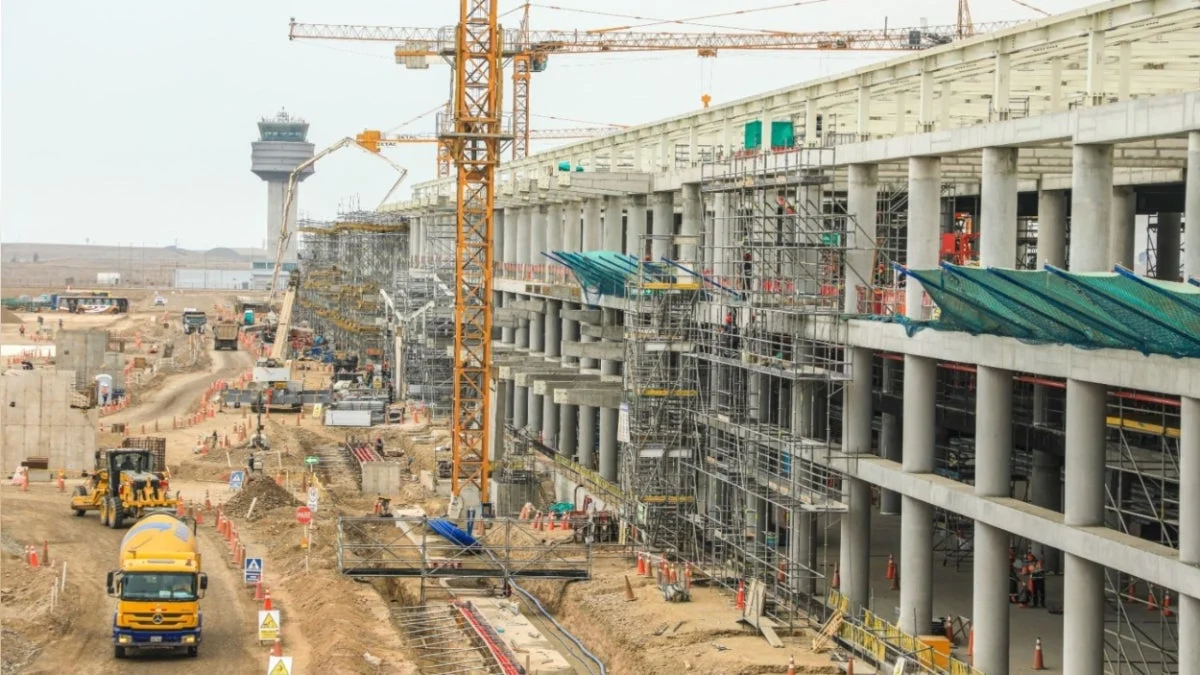
The data reveals a distressing trend. Between 2023 and 2026, the share of public works in the non-financial budget plummeted from 28.5% to 22.3%. This 6.2 percentage point contraction represents a staggering S/ 14 billion diverted away from critical sectors like water sanitation, education facilities, and regional road connectivity. Instead of building the foundations for long-term growth, these funds have been absorbed into the "current expenditure" of the state, creating a structural rigidity that threatens to paralyze future administrations.
Chronology: The Erosion of Fiscal Discipline
To understand how Peru arrived at this precarious juncture, one must look at the timeline of the last four years. The degradation of fiscal space was not an overnight occurrence but a cumulative effect of relentless legislative pressure.
- 2022: The cost of these permanent mandates was relatively manageable, sitting at approximately S/ 3.5 billion. At this stage, the fiscal impact was perceived as a secondary concern, secondary to the post-pandemic recovery.
- 2023-2025: The outgoing Congress accelerated the passage of populist measures. By shifting the budget toward recurring payroll costs and pension adjustments, the legislative branch effectively tied the hands of the executive. Each law, while individually focused on a specific sector, collectively undermined the "fiscal rule" that has historically protected Peru’s macroeconomic stability.
- 2026: The current fiscal year marks the tipping point. The cumulative weight of these 199 laws has now solidified into the state’s permanent budget base, meaning these costs cannot be reversed without significant political and legal friction.
- 2027 (The Projected Crisis): The MMM 2027-2030 forecasts that the cost of these commitments will escalate to S/ 50 billion annually—equivalent to 3.5% of the country’s GDP.
Supporting Data: The Anatomy of the Spending Surge
The financial burden placed on the Peruvian treasury is not merely a matter of general spending; it is driven by specific, high-cost mandates that leave little room for maneuver. Under the guidance of Minister of Economy Elmer Cuba, the MEF has granularly identified the primary drivers of this fiscal stress:
Key Pressure Points:
- Education Sector: The Reforma Magisterial is the largest single weight on the budget. In 2027 alone, salary increases are projected to cost S/ 8.479 billion, while the leveling of pensions for retired teachers adds another S/ 7.484 billion.
- Military and Police Pensions: Perhaps the most controversial of the mandates, the cost of adjusting pensions for the Armed Forces and National Police is estimated at nearly S/ 15 billion.
- Health Sector: Beyond the standard payroll, the integration of former "CAS-COVID" contract personnel into permanent roles demands an additional S/ 2.154 billion, while general health sector salary adjustments total S/ 3.418 billion.
- Administrative Staff (CAS): New benefits and structural changes for workers under the CAS (Administrative Services Contract) regime add another S/ 3.017 billion to the annual bill.
The cumulative effect is a "snowball" scenario. The MEF warns that these obligations are designed to increase automatically, at a rate of at least S/ 10 billion in additional costs every year, creating a trajectory that is mathematically incompatible with current tax collection levels.
The Implications: A Threat to Credit Ratings and Stability
The consequences of this fiscal trajectory extend far beyond the Ministry of Economy. By inflating the deficit and the debt-to-GDP ratio, the current path threatens the hard-won "investment grade" status that has made Peru a stable destination for foreign capital for decades.
Deficit and Debt Projections
If the current trend is not reversed, the fiscal deficit—currently at 1.8% of GDP—is projected to jump to 2.7% in 2027. More alarmingly, it is expected to stabilize at an unsustainable 2.8% of GDP through 2030. This trajectory would force the public debt to breach its legal medium-term limit of 30% of GDP, climbing to an estimated 33.8% by 2030.
For international credit rating agencies and global markets, these numbers are red flags. Losing the investment-grade status would result in higher borrowing costs for the state, effectively creating a "debt trap" where a larger portion of the national budget is spent on interest payments rather than social services or infrastructure. This would trigger a vicious cycle of austerity, reduced growth, and further economic stagnation.
Official Responses: The Battle in the Constitutional Court
The executive branch, recognizing the existential threat these laws pose to the nation’s financial health, has launched a defensive strategy centered on judicial intervention. The core of the argument is the violation of Article 79 of the Peruvian Constitution, which stipulates that members of Congress lack the authority to create or increase public spending.
The Legal Counter-Offensive
The Ministry of Economy, in coordination with the Colegio de Economistas de Lima, has filed multiple constitutional challenges. Two landmark cases currently before the Constitutional Court (TC) are of particular importance:
- Law N° 32561: This law dictates the restructuring of the pension regime for the National Police and Armed Forces. The government argues that by mandating an increase of S/ 15 billion without a corresponding funding source, the law violates the principles of budgetary balance.
- Law N° 32581: This legislation, which forces a leveling of pensions for retired teachers at an annual cost of S/ 8 billion, is being challenged on the grounds that it creates a permanent financial obligation that the state cannot guarantee without sacrificing its primary mission of public investment.
The government’s legal team contends that while the intentions behind these laws may be socially sympathetic, they represent an illegal encroachment on the Executive’s exclusive power to manage the national budget. The outcome of these cases will likely define the boundaries of legislative power for the next decade.
Conclusion: A Crossroads for Peru
Peru stands at a critical juncture. The data from the MMM 2027-2030 is not merely a collection of statistics; it is a diagnostic of a state suffering from the consequences of fiscal irresponsibility. The trade-off is clear: by choosing to satisfy immediate political demands through permanent salary and pension hikes, the legislative branch has effectively sacrificed the infrastructure—the roads, schools, and hospitals—that the next generation of Peruvians will desperately need.
Restoring the balance will require more than just judicial intervention; it will require a fundamental shift in the political culture. Unless there is a return to fiscal discipline and a respect for the constitutional limits on spending, the nation risks losing the economic stability that it has carefully cultivated over the last thirty years. The path forward requires difficult decisions, potentially involving the reversal of some of these populist measures, to ensure that the state remains an engine of growth rather than an instrument of financial insolvency.