The landscape of PC gaming is undergoing a seismic shift. At Gamescom 2026, held in Cologne, Germany, NVIDIA took center stage to unveil the next evolution of its flagship performance technology: DLSS 4.5 Ray Reconstruction. This announcement marks a pivotal moment for the industry, promising a paradigm where visual fidelity and frame-rate stability are no longer mutually exclusive, but rather synergistic components of the gaming experience.
For millions of PC gamers, the age-old dilemma of choosing between high-fidelity graphics and smooth, competitive performance has been a source of constant frustration. NVIDIA’s latest breakthrough aims to dissolve this barrier, utilizing sophisticated artificial intelligence to reconstruct game imagery in real-time, effectively allowing players to enjoy breathtaking visuals without the need for an immediate hardware upgrade.
The Core Innovation: What is DLSS 4.5 Ray Reconstruction?
At the heart of the announcement is the evolution of DLSS (Deep Learning Super Sampling). DLSS 4.5 represents a generational leap in how GPUs process light, shadow, and geometry. Unlike traditional upscaling methods, which often lead to blurring or "ghosting" artifacts in fast-paced scenes, Ray Reconstruction uses an advanced AI neural network to replace hand-tuned denoisers.
In practical terms, this means the GPU can intelligently "fill in" the gaps in a ray-traced image. When a game engine calculates the complex paths of light, it often misses data points due to computational limitations. DLSS 4.5 identifies these gaps and uses temporal and spatial data to generate higher-quality pixels, resulting in sharper edges, more accurate lighting, and a significantly cleaner image in motion.
This technology is not a mere cosmetic improvement; it is an architectural refinement that allows developers to push the boundaries of what is possible in real-time rendering. By offloading the burden of image reconstruction to the AI, the hardware can allocate its remaining resources to more complex physics, higher polygon counts, and richer world-building.
A Timeline of Transformation: Key Milestones in Graphics
The journey toward this current iteration of AI-driven graphics has been rapid and transformative. Understanding the chronology of these advancements provides context for why DLSS 4.5 is considered a landmark achievement:
- 2018: NVIDIA introduces the GeForce RTX 20-series, debuting the first iteration of DLSS. It was experimental and often struggled with image sharpness, but it signaled a shift toward AI-assisted rendering.
- 2020-2022: The refinement phase. With the 30-series, DLSS 2.0 and 3.0 (Frame Generation) solidified the technology as a standard, proving that frame rates could be doubled or tripled using AI.
- 2024: Ray Reconstruction (DLSS 3.5) hits the market, changing how ray-traced games handle complex reflections and shadows.
- August 2026 (Gamescom): NVIDIA announces DLSS 4.5. The focus shifts from merely increasing frame rates to "Intelligent Fidelity," emphasizing visual stability and the democratization of high-end graphics across a wider range of hardware.
Supporting Data: Compatibility and Industry Adoption
One of the most significant concerns for the gaming community is the "barrier to entry." Historically, new graphics features were often gated behind the purchase of the latest, most expensive hardware. However, NVIDIA has confirmed that DLSS 4.5 Ray Reconstruction is backward-compatible with existing GeForce RTX architecture, provided users have the latest drivers and application updates.
The Launch Roster
The impact of this update is immediate. NVIDIA confirmed that 30 of the most prominent titles in the industry will support the feature at launch or via imminent patches. The list includes:
- Cyberpunk 2077 (continuing its legacy as a tech-showcase title)
- Call of Duty: Black Ops 7
- Alan Wake 2
- DOOM: The Dark Ages
- Hogwarts Legacy
- Indiana Jones and the Great Circle
- Marvel’s Spider-Man 2
This widespread adoption suggests that game studios are increasingly viewing AI-upscaling and reconstruction as essential tools rather than optional add-ons. By integrating these features early in the development cycle, developers can ensure that their artistic vision is preserved across a vast spectrum of PC specifications.
Gears of War: E-Day and the Future of Geometry
The showcase was highlighted by the reveal of Gears of War: E-Day, a title that serves as the flagship for a new technology suite: RTX Mega Geometry. While DLSS 4.5 handles the reconstruction of lighting, Mega Geometry focuses on the complexity of the world itself.

In E-Day, the sheer volume of rubble, destruction, and particle effects typical of the series would normally cripple a standard rendering engine. RTX Mega Geometry allows for near-infinite polygon density, enabling the engine to render incredibly complex environments without a linear increase in the performance cost. When paired with DLSS 4.5, the result is a level of environmental detail previously reserved for pre-rendered cinematic cutscenes, now running in real-time.
Official Responses and Strategic Implications
NVIDIA executives emphasized that the goal of the 4.5 update is longevity. In an era where hardware costs are rising, the ability to extend the life of a mid-range RTX card is a massive selling point.
"Our philosophy is that the player should not be penalized for the hardware they own," stated a spokesperson during the Gamescom press event. "By utilizing the latent potential of AI, we are ensuring that the games of tomorrow remain playable and beautiful on the hardware of yesterday."
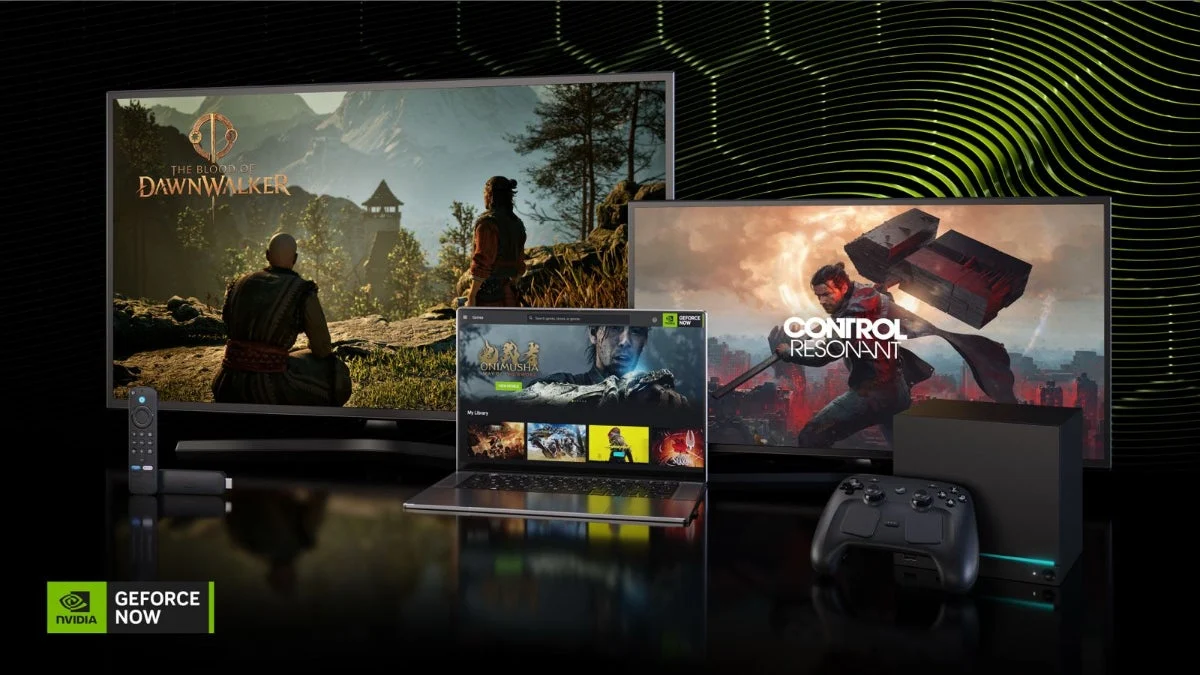
Industry analysts point out that this move is a strategic play against the growing trend of cloud-based gaming and console dominance. By making high-end PC gaming more accessible through optimization, NVIDIA is protecting the desktop ecosystem. Furthermore, the expansion of GeForce NOW—which will now support DLSS 4.5 and bring high-end titles like CONTROL Resonant and Star Wars Zero Company to devices as modest as the Fire TV Stick—demonstrates a commitment to a "platform-agnostic" approach.
Implications for the Industry: The "Remix" Revolution
Perhaps the most surprising aspect of the Gamescom presentation was the focus on legacy titles through RTX Remix. The ability to apply modern AI lighting, texture reconstruction, and ray tracing to classics like The Elder Scrolls III: Morrowind and Painkiller transforms these games from historical artifacts into modern visual spectacles.
This implies a future where "remastering" is no longer a labor-intensive manual process for developers. Instead, the AI can be used to "modernize" older engines, allowing modding communities and developers to breathe new life into beloved classics with minimal overhead.
Conclusion: The New Standard
The announcement of DLSS 4.5 at Gamescom 2026 is more than a technical upgrade; it is a declaration that the future of graphics lies in artificial intelligence. As we look forward, the distinction between "low-end" and "high-end" hardware will continue to blur, replaced by a scale of AI-assisted fidelity that adjusts dynamically to the user’s setup.
For the player, the takeaway is clear: the hardware you currently have is about to become more capable. With the integration of Ray Reconstruction into massive franchises like Call of Duty and Gears of War, and the commitment to supporting older hardware, NVIDIA has set a high bar for what gamers should expect from their digital experiences. We are no longer just looking at pixels; we are looking at a world intelligently reconstructed for the viewer, ensuring that the immersion of gaming is preserved, refined, and made accessible to all.
As these updates roll out throughout the fall of 2026, the industry will be watching closely to see if other manufacturers can match the efficiency and visual impact of NVIDIA’s latest AI suite. One thing is certain: the bar for visual quality in 2026 has been raised significantly.