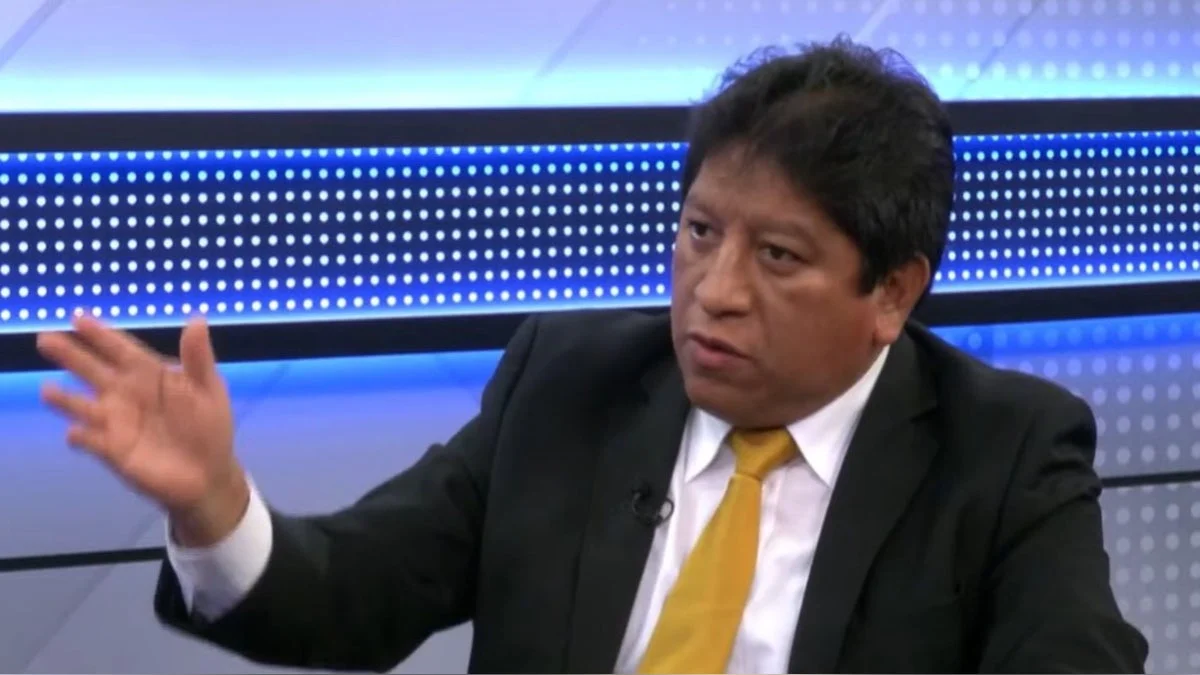
The future of Petroperú, Peru’s state-owned oil company, remains trapped in a precarious state of suspended animation. As the legal battle over the constitutionality of the government’s reorganization plan reaches the desk of the Tribunal Constitucional (TC), the Ombudsman, Josué Gutiérrez, has issued a stark warning: the executive’s reform efforts are failing to gain traction, and the clock is running out.
With the expiration of the controversial Decree of Urgency (DU) 010-2025 approaching, stakeholders find themselves in a complex web of administrative inaction, constitutional debate, and economic uncertainty.
The Core Conflict: Inaction Amidst Reform
The central tension revolves around the government’s attempt to overhaul Petroperú’s corporate structure. The executive branch introduced DU 010-2025 with the express intent of reorganizing the company’s assets to ensure financial sustainability and operational efficiency. However, according to Ombudsman Josué Gutiérrez, these objectives remain largely theoretical.
"To this day, ProInversión has not made any decision, and Petroperú has not made any decision," Gutiérrez stated during an interview on RPP’s Economía para Todos. "It has been a continuation of the same. We are heading toward December—the deadline for this decree—and there is no mechanism, no concrete action, that has improved Petroperú. On the contrary, the situation has remained stagnant."
The frustration from the Ombudsman’s office stems from the perception that the government is utilizing extraordinary legal measures to bypass parliamentary oversight for reforms that are, in practice, failing to materialize.
Chronology of the Petroperú Crisis
To understand the current deadlock, one must look at the timeline of events that brought the national oil company to this point:
- Late 2025 (December 31): The government publishes Decree of Urgency 010-2025, which provides a one-year window to reorganize the patrimonial structure of Petroperú. The decree empowers ProInversión to design and execute the transfer of assets to specialized private operators.
- February 2026: The Constitutional Tribunal (TC) formally admits the Ombudsman’s lawsuit against the decree. The lawsuit argues that the executive branch exceeded its constitutional powers by using an "urgency" decree to implement long-term structural changes that should have been debated in Congress.
- August 25, 2026: The Tribunal Constitucional holds a pivotal public hearing where both the executive branch and the Ombudsman’s office present their arguments. The case is officially left "to the vote" (dejado al voto).
- Present Day: The decree nears its December 2026 expiration date. The Ombudsman suggests that the TC might opt to wait until the expiration date to declare the matter moot rather than issuing a substantive ruling on the constitutionality of the decree.
Constitutional Arguments and the Ombudsman’s Stance
The Ombudsman’s challenge to the government is fundamentally a defense of the separation of powers. The lawsuit posits that the Executive branch, through the issuance of DU 010-2025, attempted to circumvent the legislative process.
The Question of "Urgency"
Under the Peruvian Constitution, decrees of urgency are reserved for situations that are both extraordinary and unpredictable. The Ombudsman argues that the reorganization of a state enterprise is a structural, long-term policy decision. By framing it as an "urgent" matter, the executive branch allegedly usurped the role of the Congress of the Republic, which is the proper venue for debating the future of strategic state assets.
The Risk of "Sustracción de la Materia"
Gutiérrez has suggested a pragmatic—if legally controversial—outcome for the TC. He has proposed that the court wait until December to issue its final resolution.
"It would be better for them to wait until December and issue a resolution stating that there is no longer a need to rule on the matter," Gutiérrez argued. This strategy, known in legal terms as sustracción de la materia (subtraction of the subject matter), occurs when the contested regulation ceases to exist or loses its applicability, rendering a constitutional judgment redundant. By choosing this path, the TC could avoid a direct confrontation with the executive while simultaneously ending the legal controversy.
Implications for Petroperú’s Future
The failure of the current administration to move beyond the planning phase has profound implications for the company’s financial health and its role in the Peruvian energy market.
Operational Stagnation
Petroperú has been plagued by high debt levels, exacerbated by the massive investment in the Talara Refinery modernization project. The government’s reorganization plan was intended to bring in private sector expertise to manage specific "patrimonial blocks." The lack of movement from ProInversión means that the company remains saddled with its existing bureaucratic and financial burdens, unable to pivot toward the efficiency promised by the reform.
Market Uncertainty
Potential investors and partners, who might otherwise be interested in participating in the management of these patrimonial blocks, are effectively sidelined. Without a clear signal from the government or a final word from the judiciary, the business environment surrounding Petroperú remains toxic for long-term private capital.
Sustainability and Professionalization
Gutiérrez insists that his opposition to the decree is not an opposition to the improvement of the company. Rather, he argues that the goal must be a professionalized management structure that ensures the company is financially sustainable. The fear, as expressed by the Ombudsman, is that the current process, if allowed to proceed without proper checks, could lead to the haphazard dismantling of a strategic asset rather than its revitalization.
The Role of ProInversión and the Executive
ProInversión, the agency tasked with promoting private investment, remains at the center of the criticism. The agency was authorized to design and conduct the reorganization process, including selecting operators for the restructured units. However, to date, no concrete tenders or selection processes have been initiated.
The government’s reluctance to finalize these decisions, or perhaps its inability to find a consensus within its own ranks, has led to a policy of "wait and see." By holding off on any definitive actions, the government may be hoping that the TC ruling—or the simple passage of time—will provide a clearer path forward. Yet, this indecision has left the company in a state of operational limbo that risks further eroding its market value.
Conclusion: A Critical December Ahead
As the end of the year approaches, the stakes for Petroperú have never been higher. The Tribunal Constitucional holds the key to the immediate future of the decree, while the executive branch faces the reality that its "urgent" fix has produced little more than legal friction.
The Ombudsman’s warning serves as a reminder that the constitutional framework is not a mere formality to be bypassed in the name of administrative efficiency. Whether the TC opts to rule on the merits of the case or allows the decree to expire, the fundamental challenge remains: how to manage Petroperú in a way that balances state strategic interests with the necessity of fiscal discipline and professional, transparent management.
For now, the energy sector, the labor unions associated with the refinery, and the Peruvian public must wait. The "reorganization" that was meant to save the company has, thus far, only highlighted the deep-seated political and legal divisions that characterize the state’s approach to its most important economic entity. As December draws closer, the expectation is that the silence from the government and the slow pace of the court will finally give way to a decision that will define the path for the national oil company for years to come.