Executive Summary: A New Era for the Central Bank
In a pivotal development for Peru’s economic governance, the newly reinstated Senate faces its first major institutional test: the ratification of Julio Velarde as President of the Central Reserve Bank of Peru (BCR). Following President Keiko Fujimori’s formal proposal to retain Velarde for another five-year term, political actors have begun to align.
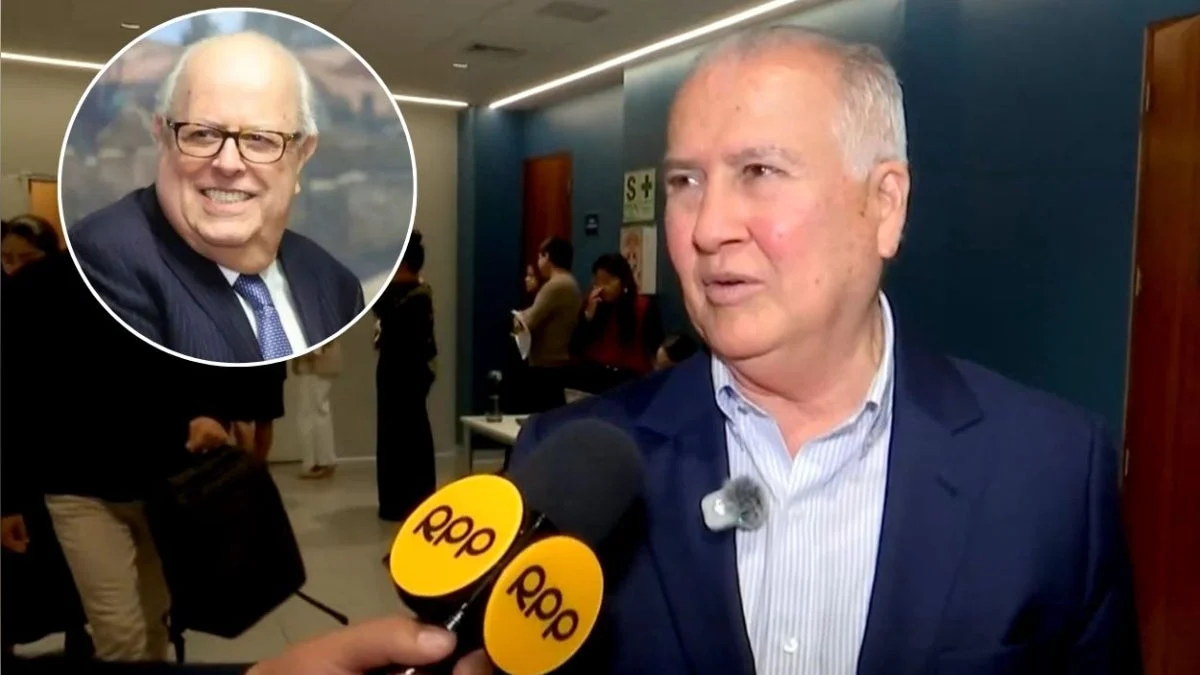
Senator and former presidential candidate Alfonso López Chau has emerged as a key voice in this transition, declaring his firm support for the veteran economist. His assessment suggests that despite the novelty of a bicameral legislative structure, the Senate is poised to provide a swift mandate for continuity, prioritizing macroeconomic stability over political friction. This decision arrives as the nation navigates its return to a bicameral system after more than three decades, placing the Senate at the heart of state-building and institutional oversight.
The Chronology of an Institutional Pillar
Julio Velarde’s tenure is a hallmark of modern Peruvian economic history. His journey at the helm of the BCR provides a unique lens through which to view the nation’s resilience.
- 2006: Julio Velarde assumes the presidency of the BCR. His appointment marks the beginning of an era characterized by low inflation and rigorous fiscal discipline.
- Successive Terms: Over the last 18 years, Velarde has served under multiple administrations of varying political ideologies. His ability to maintain autonomy has earned him widespread respect from international markets and domestic stakeholders alike.
- August 21, 2024: President Keiko Fujimori formalizes the executive decision to nominate Velarde for another five-year mandate.
- The Return of the Senate: The ratification process marks the inaugural legislative exercise of the restored Senate, a chamber that had been absent from the Peruvian political landscape for over 30 years.
Supporting Data: Why Continuity Matters
The reliance on Julio Velarde is not merely a matter of political convenience but a response to the objective indicators of success managed under his watch.
The Anchor of Macroeconomic Stability
Since 2006, the BCR has been instrumental in navigating global financial crises, commodity price fluctuations, and domestic political instability. Under Velarde’s leadership, Peru has consistently maintained one of the lowest inflation rates in the Latin American region. His policy approach—balancing orthodox monetary management with pragmatic interventions—has provided the private sector with the predictability necessary for long-term investment.
The Structure of the New Board
Under the current legislative framework, the President of the Republic retains the power to nominate the BCR head, but the Senate acts as the final arbiter. The composition of the board is now a tripartite effort:
- The Executive Nomination: The President appoints the head of the BCR.
- Senate Ratification: The Upper House must approve this choice with a majority of its legal members.
- Senate Appointments: The Senate is granted the power to select three additional directors, complementing the government’s appointees—Marylin Choy Chong, Luis Miguel Palomino Bonilla, and Gustavo Adolfo Yamada Fukusaki.
This system is designed to create a "check-and-balance" mechanism that ensures the BCR remains a non-partisan entity, insulated from the whims of daily executive cycles.
Official Responses: The Stance of Alfonso López Chau
Senator Alfonso López Chau, representing the Ahora Nación party, has offered the most significant insight into the Senate’s internal mood. His public stance serves as a barometer for how the legislature might handle the executive’s economic appointments.
A Consistent Vision
López Chau emphasized that his support for Velarde is not a reaction to the current government’s proposal, but rather a continuation of his own campaign platform. "During the electoral campaign, I explicitly proposed that Julio Velarde should remain," the senator stated. He went further, suggesting that Velarde’s role could even be expanded to include leadership over a proposed "Sovereign Wealth Fund," a project that reflects López Chau’s vision for a more robust national savings strategy.
Navigating the Bancada (Caucus)
While the senator acknowledges that his caucus has not yet held a formal vote on the matter, his confidence is palpable. When questioned by RPP on the existence of a broader consensus within the Senate, he replied, "My impression is yes."
López Chau’s rhetoric signals a departure from the confrontational politics that characterized the unicameral legislature of the past. By framing the ratification as an institutional necessity rather than a political favor, he aims to streamline the confirmation process. He clarified his position further: "I am advancing my vote. I believe there will be no problems."
Implications: Market Sentiment and Institutional Integrity
The implications of this ratification process extend far beyond the walls of the Senate chamber.
Investor Confidence
International markets closely monitor the BCR’s leadership. The institution is widely regarded as the "crown jewel" of Peru’s public sector. A smooth, bipartisan confirmation of Velarde would serve as a strong signal to rating agencies and global investors that, regardless of the political turbulence in the Executive or the Lower House, the core pillars of the Peruvian economy remain secure.
The Role of the Upper House
The Senate is currently undergoing a "stress test" of its own legitimacy. By participating in the high-stakes selection of monetary authorities, the Senate is reasserting its role as a stabilizer in the Peruvian democratic framework. The process serves as an opportunity for the legislative body to demonstrate that it can perform its constitutional duties with maturity and foresight.
Potential Challenges
While López Chau is optimistic, the political environment remains volatile. The creation of a Sovereign Wealth Fund, as mentioned by the senator, may prove to be a point of contention. While Velarde’s reputation is nearly bulletproof, the specific political arrangements surrounding the other three Senate-appointed board members could become a subject of intense negotiation between political blocs.
Conclusion: The Path Forward
As the Senate prepares for the formal vote, the narrative surrounding Julio Velarde remains one of continuity and trust. The vocal support from influential figures like Senator López Chau suggests that the political class recognizes the value of the "Velarde brand" in maintaining economic sanity.
The ratification is not merely a personnel decision; it is a declaration of intent. By choosing to uphold the current leadership at the BCR, the Senate is effectively signaling to the world that Peru remains committed to the monetary policies that have secured its growth over the last two decades. As the country moves forward, the synergy between the executive branch and the newly restored Senate will be crucial. If the early indications are any sign, the confirmation of Julio Velarde will likely be the first step in restoring the public’s faith in institutional cooperation.
The coming weeks will be decisive. As committees form and the legislative agenda takes shape, the focus will remain on whether the consensus predicted by López Chau holds firm. If it does, the appointment will stand as a testament to the idea that, even in times of transition, some pillars of the state are built to endure.