By Editorial Staff
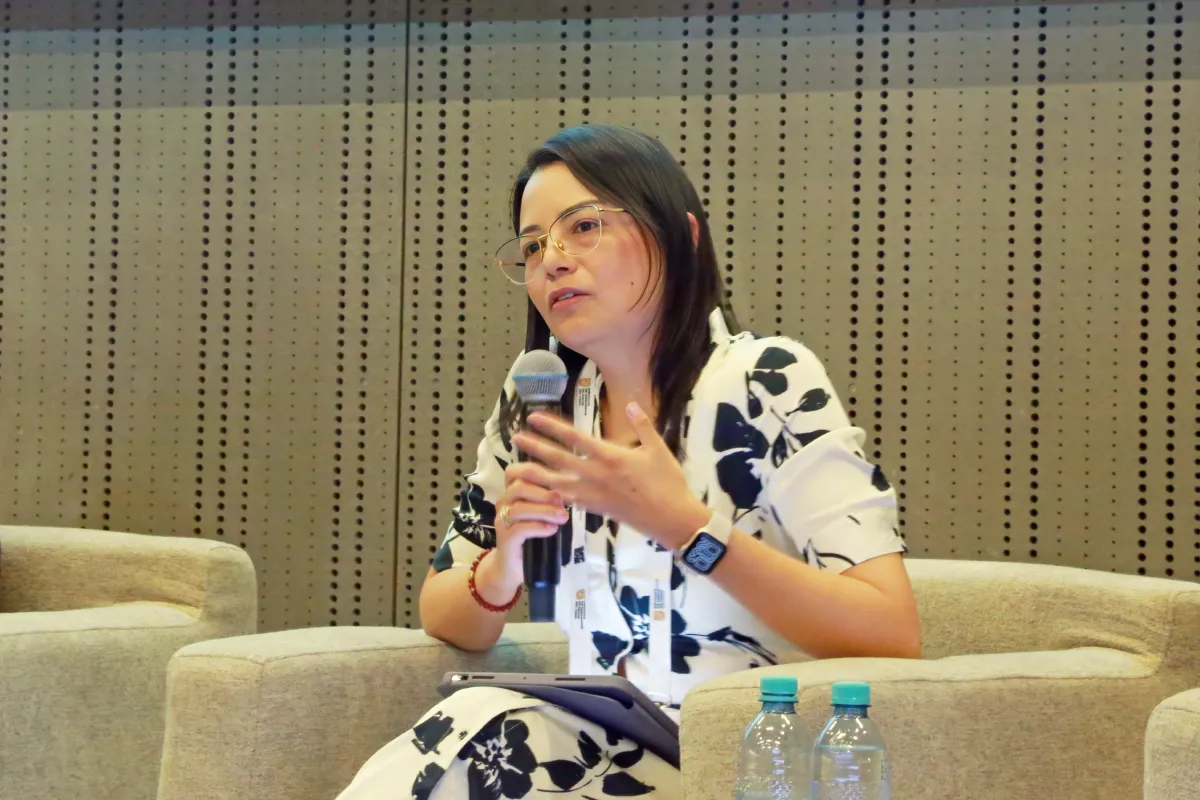
In the modern mining landscape, the "social license to operate" has evolved from a vague concept into a quantifiable strategic asset. At the recent International Meeting on Social Management and Sustainability (GESS 2026), hosted by the Peruvian Institute of Mining Engineers (IIMP), the discourse centered on how transparency and long-term community relationships serve as the bedrock for industrial success. Among the highlights was the presentation by Carla Tang, Superintendent of Environmental Planning at Antamina, who provided a masterclass on navigating complex regulatory processes through the lens of genuine stakeholder engagement.
The Pillars of Social Management: Insights from GESS 2026
The GESS 2026 conference served as a critical nexus for industry leaders to discuss the intersection of technical requirements and social responsibility. During the panel titled "Building a Better Future Today: Transparency and Traceability," experts explored the shifting expectations of stakeholders.
Carla Tang’s presentation was particularly salient, as she deconstructed Antamina’s approach to its Modification of the Environmental Impact Assessment (MEIA). For many mining companies, the MEIA is often viewed as a bureaucratic hurdle—a series of technical documents and legal requirements. However, Tang reframed it as an exercise in building a bridge between engineering objectives and community aspirations.

Chronology of an Adaptive Process: Lessons from the Pandemic
The success of Antamina’s recent environmental processes is best understood through the context of the COVID-19 pandemic. In 2020 and 2021, when the world shuttered and traditional face-to-face town halls were rendered impossible, many extractive projects stalled. Antamina, however, faced the challenge of maintaining momentum for its environmental permitting without sacrificing safety or transparency.
1. The Pre-Pandemic Foundation
Before the global health crisis, Antamina had already invested years in "day-to-day" relationship building. This included consistent community monitoring programs and open-door policies. By the time the pandemic hit, the company was not starting from scratch; it was leveraging an existing reservoir of goodwill.
2. The Shift to Bespoke Engagement
When mass gatherings were prohibited, the company pivoted to a hyper-localized strategy. Recognizing that digital connectivity was not uniform in the regions surrounding their operations, Antamina deployed teams to perform "door-to-door" outreach. These teams were equipped with strict sanitary protocols, ensuring that technical information regarding the MEIA reached families directly. This move was not just a logistical necessity; it was a demonstration of institutional commitment.
3. The Digital and Physical Hybrid
As restrictions eased, the company integrated these grassroots efforts with digital tools, creating a hybrid engagement model. This ensured that transparency remained high, providing a constant flow of information that prevented the spread of misinformation, which often thrives in vacuums created by poor communication.

Supporting Data: Why Trust is a Material Asset
In the mining sector, "reputation" is often treated as an intangible. However, in the context of ESG (Environmental, Social, and Governance) investing, it is becoming a hard metric. Tang’s analysis highlights several key indicators that demonstrate the value of this approach:
- Conflict Mitigation: By maintaining consistent one-on-one dialogues, Antamina significantly reduced the likelihood of project delays arising from misunderstandings.
- Regulatory Compliance Efficiency: The quality of the participation process directly correlates with the speed at which regulatory bodies (such as SENACE in Peru) can review and approve technical documents.
- Community Feedback Integration: The MEIA process allowed for the incorporation of local concerns into the technical design, ensuring that the environmental mitigation measures were not just "top-down" mandates but collaborative solutions.
Official Perspectives: A Multidisciplinary Dialogue
The panel moderated by Mirtha Rodríguez, Corporate Director of HSSEQ and Sustainability at Komatsu-Mitsui, highlighted that Antamina’s experience is part of a broader industry trend. The session brought together diverse perspectives that underscore the complexity of modern mining:
- Adán Olivares (IRMA): Discussed the international standards for responsible mining, emphasizing that global certification bodies now demand a higher level of social transparency than ever before.
- Miluska Cervantes (Cerro Verde): Provided insights into the intersection of government relations and local sustainability, arguing that mining companies must act as partners in regional development.
- Wendy Retamozo (Anglo American): Focused on the role of innovation in sustainability, positing that technological advancements should be used to make environmental impact data more accessible and understandable for the average citizen.
Implications for the Future of Mining in the Andes
The implications of the strategies discussed at GESS 2026 are profound. As mining projects become more technically complex and the global demand for minerals (like copper) surges, the social pressure on these projects will only intensify.
From "Social License" to "Social Partnership"
The traditional model of the "social license to operate" implies a top-down permission granted by the community. The new model, as practiced by leaders like Antamina, moves toward a "social partnership." This implies shared responsibility, shared information, and shared benefits.

The Technology of Transparency
Transparency in 2026 is no longer just about publishing a PDF on a website. It is about the "trazabilidad" (traceability) of information. As Tang pointed out, when communities are involved in the monitoring process—seeing the water quality tests, understanding the dust mitigation measures, and meeting the engineers—the technical data becomes a tool for unity rather than a source of suspicion.
The Cost of Inaction
The case study presented at GESS 2026 serves as a warning to companies that continue to view social management as a secondary function. In an era of heightened social awareness, the lack of a robust engagement strategy is a direct risk to the balance sheet. Conversely, the "Antamina model" demonstrates that investing in the human element of mining is the most effective way to protect capital and ensure long-term operational continuity.
Conclusion: The Human Factor as the Ultimate Metric
As the mining industry looks toward the next decade, the challenge will be to balance the massive scale of industrial operations with the granular reality of community life. Carla Tang’s summary of the situation remains the industry’s most vital lesson: "The trust and reputation that we have been building with the communities over the years are what finally allow a process to reach a successful conclusion."
Ultimately, the technical expertise required to extract mineral wealth is only half the equation. The other half—the ability to communicate, to adapt, and to build trust—is what defines a modern, sustainable mining enterprise. The proceedings at GESS 2026 confirm that in the eyes of the public, and by extension the regulators, the company that treats social sustainability as a core engineering discipline is the one that will win the future.