Executive Summary: A National Energy Transformation
In a significant move to rectify historical imbalances in energy distribution, the Peruvian government has unveiled a comprehensive strategy aimed at massifying natural gas consumption across the nation. At the heart of this initiative is the "Siete Regiones" (Seven Regions) project, a multi-million-dollar endeavor designed to extend the benefits of natural gas to 15 cities across seven key regions of the country.
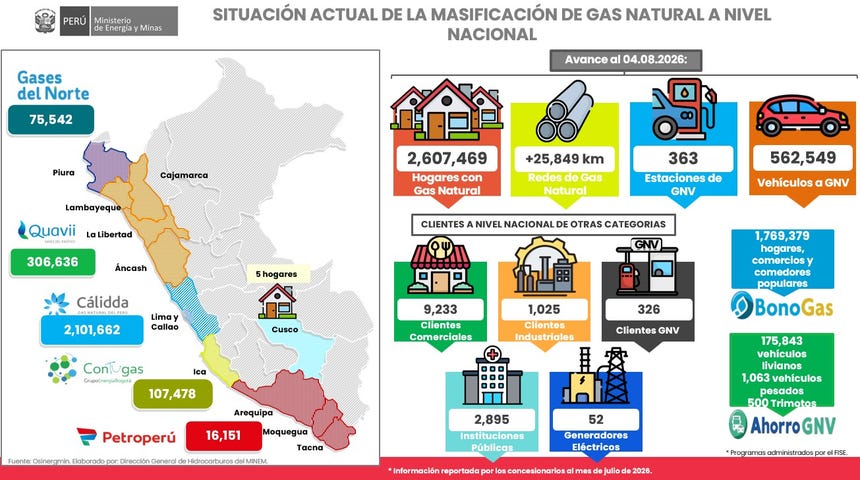
Currently, Peru’s energy landscape is marked by a stark geographic disparity. While Lima and the Callao region enjoy the lion’s share of natural gas infrastructure—accounting for approximately 2.1 million of the country’s 2.6 million total residential connections—the rest of the nation remains largely dependent on more expensive and less efficient energy sources. This initiative seeks to bridge that gap, with an initial goal of 300,000 residential connections that would immediately benefit between 1.2 and 1.5 million citizens.
The Paradox of the South: The Cusco Case
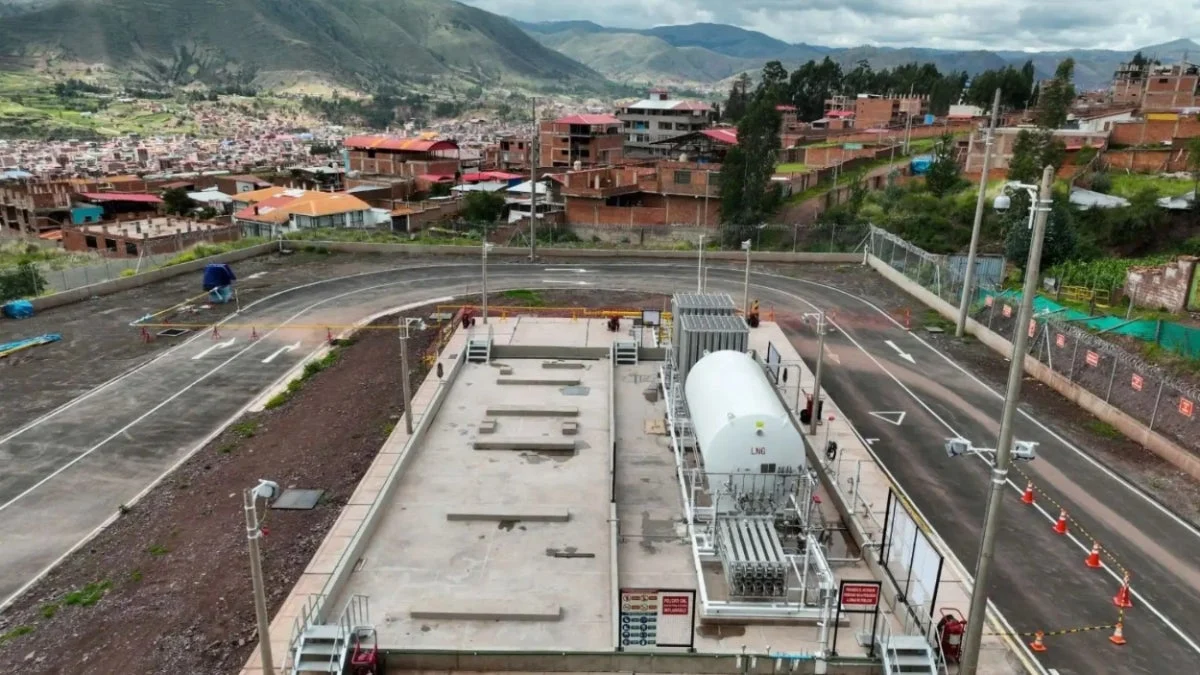
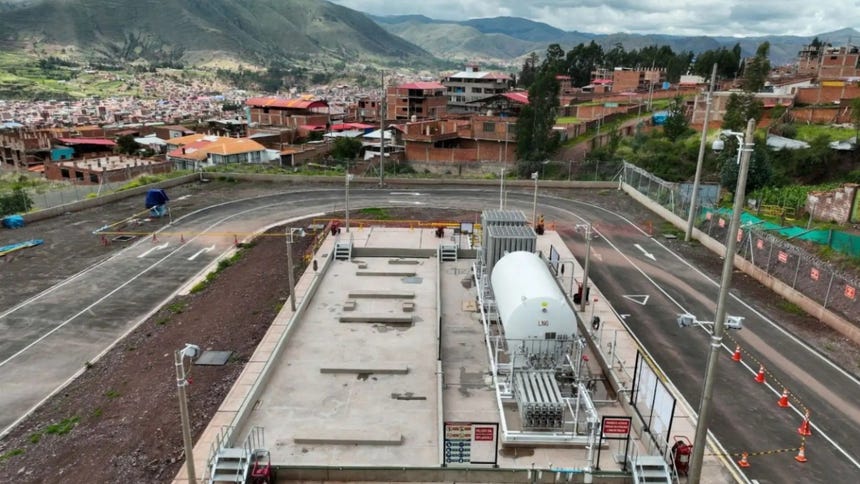
Perhaps the most striking example of the current energy inequality is found in Cusco. Despite being one of the primary regions responsible for the production of natural gas in the country, Cusco remains severely underdeveloped in terms of local access. As of the current reporting, only five households in the entire region are connected to the natural gas grid. This anomaly exists solely because those few connections were part of a limited pilot program that involved the construction of a small-scale regasification plant.
The government, led by the administration of Keiko Fujimori, has identified this as a national priority. The Ministry of Energy and Mines (MINEM) is currently working to overcome the bureaucratic and legal hurdles that have delayed the expansion of this pilot program, with the hope of bringing full-scale residential service to Cusco within the current year.
Chronology of a Regulatory Path
The progress of the "Siete Regiones" project has been a meticulous, albeit slow, process of regulatory alignment. The following timeline outlines the steps taken and the milestones ahead:
- Mid-2026: The government reaffirms its commitment to massification during the Fiestas Patrias celebrations, formally identifying the seven regions as the priority for immediate investment.
- August 2026: During the XV "Gas Natural Perú 2026" conference, Viceminister of Hydrocarbons, Iris Cárdenas, confirms that the technical evaluation of the project is in its final phase.
- September 2026 (Projected): The Ministry of Energy and Mines expects to conclude the review of observations submitted by Osinergmin (the energy regulator). Once finalized, the project will be forwarded to the Ministry of Economy and Finance (MEF), led by Minister Elmer Cuba, for final fiscal approval.
- Late 2026: Upon the signing of the necessary addenda to existing contracts, the government aims to initiate immediate deployment, with a focus on rapidly scaling up the pilot infrastructure already present in Cusco.
Technical Scope and Regional Reach
The "Siete Regiones" project is not a monolithic infrastructure plan but a targeted approach using diverse technical solutions adapted to the geography of each region. The target cities and regions include:
- Ayacucho: Huamanga and Huanta.
- Ucayali: Pucallpa, Aguaytía, and Curimaná.
- Junín: Huancayo and Jauja.
- Puno: Puno and Juliaca.
- Cusco: Cusco, Quillabamba, and Calca.
- Apurímac: Abancay and Andahuaylas.
- Huancavelica: The regional capital.
The strategy for implementation varies by location based on proximity to existing supply chains. In Pucallpa, for instance, the project will leverage gas sourced from Lote 31-C, ensuring local resource utilization. In Ayacucho, the strategy involves the construction of a branch extension from the main TGP (Transportadora de Gas del Perú) pipeline, demonstrating a modular approach to connectivity.
Official Responses: The View from the Viceministry
In an exclusive interview with RPP, Viceminister of Hydrocarbons, Iris Cárdenas, provided clarity on the obstacles facing the project. According to Cárdenas, the delay in reaching the MEF stage stems from complex contractual interpretations.
"We are currently finalizing the evaluation of observations, one of which concerns the net book value and the legal interpretation of a specific clause within the contract," Cárdenas stated. She emphasized that once these legal nuances are ironed out and the addenda are signed, the government has a ready-to-execute roadmap. "In Cusco, we could see results this year because the foundation—the pilot project—is already there. We have the schedule, we have the technical plan, and we have the political will to accelerate."
Beyond "Siete Regiones": A National Infrastructure Plan
While the "Siete Regiones" project acts as an immediate "palliative" to address the most urgent needs, the Ministry of Energy and Mines is looking toward a much broader, long-term horizon. The government is currently drafting a comprehensive National Gas Infrastructure Plan, which seeks to treat gas transport with the same systemic priority as electrical transmission.
"We are looking to develop large-scale transport networks, similar to how the electric sector manages its transmission grids," Cárdenas explained. "This plan is not limited to the South; it encompasses the North, the Center, and the entire territory. We are moving toward a national grid concept that ensures energy security for the next several decades."
The Legacy of the Gasoducto Sur Peruano
A critical component of this long-term strategy involves addressing the "ghost" of the past: the Gasoducto Sur Peruano (GSP). The project, which was halted due to legal and corruption-related controversies, remains a sensitive point of national interest.
The current administration has confirmed that it is conducting a deep-dive audit of the existing infrastructure. "We have analyzed the piping, we know the exact route, we have evaluated the state of the construction, and we understand its current status," Cárdenas noted. For the government, the completion of a transport route to the South is not just an economic project; it is a moral and social obligation. "It is a debt we have to the South," the Viceminister admitted. "It is unacceptable that the region where the gas originates is the region that remains disconnected from its benefits."
Socio-Economic Implications
The implications of successfully executing this plan are profound. For a household, the transition from LPG (liquefied petroleum gas) tanks to natural gas piped directly to the home represents a significant reduction in monthly utility costs and an increase in household safety.
On a macroeconomic scale, the expansion of the gas network serves as a catalyst for industrial development in the interior of the country. Reliable, affordable energy is the bedrock of industrial growth; by bringing gas to cities like Huancayo and Juliaca, the government is essentially creating the necessary conditions for local manufacturing and small-to-medium enterprises to thrive.
Furthermore, by reducing reliance on imported fuels and optimizing the use of domestic resources, the project strengthens Peru’s energy sovereignty. As the world moves toward cleaner energy transitions, natural gas serves as a crucial bridge fuel for Peru, offering a lower-carbon alternative to traditional biomass and coal, while paving the way for future investments in renewable energy infrastructure.
Conclusion: A New Era for Energy
The path to universal natural gas access in Peru is fraught with the legacy of past failures, complex legal frameworks, and the geographic challenges of the Andes. However, the current strategy represents a departure from the "Lima-centric" model of the past.
By focusing on the "Siete Regiones" project as an immediate intervention while simultaneously laying the groundwork for a robust, national gas transmission grid, the government is signaling a shift toward a more equitable distribution of national wealth. As the month of September approaches, the eyes of the public and the industry will be fixed on the Ministry of Economy and Finance, waiting to see if the fiscal green light will finally turn on, signaling the dawn of a new, connected energy future for the millions of Peruvians who have waited far too long to benefit from their own natural resources.