Introduction: A System in Crisis
The Peruvian government, under the guidance of Minister of Energy and Mines Guillermo Shinno, has signaled a definitive shift in its strategy to manage small-scale and artisanal mining. Recognizing that the current Registro Integral de Formalización Minera (REINFO) has failed to achieve its intended objectives, the executive branch is racing against the clock to draft a comprehensive "Ley MAPE" (Small-Scale and Artisanal Mining Law).
With the current REINFO process set to expire on December 31, 2024, the administration is attempting to balance the urgent need for formalization with the necessity of curbing the rampant illegal mining that has utilized the existing registry as a protective shield. The proposed legislation represents a fundamental departure from previous policies, shifting the focus from bureaucratic registration to a tiered, scale-appropriate regulatory framework.
Chronology of a Failed Mechanism
To understand the urgency of the current administration’s position, one must look at the history of the REINFO. Since its inception, the registry has been the primary tool for bringing illegal miners into the legal economy. However, its effectiveness has been consistently undermined by a lack of oversight and an overly complex set of requirements that fail to account for the reality of artisanal operations.
- 2019: The government initiates a series of extensions to the registration process, hoping to capture the informal mining sector through incentives and simplified administrative paths.
- 2020-2023: Despite five separate extensions, the rate of successful formalization remains stagnated. Reports suggest that instead of fostering growth, the REINFO has become a loophole for illegal operators to avoid sanctions.
- Late 2023 – Early 2024: Mounting pressure from environmental groups, the mining industry, and civil society forces the government to admit that the REINFO is no longer fit for purpose.
- September 2024: Minister Guillermo Shinno announces that the Executive is drafting the "Ley MAPE" to replace the current system, with a goal of presenting a finalized proposal by November.
Supporting Data: Why REINFO Failed
The core argument presented by Minister Shinno is that the REINFO process demands a level of technical and financial compliance that is essentially incompatible with the nature of small-scale mining. By imposing requirements designed for medium or large-scale mining operations, the state effectively forced many artisanal miners to abandon the process or remain in the shadows.
The "One-Size-Fits-None" Problem
Currently, an artisanal miner is often required to provide geological studies, environmental impact assessments, and complex permit documentation that can cost thousands of dollars and take years to process. For a small operator working in a remote area, these barriers are insurmountable.
- Failure to Differentiate: The current system fails to distinguish between the "subsistence" miner, who works small deposits with minimal machinery, and the "organized" illegal operator, who uses heavy machinery and chemical processes (such as mercury usage) to extract gold on a massive scale while hiding behind a registration number.
- Institutional Inertia: Without a dedicated institutional framework, the oversight of REINFO has been fragmented across regional governments, leading to inconsistent enforcement and a lack of technical support for those genuinely trying to formalize.
Official Responses and Strategic Vision
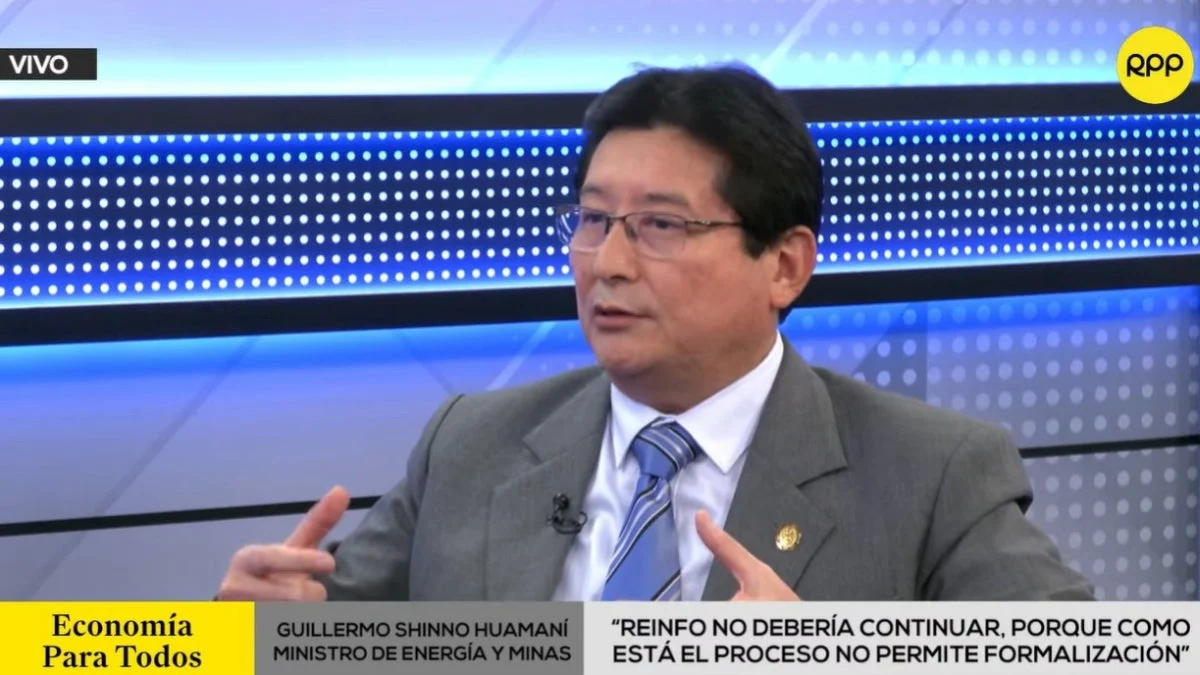
Minister Guillermo Shinno, in an interview with Economía para Todos, was blunt regarding the future of the current registry: "It hasn’t worked in the last 15 years, and it won’t work in the next 15."
A New Approach: The Ley MAPE
The proposed legislation seeks to create a tailor-made process. Shinno emphasized that the Ministry of Energy and Mines (MINEM) is currently working with an internal commission to design a framework that is proportionate to the scale of operations.
"I am not going to ask an artisanal miner for the same requirements that I ask of a large or medium-sized mining company," Shinno stated. This shift implies a move toward:
- Simplified Environmental Compliance: Creating a streamlined, digital-first environmental permit process that focuses on core safety and basic environmental protection rather than exhaustive, academic-level impact studies.
- Tiered Regulation: Classifying miners based on their actual capacity and environmental footprint, allowing for lower barriers for the smallest operators while maintaining rigorous control over those with higher production capacities.
- Institutional Strengthening: Establishing a central authority or a specialized unit within the government dedicated exclusively to managing the MAPE, rather than relying on decentralized and often underfunded regional offices.
Addressing the "Ghost" Concessions
One of the most innovative and controversial aspects of the upcoming legislation is the proposed treatment of mining concessions. Currently, thousands of hectares in Peru are tied up in "inactive" concessions. These are held by individuals or entities that do not perform any work but prevent others from mining the area.
Shinno has suggested that the new law will implement mechanisms to distinguish between productive, legitimate concessionaires and those holding rights for purely speculative purposes.
The Financial Bond Proposal
To combat speculation, the Ministry is evaluating a proposal that would require concession holders to present:
- A Binding Work Plan: A clear, time-bound commitment to exploration or exploitation.
- A Performance Bond: A financial guarantee equivalent to the proposed investment. If the operator fails to move forward with the project, the State would have the authority to execute the bond and, ultimately, forfeit the concession.
"This is not an expropriation," Shinno clarified. "It is about ensuring that those who have the right to mine actually do so, or that they release the land for those who are willing to work."
Implications and Future Challenges
The transition from REINFO to the Ley MAPE is fraught with political and social risks. As the December 31 deadline approaches, the government faces several critical challenges.
1. The Legislative Bottleneck
The success of the new law depends heavily on the cooperation of the Peruvian Congress. If the Executive does not obtain special legislative powers, the proposal will face a lengthy debate in the Energy and Mines Commission. Given the polarized nature of the legislative body, there is a risk that the bill could be watered down or delayed.
2. The Status of Current REINFO Registrants
A major point of contention is what will happen to the thousands of miners currently in the system. The government has yet to decide if there will be a "grace period" or a transition mechanism for those who have shown good faith efforts toward formalization. Shinno has hinted at a "differentiated" approach, where only those who have demonstrated actual progress in their compliance efforts would be allowed to migrate to the new system.
3. Social and Security Impacts
Illegal mining is often tied to organized crime, environmental degradation (particularly in the Amazon), and human rights abuses. By creating a clearer path to formality, the government hopes to "drain the swamp" of illegal activity. However, if the new requirements are still perceived as too difficult, or if the transition period is too short, the government risks pushing more miners into the arms of criminal syndicates.
Conclusion: A Turning Point for Peruvian Mining
The overhaul of the formalization process is not merely a bureaucratic task; it is an economic and environmental imperative for Peru. By acknowledging the failure of the REINFO and moving toward the Ley MAPE, the Ministry of Energy and Mines is signaling that the era of "indefinite extensions" is coming to a close.
The success of this endeavor will depend on whether the government can effectively separate the small-scale miners who want to participate in the formal economy from the large-scale illegal operations that thrive on the status quo. With the November deadline for the draft law fast approaching, all eyes are on Minister Shinno and the administration to see if they can finally craft a policy that balances the needs of the artisanal sector with the rule of law.
The upcoming legislative battle in the halls of the Peruvian Congress will likely determine the trajectory of the country’s mining sector for the next decade. If successful, the Ley MAPE could serve as a model for regional governance; if it fails, it may entrench the very problems it seeks to solve.