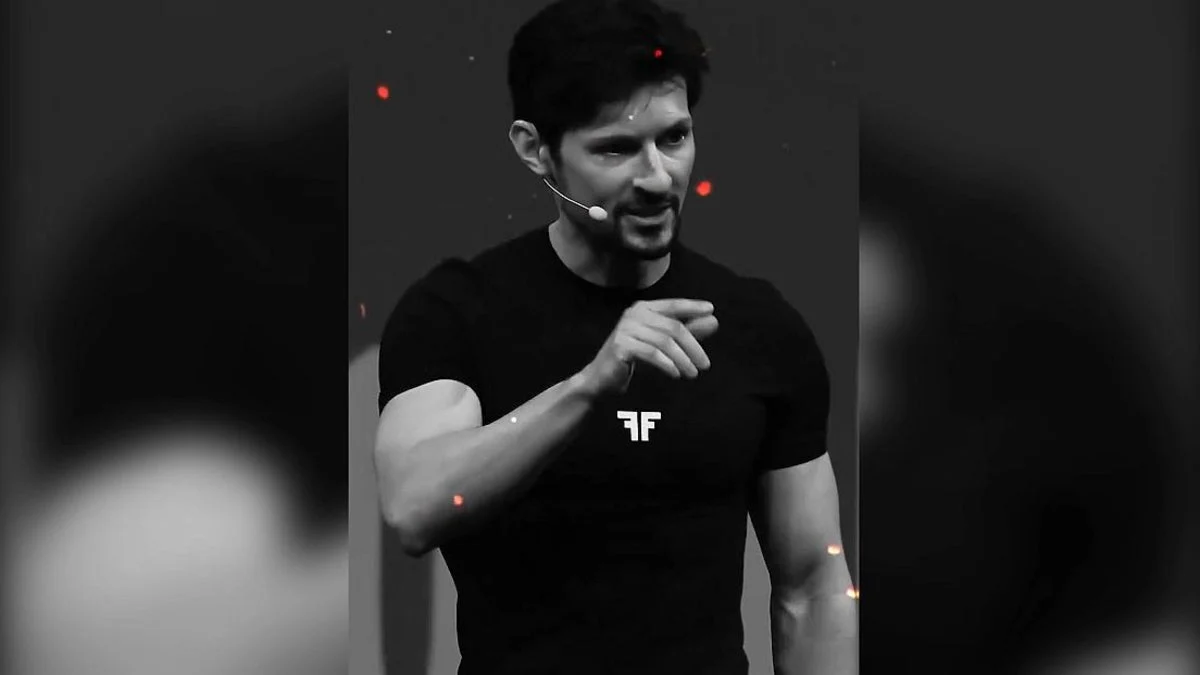
The global digital landscape is bracing for a seismic shift as the Federal Security Service (FSB) of Russia has officially placed Pável Dúrov, the enigmatic billionaire founder of the encrypted messaging giant Telegram, on an international wanted list. This drastic move follows the initiation of a criminal case against the entrepreneur, accusing him of complicity in terrorist activities—a charge that, under Russian law, could theoretically result in a life sentence.
The escalation marks a new chapter in the long-standing, often volatile relationship between the Russian state and the man who once created the country’s most popular social network, VKontakte (VK), before fleeing into self-imposed exile.
The Core Allegations: A State-Level Accusation
The FSB’s formal statement is nothing short of a blistering indictment of Telegram’s operational philosophy. According to the security agency, the platform has become a sanctuary for state enemies, extremist organizations, and foreign intelligence services.
The primary grievance cited by the FSB is Telegram’s refusal to purge specific channels, automated bots, and group chats that the Kremlin claims are being utilized by Ukrainian intelligence agencies to orchestrate sabotage, cyber-fraud, and lethal terrorist attacks within Russian borders. The agency argues that the lack of oversight on the platform has resulted in significant loss of life, including women and minors, and has caused billions of dollars in material damage to critical infrastructure.
Beyond direct terrorism, the FSB outlined a sophisticated "honey-pot" operation allegedly facilitated by Telegram. According to investigators, foreign intelligence operatives have been masquerading as romantic interests—often using attractive profiles to engage victims. Once a rapport is established, these targets are coerced into transferring funds, only to be blackmailed under the threat of being accused of "funding the enemy." These victims are then allegedly manipulated into committing acts of arson against energy facilities, transportation hubs, and banking institutions.
The FSB pointed to a specific, alarming trend: the recruitment of Russian youth. In the last year alone, Russian authorities reported the detention of 46 individuals, aged 18 to 22, who were allegedly radicalized or coerced through the Telegram chatbot "Daivinchik/Leo," which masquerades as a dating service.
A Chronology of Defiance: From VK to Telegram
To understand the current crisis, one must look back at Pável Dúrov’s history as a digital dissident.
- 2006: Dúrov launches VKontakte (VK), the "Russian Facebook," which quickly becomes the dominant social platform in the country.
- 2011: The first major fracture occurs. When the Russian conglomerate Mail.ru attempts to acquire full control of VK, Dúrov famously responds by posting an image of himself giving the middle finger to the camera. This photo, which Telegram’s official X (formerly Twitter) account re-posted in response to the current arrest warrant, serves as the ultimate symbol of his defiance.
- 2014: Dúrov is ousted from VKontakte. The platform is brought under the effective control of Mail.ru, a move widely seen as the Kremlin tightening its grip on Russian digital spaces. Dúrov leaves Russia, taking his core development team with him.
- 2013-Present: Dúrov launches Telegram, emphasizing end-to-end encryption and user privacy. The platform grows into a global powerhouse, reaching nearly a billion users.
- 2018: The Russian government officially blocks Telegram after it refuses to provide the FSB with decryption keys. Despite this, the platform remains highly accessible in Russia via VPNs and remains the primary source of news and communication for many Russians, including officials and military personnel.
- 2024: The FSB moves from administrative pressure to criminal prosecution, declaring Dúrov a "wanted" international fugitive.
Supporting Data and the "VPN Culture"
The irony of the current situation is that while the Russian government publicly decries Telegram as a hotbed of terrorism, the platform remains embedded in the daily life of the Russian state.
Statistics show that while the state promotes its own internal messaging application, MAX—which boasts over 86 million users—Telegram remains the de facto "town square" for Russian political discourse, military reporting, and independent journalism. The Russian populace has become highly adept at bypassing state censorship. The rise of "VPN culture" in Russia means that official blocks are effectively toothless; even when the government bans a service, the user base continues to grow.
The FSB’s narrative relies on the idea that Telegram’s moderation tools are intentionally weak. However, cybersecurity experts point out that the very features the FSB hates—encryption and decentralized infrastructure—are the same features that have made Telegram a lifeline for dissidents and citizens living under authoritarian regimes worldwide.
Official Responses and Legal Implications
The legal path forward is murky. Vladimir Zherebenkov, a prominent Russian attorney, noted in an interview with the news agency TASS that the charges against Dúrov are classified as "extremely grave." Should Dúrov be arrested in a country with an extradition treaty with Russia, he could face a life sentence.
Dúrov, who holds multiple citizenships, has thus far maintained a stance of calculated silence, punctuated by the aforementioned post on X. By re-sharing his 2011 "middle finger" photo, Dúrov is signaling that he will not play by the Kremlin’s rules. He is effectively doubling down on the narrative that he is a persecuted visionary rather than a criminal.
The Kremlin’s goal is likely to force an international arrest warrant through Interpol. However, Interpol has strict guidelines against issuing "Red Notices" for cases that are deemed politically motivated. The Russian government will have to prove to the international community that these are legitimate criminal charges—specifically terrorism-related—rather than a political vendetta against a tech mogul who refused to hand over his platform’s encryption keys.
Implications: A Global Paradigm Shift
The conflict between Pável Dúrov and the Russian state serves as a microcosm of a much larger global struggle: the battle for the soul of the internet.
1. The Death of Digital Neutrality
Governments across the globe, from the EU to the United States and Russia, are increasingly demanding that tech companies take responsibility for the content hosted on their platforms. The "neutral platform" defense, which companies like Telegram have historically relied upon, is becoming a legal liability.
2. The Weaponization of Encryption
The FSB’s accusation that Telegram is being used for sabotage raises legitimate concerns about how private messaging apps manage the balance between user privacy and national security. If Telegram is forced to compromise its architecture to appease the Kremlin, it risks losing the trust of its global user base, which relies on the platform precisely because it is seen as "unhackable."
3. The Future of the "Digital Nomad" Tech Mogul
Dúrov represents a new class of entrepreneur: the borderless citizen. By operating outside of the jurisdiction of any single nation, Dúrov has managed to build an empire that defies national boundaries. However, the FSB’s actions prove that no digital entity is truly beyond the reach of a determined state actor. This will likely lead to a "great fragmentation," where companies choose to operate only in jurisdictions that align with their ethical and legal standards, potentially isolating the Russian digital space further from the West.
4. Psychological Warfare
The use of the 2011 photo by the official Telegram account indicates that this is as much a war of symbols and morale as it is a legal battle. By mocking the FSB’s attempt to exert authority, Dúrov is attempting to maintain his status as a martyr for digital freedom.
Conclusion
As the legal proceedings against Pável Dúrov begin to unfold, the world watches with bated breath. This is more than a dispute over a messaging app; it is a fundamental clash between the state’s desire for absolute control over its information space and the individual’s pursuit of absolute digital autonomy.
Whether Dúrov remains a fugitive in the shadows or becomes the center of a landmark international legal battle, one thing is clear: the era of the "unregulated digital frontier" is coming to a violent and litigious end. Telegram, the company that once prided itself on being the voice of the people, now finds itself the primary target of one of the world’s most powerful intelligence apparatuses. The outcome of this case will set a precedent for how tech founders—and the platforms they build—are held accountable for the digital actions of their users in an increasingly volatile world.