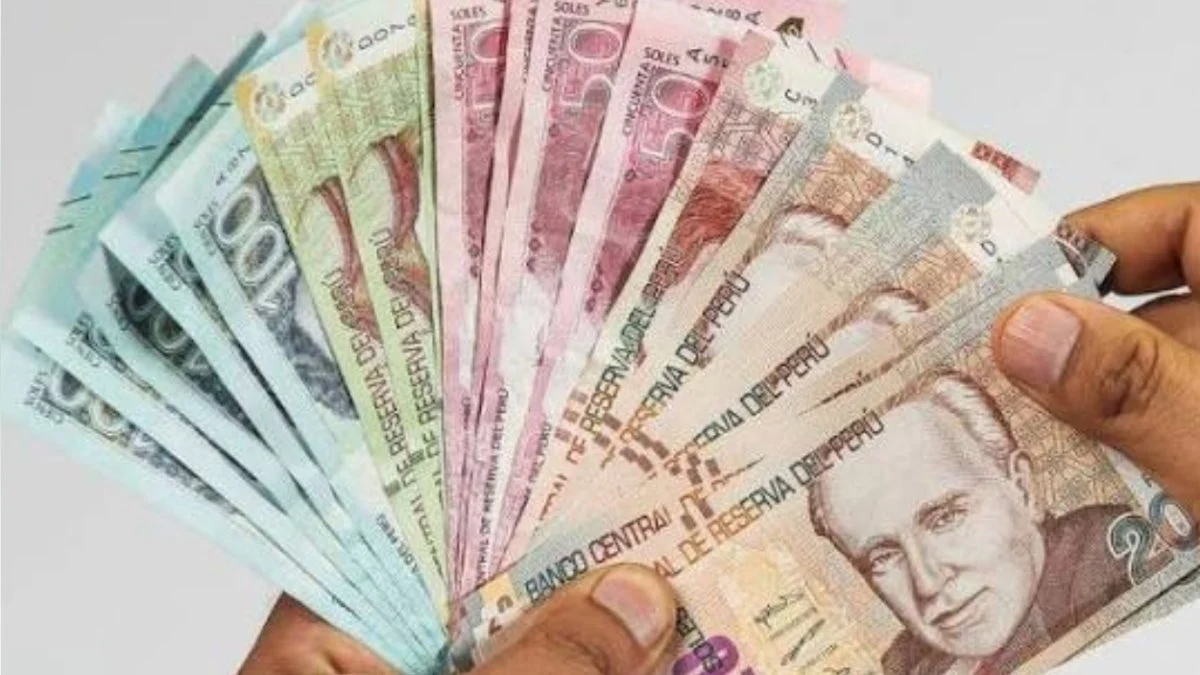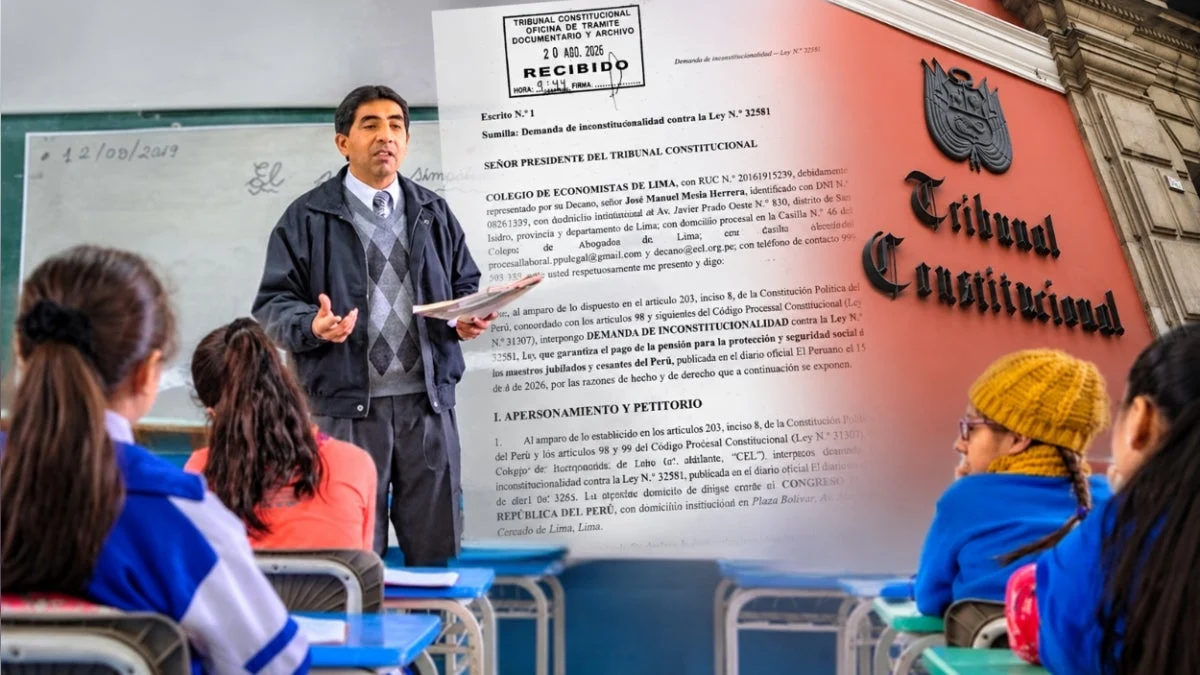
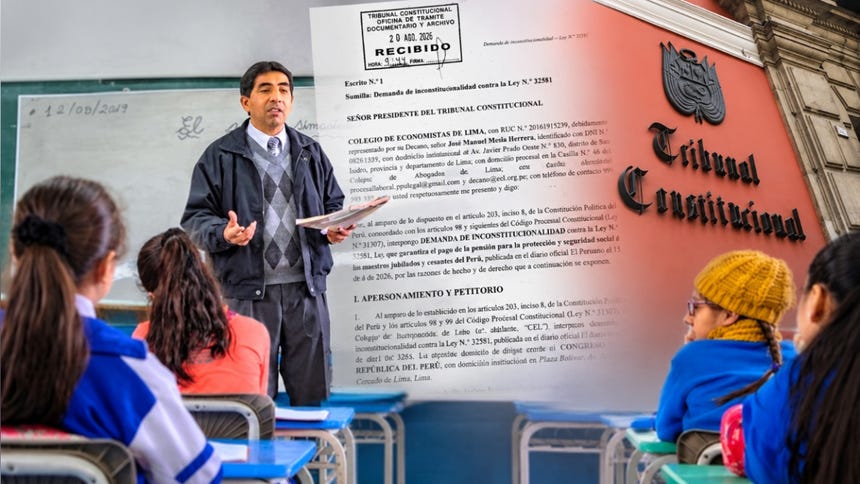
In a landmark legal challenge that could redefine the boundaries of fiscal responsibility and legislative power in Peru, the Lima College of Economists (CEL) has officially filed a petition before the Constitutional Tribunal (TC). The objective: the total repeal of Law 32581, a controversial piece of legislation promulgated by the previous Congress that mandates a pension of S/3,500 for retired and resigned teachers.
The move marks a historic first for the professional association, which has opted to utilize its constitutional standing to intervene directly in matters of national fiscal policy. At the heart of the dispute lies a fundamental tension between the populist legislative agenda of the outgoing Congress and the stark economic realities of the national budget.
The Core of the Controversy: A Massive Unfunded Mandate
The legislation in question, pushed through by the previous Congress via insistence in April 2026, sought to provide a significant, immediate increase in the retirement income of the teaching sector. While the intent—to improve the quality of life for retired educators—has garnered vocal support from unions such as the SUTEP, the mechanisms of the law have triggered alarm bells among economic analysts.
The primary argument presented by the Lima College of Economists is that the law suffers from a fatal technical flaw: it mandates a massive increase in public expenditure without identifying a sustainable source of financing. In a constitutional system that strictly prohibits the legislative branch from initiating expenditure without clearly defined budgetary support, the CEL argues that Law 32581 is fundamentally unconstitutional.
"This is not a matter of whether teachers deserve better pensions," explained a representative for the economists’ guild. "It is a matter of administrative integrity and the preservation of the national treasury. You cannot legislate a multi-billion sol benefit into existence by administrative fiat without a corresponding revenue stream."
Chronology of the Legislative Dispute
The trajectory of this conflict spans several months of intense debate within the Peruvian legislative halls:
- Early 2026: Discussions regarding the plight of retired teachers gain momentum in the legislature, with proponents arguing that current pension levels are insufficient to meet the cost of living.
- April 2026: The Congress approves a bill setting a baseline pension of S/3,500 for retired teachers. The proposal faces immediate criticism from the Ministry of Economy and Finance (MEF) regarding its lack of fiscal impact analysis.
- Post-Promulgation (April–August 2026): Following the enactment of the law, the Lima College of Economists conducts an exhaustive study of the projected impact, concluding that the fiscal burden is unsustainable.
- August 20, 2026: The Lima College of Economists formally submits their demand to the Constitutional Tribunal, seeking to strike down the law.
- Present Day: The case awaits review by the TC, which will determine the constitutionality of the law and its long-term viability within the framework of the state budget.
Supporting Data: The Multi-Billion Sol Burden
The financial implications of Law 32581 are staggering. According to a detailed analysis provided by the Directorate of Macrofiscal Studies of the Fiscal Council, the initial cost of implementing this policy is estimated at approximately S/8,018 million annually.
However, experts emphasize that this figure is merely a baseline, often described as a "partial reference scenario." The actual cost is likely to escalate significantly due to several omitted variables:
- Exclusion of the Private Pension System (SPP): The current estimate does not account for the potential pressures to include those within the private system, which could balloon the fiscal requirement.
- Future Retiree Cohorts: The calculation is static and does not account for the influx of new teachers entering retirement every year.
- Linkage to Active Salary Scales: The most alarming projection involves the linkage of these pensions to the "Remuneración Íntegra Mensual" (RIM). As the salary of active teachers increases to keep pace with inflation and sector-wide raises, the pension obligation for retired teachers will grow proportionally.
The Lima College of Economists estimates that if these variables are factored in, the annual incremental cost could skyrocket from S/8 billion to a staggering S/13,400 million within just five years. To put this in perspective, such an amount represents a significant percentage of the national budget, potentially starving other essential public sectors—such as infrastructure, healthcare, and technology—of necessary funding.
The Violation of Actuarial Principles
Beyond the raw numbers, the economists argue that the law destroys the fundamental logic of a pension system. In any actuarial model, there must be a defined relationship between the contributions made during an individual’s working life and the benefits received upon retirement.
Law 32581 effectively discards this link. Under the current regime, a teacher might have contributed to a pension fund that would support a monthly payment of approximately S/650. The new law forces a jump to S/3,500—an increase of nearly 438%—without any corresponding increase in the contributions paid by the beneficiary. The CEL asserts that this creates a "gift" mechanism rather than a pension system, violating principles of equity. Other pensioners in the public sector, who remain locked into lower, non-adjusted rates, are effectively being treated as second-class citizens, creating an environment of profound inequality before the law.
Official Responses and the "Super-Minister" Dispute
The reaction from teacher unions has been fierce. The Secretary-General of the SUTEP has publicly defended the pension increases, characterizing the opposition from the Ministry of Economy and Finance as an overreach. In a heated public statement, the union leader accused the head of the MEF of acting like a "super-minister," suggesting that the government is choosing to prioritize fiscal accounting over the dignity of veteran educators.
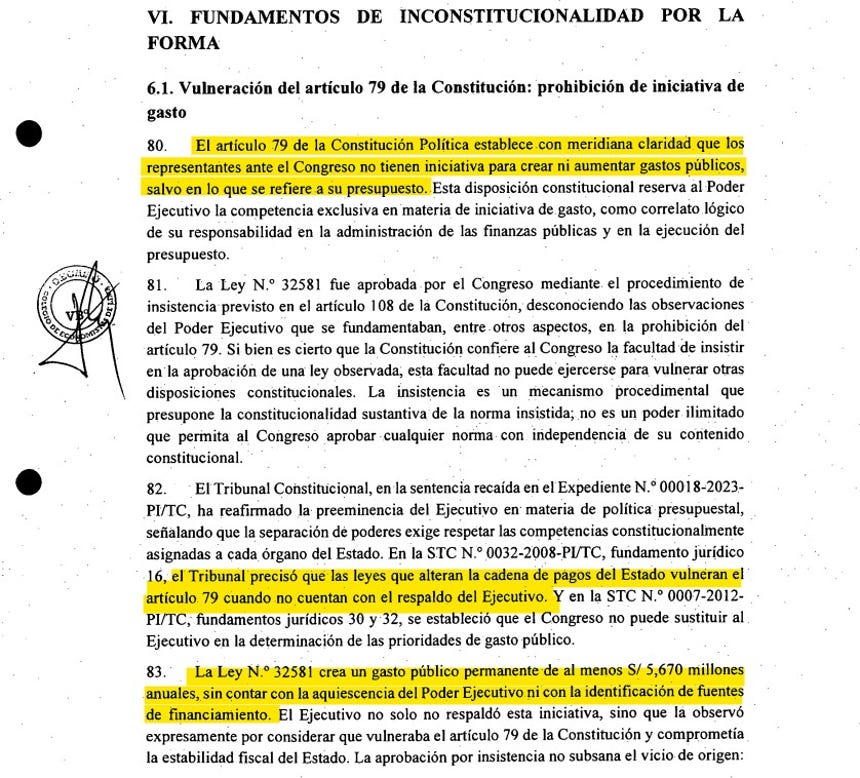
Conversely, the government and the technical community remain steadfast. They argue that if the Constitutional Tribunal allows such laws to stand, it sets a dangerous precedent where any future Congress could authorize massive, unfunded spending to gain political favor, effectively paralyzing the state’s ability to manage its finances.
Implications for Peru’s Financial Future
The ruling by the Constitutional Tribunal will be a watershed moment for Peru. There are three primary potential outcomes, each with significant implications:
- Total Repeal: If the TC rules in favor of the Lima College of Economists, the law will be struck down. This would require the legislative branch to go back to the drawing board to design a more fiscally responsible reform—one based on actuarial studies and sustainable funding, as requested by the CEL.
- Partial Invalidation: The TC might allow certain elements of the pension reform to proceed while striking down the most egregious fiscal impacts, likely forcing a renegotiation of the benefit amounts.
- Validation: Should the TC uphold the law, it would signal a major shift in the interpretation of constitutional law regarding fiscal responsibility. It would effectively grant the Congress broad latitude to bypass the Executive’s control over the budget, potentially leading to future "fiscal shocks" as more populist measures are introduced.
José Manuel Mesía Herrera, the president of the Lima College of Economists, has stressed that their goal is not to deny teachers the benefits they deserve, but to ensure that those benefits are delivered through a structure that does not collapse the national economy.
"We need rules, not rhetoric," Mesía Herrera stated in a recent interview. "The sustainability of our public finances is the bedrock of our national stability. If we erode that foundation today, we are effectively stealing from the next generation of Peruvians to pay for the political convenience of today."
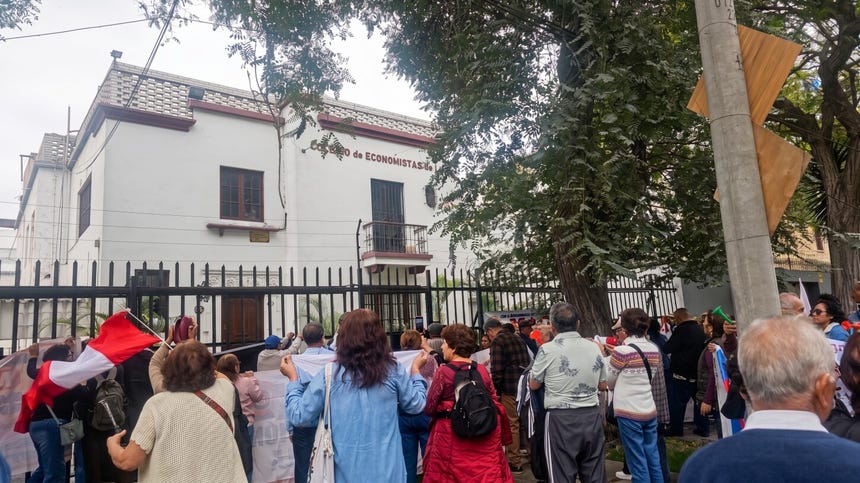
As the case proceeds, the eyes of the international financial community are on Lima. The result will serve as a bellwether for the health of Peru’s fiscal institutions and the strength of the checks and balances designed to prevent the country from descending into the trap of unsustainable deficit spending. Whether the Constitutional Tribunal chooses to prioritize the immediate demands of the teachers’ unions or the long-term stability of the Peruvian economy remains the defining question of the year.