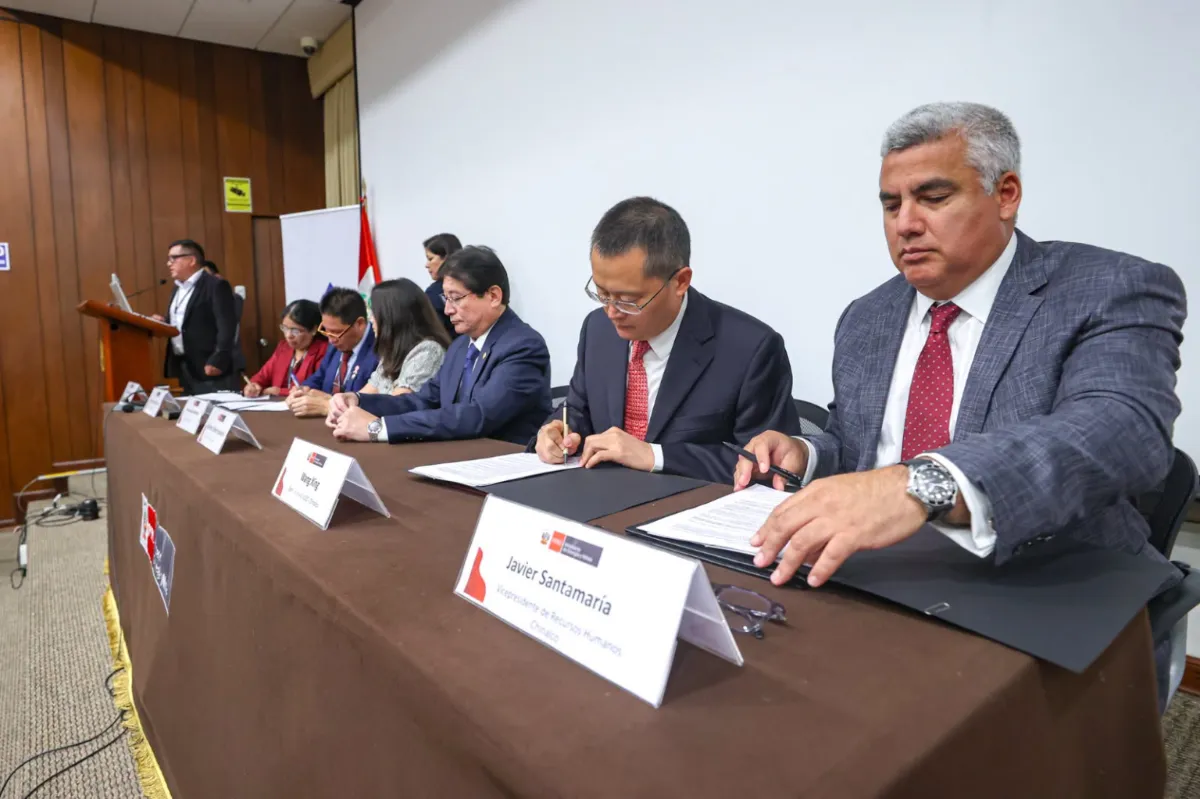
Junín, Peru – In a significant stride towards fostering comprehensive and sustainable development, the Municipalidad Distrital de Morococha and Minera Chinalco Perú have formalized a groundbreaking framework agreement. This accord, encompassing 89 distinct commitments, is strategically designed to propel the integral growth of this vital district in the Junín region. The meticulously structured agreement spans four critical pillars: social, economic, environmental, and institutional, with a clear focus on advancing the development of the new Morococha city and enhancing the provision of basic services for its residents.
The signing ceremony, a testament to collaborative efforts, was graced by the presence of distinguished officials, including the Minister of Energy and Mines, Guillermo Shinno. Minister Shinno lauded the agreement as a pivotal step in the local development trajectory, emphasizing its potential to significantly uplift the living conditions of Morococha’s inhabitants. Also in attendance were the Vice Minister of Mines, Mayra Figueroa, and the District Mayor of Morococha, Roberto Cornelio Flores, underscoring the high-level importance attached to this initiative.
Minister Shinno articulated a powerful message during the event, highlighting the indispensable role of synergistic partnerships between the public sector, local authorities, and private enterprise. He asserted that such collaborations are instrumental in effectively addressing community needs and championing development initiatives within the operational spheres of mining activities. The 89 agreements enshrined in this pact represent a robust, shared agenda between the Municipalidad Distrital de Morococha and Minera Chinalco Perú, covering a broad spectrum of crucial aspects. These include advancements in social and economic progress, diligent environmental stewardship, and the crucial strengthening of the district’s institutional framework.
Foundation of Collaboration: The Genesis of the Morococha-Chinalco Agreement
The establishment of this comprehensive framework agreement between the Municipalidad Distrital de Morococha and Minera Chinalco Perú is not an isolated event but rather the culmination of extensive dialogue and a shared vision for the future of the Morococha district. For years, the relationship between mining operations and local communities has been a complex tapestry, often characterized by challenges and opportunities. This agreement signifies a deliberate and proactive effort to weave a more cohesive and beneficial narrative, prioritizing the long-term well-being of the Morococha populace.
The genesis of this accord can be traced back to a mutual recognition of the transformative potential that a well-structured partnership can unlock. Minera Chinalco Perú, as a significant economic actor in the region, understands its responsibility to contribute beyond its direct operational footprint. Simultaneously, the Municipalidad Distrital de Morococha, representing the aspirations and needs of its citizens, sought a robust mechanism to ensure that the benefits of economic activity translate into tangible improvements in quality of life.
Months, if not years, of preparatory discussions, technical working groups, and community consultations likely preceded the formal signing. These dialogues would have meticulously identified areas of mutual interest and potential synergy, allowing for the articulation of specific, measurable, achievable, relevant, and time-bound (SMART) objectives. The sheer number of agreements – 89 – speaks to the depth and breadth of the considerations that have been incorporated into this pact, demonstrating a commitment to addressing a wide array of developmental challenges.
The strategic location of Morococha, often intertwined with the operational landscape of mining activities, necessitates a forward-thinking approach to development. The concept of a "new Morococha city" implies a recognition of past challenges and a clear ambition to build a modern, functional, and thriving urban center. This agreement, therefore, is not merely about managing the present but about architecting a more prosperous and sustainable future.
A Multifaceted Approach: The Four Pillars of Development
The strategic distribution of the 89 agreements across four distinct pillars – social, economic, environmental, and institutional – underscores a holistic and integrated approach to development. This breakdown ensures that no critical aspect of community well-being is overlooked, fostering a balanced and sustainable growth trajectory.

Social Development: Enhancing Human Capital and Well-being
Under the social pillar, the agreement likely encompasses a broad spectrum of initiatives aimed at improving the lives of Morococha’s residents. This could include:
- Education: Investments in school infrastructure, provision of educational materials, scholarships for deserving students, teacher training programs, and the establishment of vocational training centers to equip the local workforce with relevant skills. The goal here is to empower the younger generation and create pathways to better employment opportunities.
- Healthcare: Upgrades to local health facilities, ensuring the availability of essential medical supplies and equipment, mobile health units to reach remote areas, and public health awareness campaigns focused on preventative care and disease management. Access to quality healthcare is a fundamental human right and a cornerstone of a healthy community.
- Culture and Recreation: Support for cultural initiatives, preservation of local traditions and heritage, development of community centers, sports facilities, and recreational spaces to foster social cohesion and provide avenues for leisure and personal development.
- Housing and Infrastructure: Contributions towards improving housing conditions, particularly for vulnerable populations, and the development of essential community amenities such as clean water supply, sanitation systems, and waste management facilities. The "new Morococha city" vision would undoubtedly heavily rely on improvements in these areas.
- Poverty Alleviation and Social Inclusion: Programs designed to support vulnerable groups, create employment opportunities, and promote equitable access to resources and services. This could involve initiatives for women’s empowerment, support for the elderly, and programs for individuals with disabilities.
Economic Development: Stimulating Local Prosperity and Opportunity
The economic pillar of the agreement is crucial for generating sustainable livelihoods and fostering local economic resilience. Key areas of focus may include:
- Job Creation and Local Employment: Prioritizing the hiring of local residents for positions within Minera Chinalco Perú’s operations and its supply chain. This could be facilitated through specific training programs and preferential hiring policies.
- Support for Local Businesses and Entrepreneurship: Initiatives to bolster local businesses through access to financing, technical assistance, market linkages, and opportunities to supply goods and services to the mining operation. This fosters a diversified local economy and reduces over-reliance on a single industry.
- Sustainable Agriculture and Tourism: Exploring and supporting the development of sectors such as sustainable agriculture, value-added processing of local produce, and eco-tourism. These sectors can provide alternative income streams and leverage the region’s natural and cultural assets.
- Infrastructure for Economic Growth: Investments in infrastructure that supports economic activity, such as improved road networks, reliable energy supply, and communication technologies, facilitating trade and connectivity.
- Skills Development and Workforce Training: As mentioned in the social pillar, this is also crucial for the economic pillar, ensuring that the local workforce possesses the skills demanded by the evolving economy, including those related to mining and its ancillary industries.
Environmental Stewardship: Protecting and Preserving Natural Resources
Given the inherent connection between mining and the environment, the environmental pillar is of paramount importance. This segment of the agreement likely focuses on:
- Environmental Monitoring and Management: Robust programs for monitoring air and water quality, biodiversity, and soil conditions within the operational area and its surroundings. This includes adherence to strict environmental regulations and the implementation of best practices.
- Rehabilitation and Reforestation: Commitments to rehabilitate disturbed land following mining activities and implement comprehensive reforestation and revegetation programs to restore ecosystems.
- Water Resource Management: Sustainable management of water resources, ensuring efficient use, protection of water sources from contamination, and equitable access for both industrial and community needs.
- Waste Management and Pollution Control: Implementation of advanced waste management strategies, including reduction, reuse, recycling, and safe disposal of mining-related waste, along with stringent pollution control measures.
- Climate Change Adaptation and Mitigation: Initiatives to assess and address the impacts of climate change on the local environment and community, and to implement measures that contribute to climate change mitigation.
- Biodiversity Conservation: Programs aimed at protecting and conserving the region’s rich biodiversity, including endangered species and their habitats.
Institutional Strengthening: Enhancing Governance and Capacity
The institutional pillar is critical for ensuring the long-term effectiveness and sustainability of development efforts. This pillar would focus on:
- Capacity Building for Local Government: Providing training and resources to municipal officials and staff to enhance their administrative, financial, and project management capabilities.
- Transparency and Accountability: Establishing mechanisms to ensure transparency in the management of funds and the implementation of projects, fostering accountability to the community.
- Community Participation and Governance: Promoting active community participation in decision-making processes, strengthening local governance structures, and ensuring that development initiatives are aligned with community priorities.
- Inter-Institutional Coordination: Facilitating effective coordination and collaboration between the municipality, Minera Chinalco Perú, regional government bodies, and other relevant stakeholders.
- Legal and Regulatory Compliance: Ensuring that all activities undertaken under the agreement adhere to national and international legal and regulatory frameworks.
Official Endorsements: A Testament to Shared Vision
The presence of Minister Guillermo Shinno and Vice Minister Mayra Figueroa at the signing ceremony lent significant weight and national recognition to the agreement. Their statements underscored the Peruvian government’s commitment to fostering responsible mining practices that contribute to local development and improve the lives of citizens.
Minister Shinno’s remarks, emphasizing the power of public-private partnerships, resonated with the overarching objective of the agreement. He highlighted that such collaborations are not merely transactional but are essential for building trust, creating shared value, and ensuring that mining operations act as catalysts for positive social and economic transformation. His endorsement signals that this agreement aligns with national priorities for sustainable resource development.
Vice Minister Figueroa’s participation further reinforced the focus on the mining sector’s role in development. Her likely emphasis would have been on how this agreement sets a precedent for other mining operations and how it contributes to the responsible extraction of resources while ensuring that the benefits are equitably distributed.
Mayor Roberto Cornelio Flores, representing the direct beneficiaries of the agreement, would have articulated the community’s hopes and expectations. His voice would have underscored the practical implications of the 89 commitments for the daily lives of Morococha’s residents, from improved services to new economic opportunities. The agreement, in his view, represents a tangible step towards realizing the aspirations of his constituents.

Implications and the Road Ahead: Building a Sustainable Future for Morococha
The framework agreement between Minera Chinalco Perú and the Municipalidad Distrital de Morococha carries profound implications for the future of the district and the broader region of Junín.
For Morococha: The most immediate implication is the promise of tangible improvements in the quality of life for its residents. The comprehensive nature of the 89 agreements suggests a holistic approach that addresses critical needs across social, economic, and environmental spheres. The development of the "new Morococha city" is now on a clearer path, with concrete commitments to guide its progress. This agreement has the potential to transform Morococha from a community facing development challenges into a model of sustainable resource-driven growth.
For Minera Chinalco Perú: This agreement signifies a deepened commitment to its social license to operate and its role as a responsible corporate citizen. By investing in the sustainable development of the community, Chinalco is not only mitigating potential risks but also building a stronger, more resilient operational environment. This proactive approach can foster goodwill, enhance community relations, and contribute to long-term operational stability.
For the Junín Region and Peru: The Morococha-Chinalco agreement serves as a potential blueprint for other mining-affected communities and companies across Peru. It demonstrates that a structured, collaborative approach can lead to mutually beneficial outcomes, fostering a more positive and productive relationship between the mining sector and local populations. The success of this agreement could inspire similar initiatives, contributing to Peru’s broader goals of inclusive and sustainable development.
Challenges and Opportunities: While the agreement marks a significant milestone, its success will ultimately depend on its effective implementation. Continuous monitoring, transparent reporting, and adaptive management will be crucial to navigate any unforeseen challenges. The 89 commitments provide a roadmap, but the journey will require sustained effort, unwavering commitment, and open communication from all stakeholders.
The road ahead for Morococha, paved with this comprehensive agreement, is one of significant opportunity. The commitment to social, economic, environmental, and institutional development offers a vision of a thriving, resilient, and sustainable future for this important district in the heart of Junín. The collaborative spirit demonstrated by the Municipalidad Distrital de Morococha and Minera Chinalco Perú, supported by national government endorsement, signals a promising new chapter in the region’s development story.