Executive Summary: A Diplomatic Firestorm
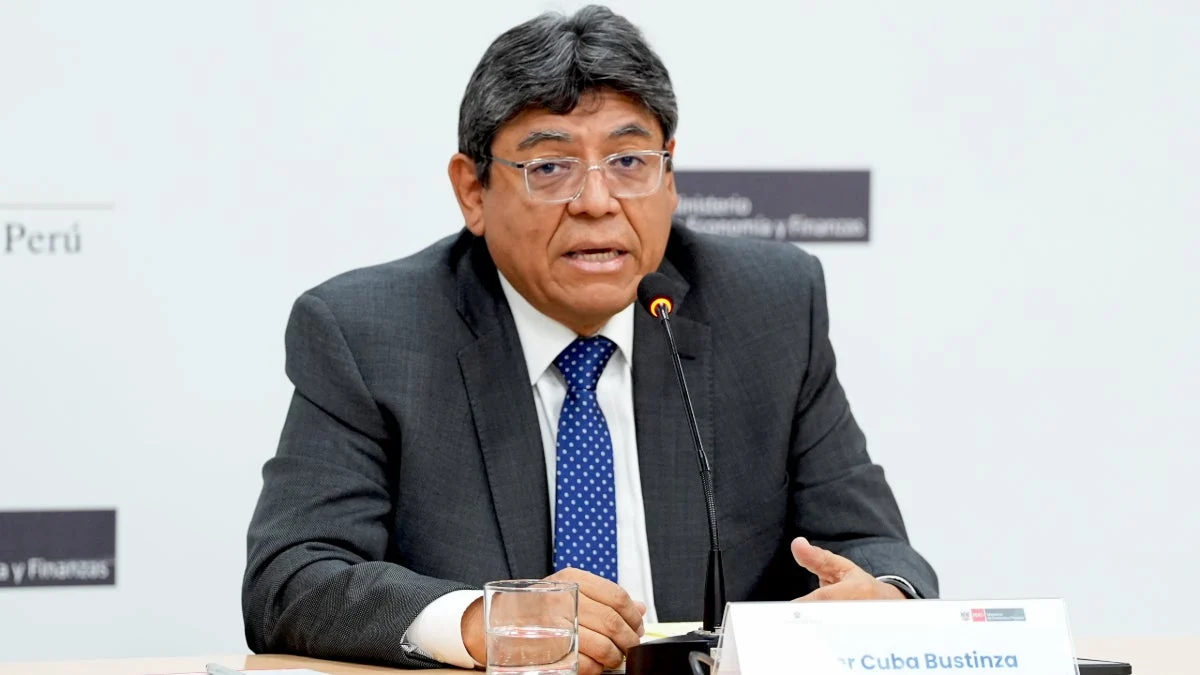
In a high-stakes moment of political friction, the Peruvian Minister of Economy, Elmer Cuba, has issued a formal apology following intense public and political backlash regarding his dismissive comments concerning the recent torrential rains and subsequent flooding in the capital. The controversy, which erupted after the Minister characterized the climate emergency as a "colloquial" matter and urged citizens not to "despair" over "a bit of water up to the knees," has placed the government in a defensive position. As the nation grapples with the impact of a DANA (Isolated Depression at High Levels) weather system, the Minister’s attempts to contextualize his remarks have sparked a broader debate regarding the disconnect between executive-level economic discourse and the lived reality of vulnerable populations.
Chronology of the Controversy
Phase 1: The Initial Remarks
The controversy originated during an interview with Exitosa, where Minister Cuba was asked to assess the economic and social impact of the heavy rains paralyzing Lima. Seeking to provide a global perspective, the Minister drew parallels between Lima’s situation and major international metropolises. "In the entire planet there are rains," he stated. "Do not let us despair. Even Paris floods, even Madrid floods. Santiago de Chile, which is used to rain, floods."
He continued by downplaying the immediate urgency of the water levels, stating, "Public works can be fixed. Let us not exaggerate over a bit of water up to the knees; that is just how it happens."
Phase 2: Public and Political Outcry
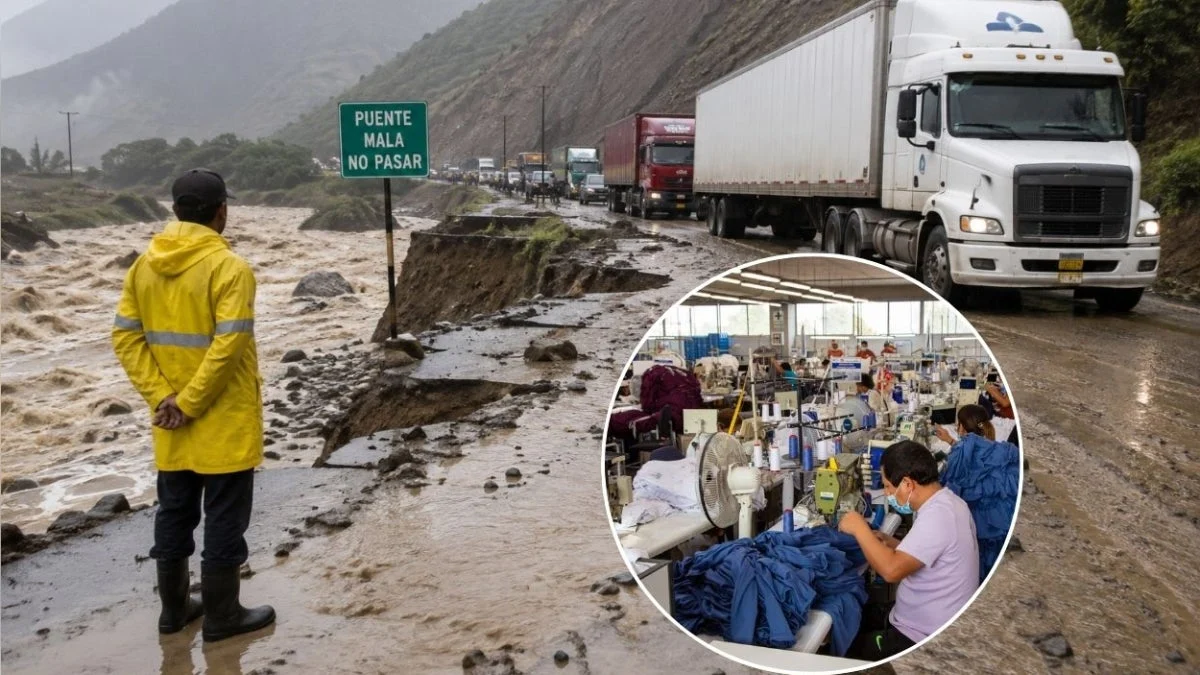
The reaction was swift and unforgiving. Social media platforms and local news outlets were flooded with images of families in Lima’s periphery who had lost their homes, livestock, and livelihoods to mudslides and structural collapses. The perception that the Minister of Economy was minimizing human suffering in favor of an abstract, globalized view of urban flooding caused an immediate political rupture.
Opposition leaders, most notably Keiko Fujimori, seized the opportunity to critique the administration’s empathy deficit. "I believe the Minister of Economy is not seeing the magnitude of the damage, the losses, and the pain of families who are experiencing such deep sadness because, in many cases, they have lost everything," Fujimori noted in a televised statement.
Phase 3: The Retraction and Apology
Facing mounting pressure, Minister Cuba utilized RPP’s platform to perform damage control. He explicitly apologized for his previous phrasing, categorizing his own words as "unhappy" and "colloquial." He emphasized that his intention was never to diminish the plight of the victims, asserting, "Never would I express myself that way about my compatriots. If someone has felt offended, I offer a thousand apologies."
Supporting Data and Contextual Realities
The DANA Weather Phenomenon
The meteorological event currently affecting the Peruvian coast is identified as a DANA. Unlike typical seasonal rainfall, these systems are characterized by intense, sudden atmospheric instability. In a city like Lima—where infrastructure, drainage systems, and housing in the informal settlements are not engineered to withstand significant precipitation—the results are disproportionately catastrophic compared to the European cities cited by the Minister.
Vulnerability of Urban Infrastructure
Data from the Ministry of Housing and Construction indicates that a significant percentage of Lima’s population resides in high-risk zones. The "water up to the knees" mentioned by the Minister, while perhaps an annoyance in a well-drained city with modern sewers, acts as a vector for disease, electrical failure, and the destruction of mud-brick (adobe) housing in Lima’s shantytowns.
Economic analysts note that the Minister’s failure to distinguish between "nuisance flooding" in developed nations and "structural catastrophe" in developing urban centers highlights a critical gap in the administration’s risk-assessment communication.
Official Responses and Political Implications
The Minister’s Defense: A Clarification of Intent
During his follow-up interview on La Rotativa del Aire, Minister Cuba attempted to refine his stance. He argued that his comments were misinterpreted by being stripped of their intended nuance.
"I was referring to the fact that our country experiences rainfall constantly, and we must see its true magnitude and face it," the Minister explained. He acknowledged the geographical disparity in preparedness: "In the particular case of Lima, it is different because we are not used to this type of precipitation. A minor rain can be catastrophic. The same rain that occurs in Puno causes no issues because they are accustomed to it. But that was a colloquial expression; I consider the page turned."
The Fujimori Critique
The direct confrontation with Keiko Fujimori highlights a broader, underlying tension in Peruvian politics: the struggle to maintain public trust during state-declared emergencies. Fujimori’s critique serves as a proxy for the wider public frustration, positioning the executive branch as being "out of touch" with the economic fragility of the working class.
The Minister’s agreement with the President’s assessment—that the damage is indeed grave—marks a strategic retreat designed to de-escalate the situation. However, political analysts warn that the phrase "a bit of water up to the knees" may become a lasting symbol of the government’s perceived apathy.
Broader Implications for the Administration
Crisis Communication in the Digital Age
This incident underscores the perils of "colloquial" language in high-stakes governance. In an era where viral soundbites can define a minister’s legacy, the use of informal language to describe natural disasters proved to be a severe miscalculation. The Minister’s attempt to use global comparisons—Paris, Madrid, and Santiago—failed because it ignored the specific socio-economic context of the Peruvian capital.
The Legislative Agenda
The timing of this controversy is particularly damaging for the government, as it comes during a critical period for the Executive Branch’s request for special legislative faculties. Ministers have been struggling to provide a definitive date for the presentation of this request to Congress. The distraction caused by the Minister of Economy’s gaffe adds another layer of complexity to these negotiations, as opposition parties are now emboldened to demand stricter accountability from the cabinet.
Economic Resilience vs. Human Cost
The episode raises a fundamental question: How should a government balance the economic management of a crisis with the emotional intelligence required to lead a grieving population? While the Minister of Economy’s mandate is to focus on fiscal stability and public works, his role as a public face of the government necessitates a degree of empathetic communication that the recent controversy clearly lacked.
Moving forward, the administration faces the challenge of repairing its image while simultaneously managing the tangible impacts of the rainfall. With public works needing repair and families requiring emergency aid, the Ministry of Economy must transition from defensive rhetoric to proactive, compassionate policy implementation.
Conclusion
The "colloquial expression" of Minister Elmer Cuba has served as a catalyst for a national conversation regarding the government’s responsibility during climate emergencies. While the Minister has formally apologized and attempted to close the chapter on the controversy, the political fallout remains palpable. As the government continues to seek legislative support and manage the ongoing DANA crisis, the episode serves as a stark reminder that in the face of natural disaster, the precision of language is just as critical as the efficiency of policy.
The administration now faces the arduous task of proving that its commitment to the citizens of Lima is not merely theoretical, but rooted in a concrete understanding of the hardships faced by the most vulnerable members of society. The "page may be turned" for the Minister, but the public, and his political rivals, are unlikely to forget the narrative of indifference that emerged from these ill-fated remarks.