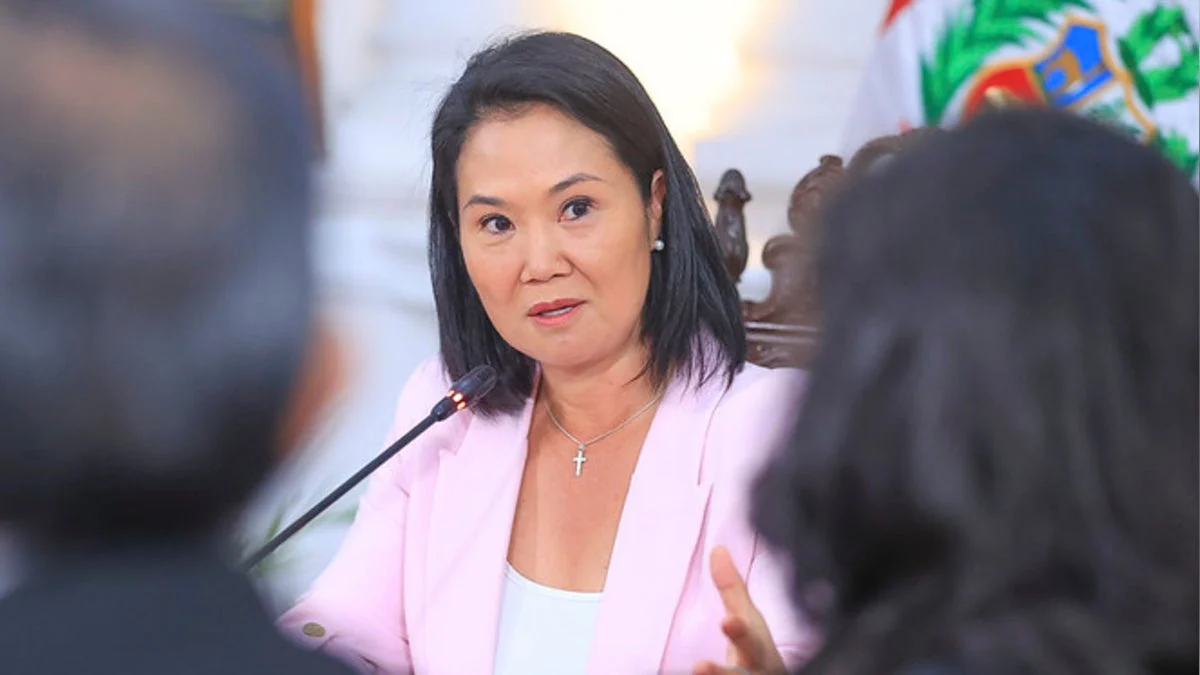
In an era defined by the rapid fragmentation of media consumption, the administration of President Keiko Fujimori has doubled down on a controversial yet deliberate strategy: bypassing traditional press gatekeepers in favor of direct, unfiltered digital engagement. During her most recent Sunday address, the President defended her practice of holding weekly live-streamed balances of her administration, arguing that in a polarized information landscape, digital platforms have become the only reliable bridge to a bifurcated electorate.
The President’s defense comes at a time when her government faces significant pressure on multiple fronts, including rising concerns over public safety and the legislative challenges inherent in a fragmented Congress. By utilizing social media as her primary podium, Fujimori is attempting to redefine the relationship between the executive branch and the citizenry, a move she describes as both a duty of transparency and a modern necessity.
Main Facts: The Shift Toward Direct Engagement
The core of President Fujimori’s communication strategy rests on the recognition of a shifting media paradigm. According to the President, the Peruvian populace is effectively split down the middle regarding how they receive information. One half continues to rely on legacy media—television, radio, and print—while the other, predominantly composed of the younger generation, consumes news almost exclusively through social media algorithms and digital influencers.
"For me, governing also means communicating, transmitting, and sharing with the people," Fujimori stated during her latest broadcast. By integrating both traditional and digital fronts, her administration seeks to ensure that its official messaging reaches all corners of the country without the perceived "distortion" of traditional media filters.
Key points of her current approach include:
- Real-time Interactivity: Utilizing live comments and queries to address public concerns directly.
- The "Humanizing" Component: Dedicating time to promote local artisans and regional entrepreneurs, a move she insists provides vital economic visibility to underrepresented sectors.
- Transparency Claims: Bypassing traditional editorial constraints to provide a direct narrative of the government’s daily operations.
Chronology of a Communication Strategy
The evolution of Fujimori’s digital strategy has not been linear. Since taking office, the administration has moved from standard press conferences to a more personalized, social-media-centric model.
- Initial Phase (The Transition): Early in her term, the focus was on traditional media. However, after facing what the administration described as "systemic bias" in mainstream outlets, the pivot toward digital platforms began.
- Middle Phase (The Integration): The introduction of the "Sunday Balance" broadcasts marked a shift toward a fixed schedule. These sessions were designed to mimic the intimacy of a vlog, featuring the President in informal settings, often surrounded by artisanal crafts.
- Current Phase (The Institutionalization): The current period sees the digital strategy as a fully institutionalized tool of the executive branch. This phase is characterized by the explicit rejection of traditional media’s role as the sole mediator of government action.
Supporting Data and The "Artisan" Debate
A point of intense contention within the political arena has been the President’s practice of showcasing gifts, artisanal goods, and local products during her official broadcasts. Critics argue that these segments trivialize the dignity of the presidential office and serve as a distraction from pressing policy issues.
However, the President maintains that this is a strategic effort to stimulate the national economy. By showcasing regional products, she claims to be providing a platform for entrepreneurs who lack the resources to compete in the advertising-heavy markets of Lima.
"I choose to promote these entrepreneurs who, with great effort, create such beautiful things," Fujimori asserted. Data from the Ministry of Production suggests that small-scale craft exports have faced significant hurdles in the post-pandemic market; the President’s digital spotlight is her way of attempting to bridge that gap.
Moreover, her assertion that 50% of the population relies on digital platforms for information is supported by current digital literacy reports in Peru, which highlight a massive migration of younger demographics away from cable news and toward short-form, platform-native content.
Official Responses and Political Friction
The President’s reliance on social media has drawn sharp criticism from media watchdogs and opposition lawmakers. The primary concern is the lack of "journalistic friction." When a President speaks directly to followers without the presence of a professional press corps, critical questions regarding budget allocations, corruption allegations, or policy failures are often absent.
The Legislative Impasse
The tension between the administration and the traditional political establishment is particularly visible regarding the upcoming request for legislative faculties. Fujimori confirmed that her government would submit a formal request to Congress in the coming days to grant the executive branch broader powers to tackle the country’s escalating insecurity crisis.
"Our government will take strong measures," she stated. "We are currently articulating our strategy, and we will present the request for faculties shortly. This will allow for greater integration and cooperation in the fight against crime."
The President specifically highlighted the role of the military in the ongoing "Plan Escudo," a security initiative aimed at curbing organized crime. She praised the police and armed forces, noting that her administration has empowered these institutions in ways that previous governments failed to do.
Implications: A New Era of Populist Governance?
The implications of President Fujimori’s communication style are profound. By framing the media as an obsolete intermediary, the administration is effectively creating a "digital feedback loop" that can be highly effective in maintaining a base of support but dangerous for democratic oversight.
1. The Erosion of Accountability
When the leader of a nation determines what is news, the capacity for investigative journalism to hold power to account is diminished. If the President’s supporters only see the "filtered" version of events presented on social media, the ability to build a national consensus on complex issues like economic reform or justice becomes increasingly difficult.
2. Efficiency vs. Democracy
From an administrative standpoint, the President’s strategy is highly efficient. She can disseminate policy updates and correct misinformation within minutes. However, critics argue that this efficiency comes at the cost of democratic deliberation. The lack of "hard questions" in a controlled environment prevents the public from seeing the cracks in the government’s logic.
3. The Security-Communication Nexus
The timing of this push for legislative faculties, coupled with her control of the narrative, suggests a broader strategy to solidify power. By painting a picture of an "empowered" military and a "productive" executive, Fujimori is betting that the public’s fear of crime will outweigh their concerns about her media practices.
As the government moves to finalize the request for faculties, the question remains: will the Peruvian Congress accept this delegation of power, or will the legislative body serve as the final check against a President who has effectively moved her office into the digital cloud?
Conclusion
President Keiko Fujimori is testing a bold hypothesis: that in the 21st century, the ability to bypass traditional media is more valuable than the legitimacy provided by it. Whether this strategy will lead to a more transparent government or simply a more insulated one is a question that will likely define her legacy. As the country prepares for the next phase of the security crisis and the ensuing legislative battle, the digital screen remains the most important battlefield in Peruvian politics. The President is not just communicating; she is attempting to reshape the fundamental infrastructure of political discourse in Peru.