Executive Summary: The Conflict Between Political Expediency and Macroeconomic Health
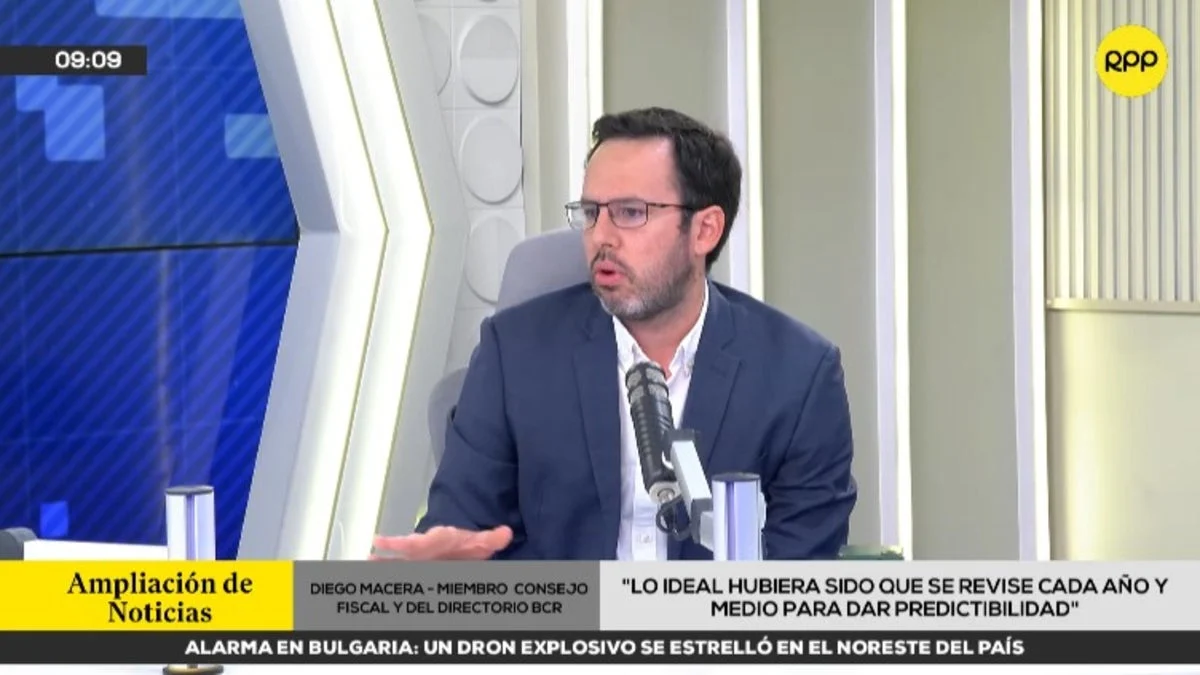
In a recent interview with RPP, Diego Macera, a distinguished member of the Fiscal Council and the Board of Directors of the Central Reserve Bank of Peru (BCRP), delivered a sobering assessment of the nation’s current economic trajectory. Macera’s commentary centered on two critical fronts: the government’s proposed hike to the Remuneración Mínima Vital (RMV)—the minimum wage—and the ongoing struggle to contain legislative overreach regarding public spending.
Macera’s central thesis is that the Peruvian economy is currently being treated as a stage for short-term political gains rather than being managed through long-term structural logic. By decoupling wage increases from productivity metrics and ignoring the strict boundaries of fiscal responsibility, the government and the legislature risk exacerbating inflation, stifling formal employment, and creating profound social inequity.
The Minimum Wage Controversy: A Tool for Popularity?
The Proposed Hike
The government of Keiko Fujimori has recently proposed a significant adjustment to the minimum wage, seeking to raise it from S/ 1,130 to S/ 1,300. This move, framed as a social benefit, has been met with significant pushback from economic experts who argue that the timing and the lack of technical justification could trigger adverse effects on the private sector.
The "Populism Trap"
Macera was unequivocal in his critique: the minimum wage should not be utilized as a "populist tool" to boost approval ratings. According to the BCRP board member, whenever a government feels a need for a "popularity hit," they turn to the minimum wage as an easy lever to pull.
"I wish this measure hadn’t been proposed," Macera stated during the Ampliación de Noticias program. He argued that while the minimum wage requires periodic review, the process must be depoliticized. He advocates for a predictable, rules-based system where adjustments are reviewed every two years, anchored strictly to two pillars: labor productivity and inflationary trends.
Economic Implications for SMEs
The primary victims of an artificial wage floor increase are Small and Medium-sized Enterprises (SMEs). In a country where the informal sector remains a dominant force, raising the cost of labor without a corresponding increase in productivity forces many small businesses to either reduce their staff or abandon the formal economy altogether. By making formal employment more expensive, the government is effectively creating a new barrier to entry for businesses trying to operate legally, thereby perpetuating the very informality they claim to combat.
Chronology of Fiscal Tensions: From Congressional Overreach to TC Intervention
To understand the current economic friction, one must look at the timeline of the relationship between the Peruvian Congress and the nation’s fiscal health.
- 2023: The Fiscal Council begins issuing warnings regarding the sustainability of various laws passed by the Congress. These laws were often drafted under the assumption that the legislative branch possessed the constitutional power to initiate spending.
- Early 2024: The Tribunal Constitucional (TC) clarifies its stance, rectifying previous interpretations. It establishes in a binding manner that the Congress does not have the authority to initiate public spending.
- Mid-2024: Despite the ruling, the fallout of previous legislation—specifically regarding CAS (Contratación Administrativa de Servicios) and CAFAE (Comité de Administración del Fondo de Asistencia y Estímulo) gratifications—continues to burden the national treasury.
- Present Day: The Executive branch, backed by experts like Macera, prepares to challenge these legacy laws before the Tribunal Constitucional, arguing they were passed without the required endorsement from the Ministry of Economy and Finance (MEF).
Supporting Data: The Case for Fiscal Prudence
Macera emphasizes that the role of the Ministry of Economy and Finance (MEF) is not to be a spectator but to act as the primary filter for any policy involving the national budget. The suggestion is to formalize a commission—independent of political cycles—that would evaluate the viability of wage increases and spending initiatives.
The Problem of Inequity
The dangers of unchecked legislative spending are most visible in the recent law increasing pensions for retired teachers to S/ 3,500. While ostensibly a benefit for educators, Macera points out that it creates an "obvious inequity" when compared to other public servants under the ONP (Oficina de Normalización Previsional) system.
For example, a nurse or a public prosecutor currently under the ONP system receives a pension closer to S/ 600. By arbitrarily raising one sector’s pension to S/ 3,500, the state creates a massive, unjustified disparity.
- Disparity Ratio: The current policy provides five to six times the benefit to one group over another, without a clear technical or social justification for such a gap.
- Fiscal Strain: Such initiatives, when multiplied across various sectors, threaten the long-term solvency of the public pension system and the national budget.
Official Responses and Strategic Implications
The Role of the Tribunal Constitucional (TC)
Macera explicitly supports the Executive’s decision to take these contentious laws to the TC. He believes that restoring the constitutional boundary—where only the Executive branch has the authority to propose spending—is vital for the survival of the fiscal framework. If the Congress continues to bypass the MEF, the resulting deficit will inevitably lead to higher taxes or increased national debt, both of which stifle economic growth.
A Call for Predictability
The economic vision proposed by Macera is one of stability. He suggests that:
- Rules-based adjustments: Wage hikes should be determined by a technical commission every 24 months.
- Productivity linkage: Any increase in the minimum wage must be justified by an increase in the output per worker to avoid triggering wage-push inflation.
- Depoliticized Governance: The MEF must reclaim its role as the gatekeeper of the treasury, ensuring that no law is passed without a rigorous cost-benefit analysis.
Conclusion: The Path Forward
The warnings issued by Diego Macera serve as a critical reminder of the fragility of the Peruvian economy. In a climate where political survival often outweighs macroeconomic prudence, the insistence on evidence-based policy is more necessary than ever.
The proposed increase to the minimum wage, while potentially popular in the short term, threatens to entrench informality and place an unsustainable burden on the nation’s smallest employers. Similarly, the ongoing battles over public sector pensions highlight the need for a unified, equitable, and fiscally responsible approach to social benefits.
As Peru faces the dual challenges of global economic uncertainty and domestic political volatility, the integration of experts like Macera into the policy-making process is essential. Moving forward, the government must decide whether it will continue to chase the temporary satisfaction of populist measures or commit to the structural reforms necessary to ensure long-term, inclusive, and stable economic growth for all Peruvians.
The verdict is clear: without a disciplined approach to fiscal and labor policy, the cost of "popularity" will ultimately be paid by the very citizens the government seeks to benefit.