Executive Summary: A Strategic Shift in Economic Policy
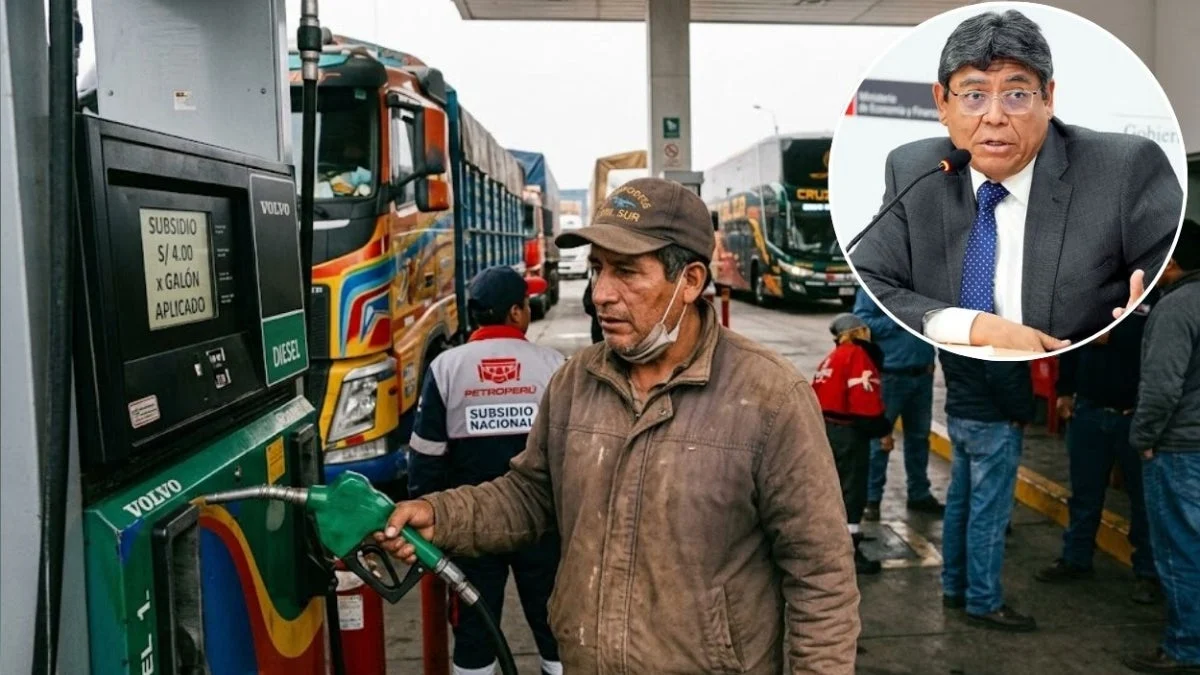
In a decisive move to mitigate the volatile impact of global energy inflation on domestic logistics and public mobility, the Peruvian government has announced the nationwide expansion of a targeted fuel subsidy. The measure, which provides an equivalent of S/ 4 per gallon of diesel, is specifically engineered to shield public transport providers and cargo carriers from the inflationary pressures that have gripped the economy in recent months.
Unlike previous attempts at broad-based price stabilization, this initiative—spearheaded by the Ministry of Economy and Finance (MEF) and operationalized by the Ministry of Transport and Communications (MTC)—employs a surgical approach to fiscal support. By leveraging direct digital transfers through the Banco de la Nación, the government aims to bypass the inefficiencies of legacy systems, ensuring that relief reaches the hands of formal transport operators while maintaining fiscal discipline.
Chronology of the Policy Evolution
To understand the significance of this expansion, one must look at the recent trajectory of Peru’s fuel stabilization efforts.
- Q1-Q2 2022: As global crude prices escalated from a stable baseline of US$60 per barrel to volatile peaks exceeding US$120, the Peruvian government faced mounting pressure from regional transport guilds.
- May–July 2022: The government implemented an initial pilot phase of the subsidy. This period focused exclusively on formal transport operators within the Lima Metropolitan area and the Callao region. This phase served as a "proof of concept" for the digital disbursement model.
- Current Phase: Recognizing that the economic fallout of fuel hikes was not localized, the Executive branch authorized the expansion of this benefit to encompass the entire national territory, transitioning from a localized urban pilot to a nationwide logistics support program.
- Future Outlook: The administration is currently in the process of drafting a secondary framework to incorporate informal transport sectors, specifically mototaxists, into the subsidy ecosystem.
Supporting Data and Financial Mechanisms
The core of this policy lies in its administrative precision. The Minister of Economy, Elmer Cuba, emphasized that the subsidy is not a reduction in pump prices at gas stations, but rather a post-consumption reimbursement model.
The "Targeted" Philosophy
The government has explicitly rejected the return to the old Fondo de Estabilización de Precios de los Combustibles (FEPC). Historically, the FEPC functioned as a blunt instrument that subsidized fuel for all users, regardless of need, placing a disproportionate burden on the national treasury. The new model relies on existing databases:
- Validated Beneficiaries: Access is restricted to those already in the national registry, cross-referenced with DNI, RUC (tax identification), and specific vehicle license plates.
- Monthly Caps: To prevent abuse and manage fiscal exposure, the subsidy is subject to defined monthly ceilings, ensuring that the relief is proportional to actual commercial usage rather than speculative consumption.
Economic Context: The Crude Reality
The decision is a direct response to the global commodity super-cycle. When the cost of a barrel of oil nearly doubled in the international markets, the cost of diesel—the lifeblood of Peru’s logistics network—threatened to paralyze internal supply chains. By providing an S/ 4 per gallon subsidy, the state is effectively absorbing a portion of the price hike that would otherwise be passed directly to the consumer in the form of higher food and transport costs.
Official Responses and Governance
The implementation phase is being managed with high-level oversight. The MTC acts as the primary operator, while the Banco de la Nación provides the secure financial infrastructure for the deposits.
"This targeted subsidy is for mass public transport across the entire Republic of Peru, as well as for passenger and cargo transport using diesel," stated Minister Cuba during a recent interview with RPP’s Ampliación de Noticias. "It is directly operated by the MTC and will be deposited in the transporters’ own bank accounts."
Government officials have been quick to defend the digital nature of these payments. By requiring a RUC and formal registration, the policy incentivizes the formalization of the transport sector. This "formalization nudge" is a key secondary goal of the policy, as it integrates thousands of independent operators into the formal economy, allowing for better regulation and tax oversight in the long term.
The Challenge of the Informal Sector: The Mototaxi Dilemma
One of the most complex segments of the Peruvian transport landscape is the prevalence of mototaxis, particularly in the Amazonian regions and peripheral urban areas.
The Data Gap
Unlike formal bus and trucking companies, mototaxists often operate without standardized records. Minister Cuba acknowledged this disparity: "In the Peruvian jungle, there are no massive systems like in Lima; they effectively use mototaxis."
Building the Registry
The government is currently tasked with an ambitious administrative project: constructing a registry for mototaxists from scratch. This process involves:
- Municipal Collaboration: Aggregating data from local municipalities that license these vehicles.
- Regulatory Integration: Utilizing data from the MTC and SOAT (Mandatory Traffic Accident Insurance) databases.
- Self-Registration Portals: The potential launch of a digital platform where drivers can verify their identity and vehicle status.
This effort represents a significant administrative hurdle, expected to take several weeks to materialize, but it is viewed as essential for social equity in the provinces.
Economic and Social Implications
The implications of this policy extend far beyond the balance sheets of transport companies.
Curbing Inflationary Pressures
Transport costs are a primary component of the "Consumer Price Index" (CPI). By stabilizing fuel costs for cargo haulers, the government aims to prevent the "pass-through effect," where fuel price spikes inevitably lead to higher prices for agricultural goods, construction materials, and essential consumer products in the nation’s markets.
Managing Social Unrest
Peru has seen sporadic, yet significant, protests in various regions due to the rising cost of living. The subsidy is a vital component of the government’s strategy to maintain social peace. By demonstrating an active, fiscal intervention to alleviate the burden on the working class and small-scale entrepreneurs, the administration hopes to quell the unrest that has historically been triggered by economic volatility.
Sustainability and Fiscal Responsibility
Critics of the policy raise concerns about the long-term sustainability of state-funded subsidies. However, the government argues that by avoiding the broad-based FEPC model, they have minimized the "leakage" of funds to sectors that do not require government assistance. The focus on diesel—a fuel primarily used by industrial and public transport—ensures that the relief is concentrated on the drivers of the national economy.
Conclusion: A Balancing Act
The Peruvian government’s decision to implement a nationwide, targeted diesel subsidy is a pragmatic response to an unprecedented global energy crisis. By combining digital banking technology, strict fiscal controls, and a clear focus on the most vulnerable logistics sectors, the administration is attempting to walk a fine line between providing necessary economic relief and maintaining fiscal responsibility.
As the program rolls out, its success will be measured not only by the stabilization of transport prices but also by the efficiency with which the government can expand the program to include the informal sector. If successful, this model of targeted, data-driven subsidy could become a blueprint for how emerging economies navigate the turbulent waters of global commodity price fluctuations in the future.
The coming weeks will be critical. As the MTC begins the disbursement of funds to the formal sector and accelerates the registration of mototaxists, the eyes of the nation remain fixed on whether this intervention will be enough to restore stability to a transport sector that remains the backbone of the Peruvian economy.